

Men’s parkas are a practical choice when you want a longer jacket that feels more substantial than a lightweight shell. They are often chosen for colder weather, commutes, everyday wear and trips where extra coverage matters.
Because parkas can vary a lot in insulation, weather resistance and cut, it helps to decide what job the coat needs to do before comparing styles. A parka that suits a wet city walk may not be the same as one that suits a drier but colder winter day.
This guide focuses on the buying decisions that matter most: warmth, protection, length, fit, comfort and the details that affect everyday use.
What should you look for in a men’s parka?
The best starting point is to match the parka to the weather and activity you expect most often. If you need one coat for cold, mixed conditions, look closely at insulation, hood coverage, fastening design and the outer fabric’s weather resistance. If you mainly want something for everyday wear, comfort, fit and ease of layering may matter more than technical features.
The main trade-off is usually between warmth and bulk. A more insulated parka can feel reassuring in colder conditions, but it may be heavier, warmer indoors and less compact to carry. Specifications vary by model, so always check the individual product page before buying.
| Feature | What It Means | Why It Matters | What To Check |
|---|---|---|---|
| Insulation | How much trapped warmth the jacket provides | Determines how suitable it is for colder days | Look for the type of insulation and whether the coat is described as lightly, moderately or heavily insulated |
| Weather resistance | How well the outer fabric copes with wind and damp conditions | Important if you will wear it in changeable weather | Check whether the product page mentions water resistance, waterproofing or a wind-resistant outer |
| Length | How far the jacket extends over the body | A longer cut can give more coverage and a more protective feel | Consider whether you want hip-length convenience or a longer parka silhouette |
| Hood design | Whether the hood is fixed, adjustable or trimmed | Useful for shielding the head and neck in poor weather | Check hood adjustability and whether it sits comfortably over your usual layers |
| Fit and layering room | How the jacket sits over a base layer, knitwear or mid-layer | Affects comfort, movement and everyday use | Review the fit notes and think about how much room you need underneath |
| Pockets and closure | Placement of pockets and how the front closes | Influences convenience and how secure the coat feels | Look for pocket layout, zip placement and any storm flap or similar front detail |
Key decision criteria explained
Warmth and insulation
Parkas are often chosen because they feel warmer and more protective than lighter jackets. The important question is not just whether a jacket is insulated, but whether that level of insulation suits your routine. A coat that feels ideal for standing around outdoors can be too warm for brisk walking or indoor-outdoor use.
Think about how quickly you run warm, whether you wear layers and how long you expect to be outside. If you mainly move between car, office and shops, you may want a different balance than someone who spends more time standing or waiting outdoors.
Outer fabric and weather protection
Some parkas focus on dry warmth, while others are better at coping with rain, drizzle and wind. A water-resistant finish can help with light showers, but it is not the same as a fully waterproof construction. If wet weather is a common part of your day, make sure you understand the level of protection being claimed.
Pay attention to seams, fastening design and hood coverage as well as the headline fabric description. These details often shape real-world comfort more than the name of the jacket alone.
Length and coverage
The longer shape is one of the defining features of a parka. That extra length can help with warmth and coverage, especially when sitting, waiting or moving slowly in colder weather. The downside is that longer coats can feel less agile than shorter jackets.
If you want a coat for active use, test whether the cut looks roomy enough for movement without feeling oversized. If you want a more classic winter silhouette, length may be part of the appeal rather than a compromise.
Hood, collar and adjustment
A good hood can make a parka far more useful on blustery days. Look for adjustability if you want the hood to stay in place more reliably, and consider whether the collar offers enough coverage around the neck. A hood that looks substantial may still be awkward if it does not sit comfortably when zipped up.
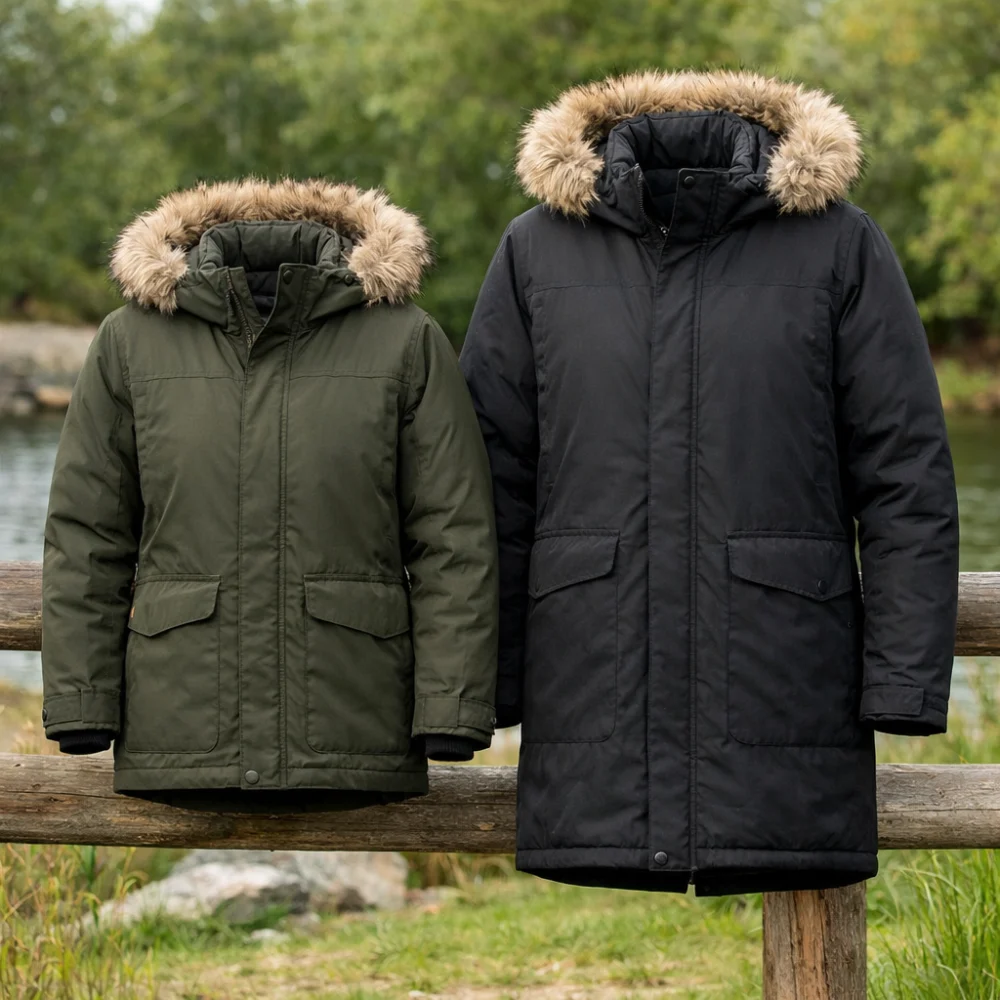
Fur-trimmed hoods, when present, are mainly a styling and comfort choice. Check the product details carefully if you care about the look or if you prefer a simpler hood design.
Common men’s parka types and variants
Men’s parkas are not all built for the same purpose. Some are designed as winter everyday coats with a clean look, while others lean towards outdoors-inspired styling and more practical weather protection. You may also see differences in insulation level, hood style and pocket layout.
If you want a more urban coat, you may prefer a parka with a simpler silhouette and less bulk. If you want something for colder outdoor use, a heavier and more protective style may suit you better, provided the fit still allows easy movement.
Which parka suits which buyer?
| Buyer need | What tends to matter most | Why |
|---|---|---|
| Everyday winter wear | Comfort, fit, hood coverage and manageable bulk | You are likely to wear it often and want something practical day to day |
| Colder, longer outings | Insulation, coverage and a secure closure | You may need more warmth and a coat that feels protective for longer periods outside |
| Wet or changeable weather | Weather resistance, hood design and front fastening | These features influence how comfortable the coat feels when conditions shift |
| Layering over knitwear or mid-layers | Roomy fit and easy movement | A parka that is too close-fitting can be uncomfortable over thicker clothing |
| Style-led shopping | Silhouette, length and finish | When appearance matters, the overall shape can be as important as technical details |
Common mistakes and misunderstandings
- Assuming all parkas are very warm. Some are heavily insulated, but others are mainly about style and moderate weather protection.
- Confusing water-resistant with waterproof. These terms do not mean the same thing, so check the product page carefully if rain protection matters.
- Choosing the wrong fit for layering. A coat that looks fine over a T-shirt may feel restrictive over knitwear or a mid-layer.
- Focusing only on the front view. Hood adjustability, pocket placement and hem length often affect daily comfort more than the jacket’s basic shape.
- Overlooking indoor comfort. A parka that is ideal outdoors may feel too warm for commuting or wearing in heated spaces.
Safety and suitability caveats
Choose a parka that suits the conditions you expect to face rather than assuming one jacket will cover every situation. If you need reliable rain protection, check the product details carefully instead of relying on the parka label alone. If you have broad shoulders, want room for layers or prefer a slimmer look, fit should be part of the decision from the start.
Because product details vary, use the individual product page to confirm the features that matter most to you.
Care, storage and everyday ownership
Parkas tend to keep their shape and comfort better when they are stored clean, dry and uncompressed for long periods. If a jacket includes removable trims, adjustable parts or specialist outer fabrics, it may need a little more attention than a simple casual coat.
Before buying, think about whether you want a jacket that is easy to maintain and wear repeatedly, or one with more feature-led detailing that may need more careful handling. The simpler the construction, the easier it is usually to look after.
How to compare men’s parkas efficiently
- Start with the main use: everyday wear, colder weather, wetter weather or a mix of all three.
- Choose the type of warmth and coverage you actually need, rather than assuming more bulk is always better.
- Compare the details that affect comfort: hood, fit, length, pocket layout and closure.
- Check the trade-off between protection, mobility and indoor comfort.
- Read the individual product page for the exact feature set before deciding.
Summary buyer decision checklist
- Does the parka suit the weather you expect most often?
- Is the insulation level right for your warmth needs?
- Do you want a longer cut for extra coverage?
- Will the fit work over the layers you usually wear?
- Is the hood and collar design comfortable and practical for you?
- Have you checked whether the outer fabric offers the level of weather resistance you need?
- Are the pocket and fastening details useful for everyday use?
Frequently asked questions
What makes a parka different from a normal jacket?
A parka is usually longer and more coverage-focused than many standard jackets. That makes it a common choice for colder weather and for people who want a more protective feel. The exact level of warmth or weather resistance still depends on the individual design.
Are parkas always suitable for winter?
Not always. Some are designed for colder conditions, while others are more about style or light seasonal wear. Check the insulation and outer fabric details if you want a coat for genuinely cold weather.
Should I size up for a parka?
Not automatically. Some buyers prefer extra room for layering, but too much space can make a coat feel bulky or less neat. The better approach is to think about what you will wear underneath and compare that with the fit guidance on the product page.
Do I need a waterproof parka?
Only if you expect regular rain and want that level of protection. Many parkas are intended more for warmth than full wet-weather performance. If rain matters, look for the wording used on the individual product page and check it carefully.
Are longer parkas always warmer?
Longer parkas often give more coverage, but warmth also depends on insulation, closure design and how well the jacket seals at the neck and cuffs. A shorter but better-insulated coat can sometimes feel warmer in practice than a longer one with less insulation.
What details matter most for everyday wear?
Fit, hood comfort, pocket placement and how easy the jacket is to put on and take off usually matter a lot. If you will wear the coat often, simple practical details can matter more than styling extras.
How do I avoid buying a parka that is too bulky?
Look closely at the fit description and think about how much layer room you actually need. If you want the coat mainly for walking around town or commuting, a less bulky design may be more comfortable than a heavier winter style.