

Men’s shorty wetsuits are a practical choice for milder water, warmer weather and sessions where you want some thermal coverage without the bulk of a full suit. They are often considered by surfers, paddleboarders and other watersports users who want to balance warmth, flexibility and easy movement.
Because shorty wetsuits are a broad category, the main challenge is not finding one at all, but choosing the right balance of warmth, stretch and comfort for how you actually use the water. A good shorty should feel close enough to the body to reduce flushing, while still letting you move freely.
This guide focuses on the buying decisions that matter before you compare individual product pages. It is about suitability, trade-offs and checks to make, rather than listing every possible style.
What should you look for first in a men’s shorty wetsuit?
Start with where and when you will wear it. The most useful first filter is whether you need light thermal cover for warm conditions, extra comfort for cool mornings, or a flexible layer that sits between swimwear and a full wetsuit. After that, fit is usually more important than any single feature, because a shorty that does not sit well will feel less comfortable and may perform less effectively.
The main trade-off is simple: more coverage and warmer materials can mean less freedom or more bulk, while a lighter, stretchier suit may feel easier to move in but offer less insulation. Specifications vary by model, so always check the individual product page before buying.
| Feature | What It Means | Why It Matters | What To Check |
|---|---|---|---|
| Fit | How closely the wetsuit sits to the body | Affects comfort, warmth and freedom of movement | Size guidance, cut, and whether the suit is meant to be close-fitting |
| Coverage | How much of the arms and legs are covered | Changes warmth, sun protection and flexibility | Sleeve and leg length, and whether the design matches your conditions |
| Material feel | How soft, stretchy or supportive the suit may feel | Influences paddling comfort and all-day wear | Product wording about flexibility, lining and panel design |
| Entry style | How you get in and out of the suit | Can affect ease of dressing and the secure feel of the suit | Back zip, chest zip or other stated closure style |
| Seams and construction | How the suit is put together | Can influence comfort and how well the suit copes with repeated use | Seam type, seam placement and any stated construction details |
Key decision criteria explained
Fit and size
Fit is the foundation of wetsuit buying. A shorty should usually feel snug without restricting breathing, shoulder movement or bending at the hips. If the fit is too loose, water can move through the suit more easily and comfort can drop; if it is too tight, the suit may feel tiring to wear. Check the size guide on the individual product page and compare it with your own measurements rather than relying on normal clothing size alone.
Thermal coverage
A shorty wetsuit is designed for conditions where you want some warmth but not a full-length suit. The exact level of coverage varies, so think about whether your priority is just taking the edge off cooler water, protecting your core, or having something that works on mixed-weather days. If you often feel cold, you may prefer a fuller suit instead; if you mainly want light protection, a shorty may be enough.
Flexibility and ease of movement
Shorty wetsuits are often chosen for ease of movement. This matters if you spend time paddling, getting on and off a board, or moving your shoulders repeatedly. A more flexible suit can be more comfortable over longer sessions, but it may feel less structured than a heavier design. Look for product information that suggests comfort in motion, without assuming that every model uses the same material mix.
Entry and closure
The way the suit opens can affect how easy it is to put on and how secure it feels once worn. Some buyers prioritise convenience, while others prefer a closure style that feels more enclosed. If you regularly change quickly at the water’s edge, ease of entry may matter more than a small difference in feel.
Seams, panels and finish
Construction details can influence comfort more than many buyers expect. Flat, well-placed seams may feel less intrusive, while panel shaping can help the suit move with your body. These are useful details to compare because they can improve day-to-day wear without changing the basic purpose of the suit.
Common shorty wetsuit types and variants
Within this category, the main differences are usually about length, closure style and overall warmth-versus-flexibility balance rather than completely separate product families.
- More coverage-focused shorties may suit buyers who want a bit more warmth and body cover while still keeping the short-sleeve, short-leg format.
- More flexible shorties may suit active users who prioritise ease of movement and lighter wear in milder conditions.
- Entry-style variations suit different preferences for convenience, security and comfort when dressing.
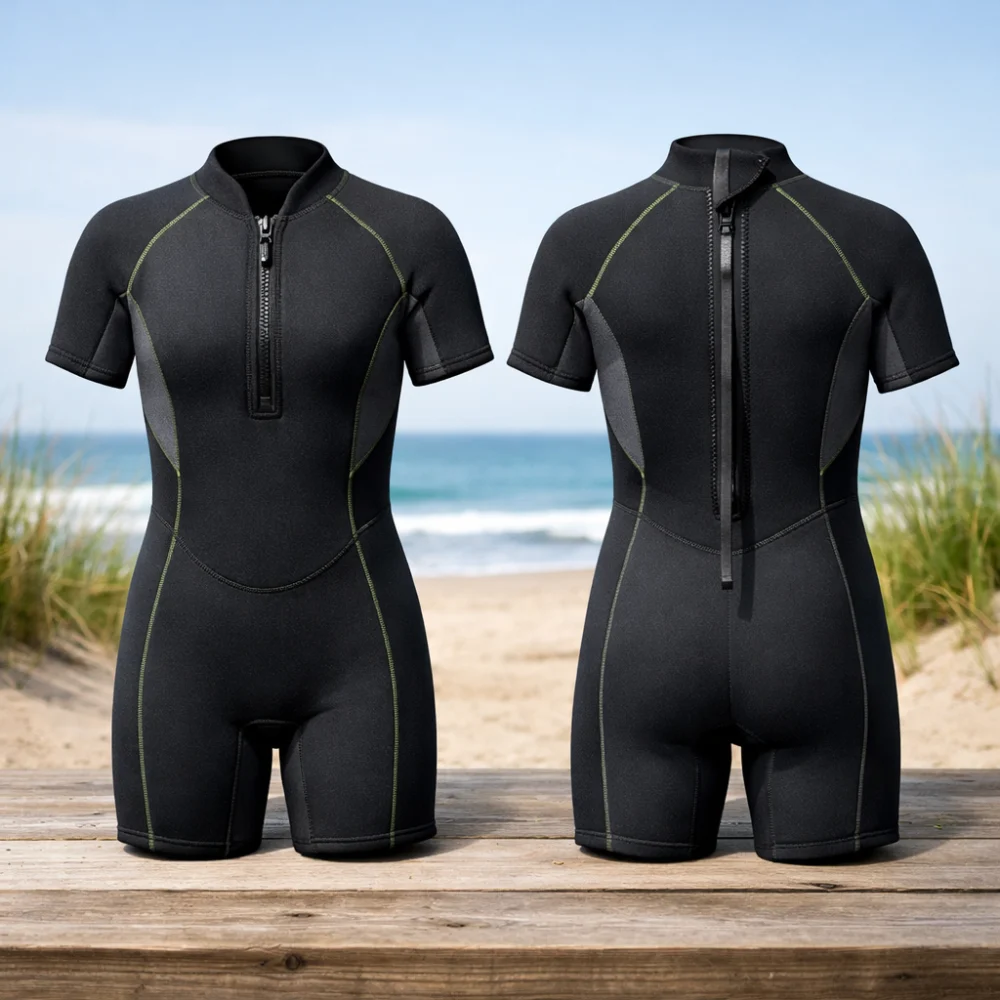
Rather than trying to pick a type by name alone, compare the stated features and consider how often you will wear the suit, how long your sessions last and how warm you usually feel in the water.
Which shorty wetsuit suits different buyers?
| Buyer need | What to prioritise | Why it helps |
|---|---|---|
| First-time buyer | Clear size guidance and a straightforward fit | Makes it easier to choose without overcomplicating the decision |
| Warm-weather surfer | Light coverage and easy movement | Supports comfort in milder conditions without unnecessary bulk |
| Mixed-use watersports user | Comfort, flexibility and a secure fit | Works better when the suit needs to support varied movement |
| Budget-conscious shopper | Simple construction and only the features you will actually use | Helps avoid paying for details that do not affect your needs |
| Cold-sensitive wearer | Closer fit and more coverage within the shorty format | Improves the chance of feeling comfortable for longer sessions |
Common mistakes and misunderstandings
- Buying only by clothing size. Wetsuit fit is different from everyday clothing, so always use the product’s own size guidance.
- Assuming all shorties feel the same. Some are aimed more at flexibility, while others lean towards coverage or structure.
- Choosing too much or too little coverage for the conditions. A shorty is useful in the right setting, but it is not a substitute for a suit designed for colder water.
- Ignoring closure style. The entry system can affect how easy the suit is to use and how it feels in wear.
- Overlooking movement needs. If you paddle, swim or board for long sessions, comfort through the shoulders and torso matters as much as warmth.
Safety and suitability caveats
Choose a shorty wetsuit for the conditions it is designed to suit, and do not assume one model will work in all temperatures or all water sports. Check the individual product page for intended use, fit notes and any construction details that matter to your activity. If you are uncertain between a shorty and a fuller wetsuit, it is usually better to compare the temperature range and coverage you actually need rather than guessing from appearance alone.
Maintenance, storage and lifespan considerations
Shorty wetsuits are generally easier to manage when rinsed and dried carefully after use, then stored away from heat and direct sunlight. Regular care helps keep the suit comfortable and can reduce unnecessary wear on seams, panels and closures. Before buying, think about how often you will use it and whether you want a suit that is easy to put on, take off and dry between sessions.
How to compare options efficiently
- Decide how warm the water and conditions are likely to be for your use.
- Choose the amount of coverage you actually need in a shorty format.
- Compare fit guidance, closure style and flexibility features.
- Check any construction details that may affect comfort or durability.
- Read the individual product page carefully before deciding.
Summary buyer decision checklist
- Does the shorty suit the conditions you will use it in?
- Does the fit guidance match your body measurements?
- Is the balance of warmth and flexibility right for your activity?
- Is the entry style likely to suit how you plan to use it?
- Have you checked the construction details on the individual product page?
Frequently asked questions
What is a shorty wetsuit used for?
A shorty wetsuit is typically used when you want some thermal cover without wearing a full-length suit. It is often chosen for milder conditions, easier movement and a lighter feel in the water. The exact suitability depends on the model and the water temperature you expect.
Is a shorty wetsuit better than a rash vest?
They serve different purposes. A rash vest is usually lighter and more minimal, while a shorty wetsuit offers more body coverage and often more thermal support. If you want warmth as well as light protection, a shorty is usually the more suitable comparison.
Should I size up for comfort?
Not usually as a default. A wetsuit that is too loose may let in more water and feel less effective, while one that is too tight can be uncomfortable. The safest approach is to follow the product’s size guide and compare it with your measurements.
Are all shorty wetsuits suitable for surfing?
Not necessarily. Some are better suited to surfing, while others may be more general-purpose for watersports or swimming-related use. Check the product page for the intended activity and make sure the fit and movement feel right for your needs.
How much difference does closure style make?
It can make a noticeable difference to ease of use and how secure the suit feels. Some buyers prefer a simpler entry, while others want a more enclosed feel. The best option depends on how often you will put the suit on, how much movement you need and what feels comfortable to you.
Can I wear a shorty wetsuit all year round?
Usually not. Shorty wetsuits are generally chosen for milder conditions, so they are not a universal solution for colder water. If your conditions vary a lot through the year, it is worth comparing a shorty with a fuller wetsuit before deciding.