

Men’s waterproof jackets are a practical choice when you want reliable wet-weather protection without carrying a bulky coat everywhere. The main challenge is choosing the right balance between waterproofing, breathability, weight, packability and comfort for how you will actually use it.
This guide is for buyers comparing lightweight packaway shells, everyday rain jackets and more robust outdoor layers. It focuses on the features that affect comfort and usefulness, rather than on brand names or short-lived trends.
If you are choosing a jacket for walking, commuting, travel or general outdoor use, it helps to start with your likely weather and activity level. A jacket that feels ideal in town may feel too warm on a hill path, while a very light shell may be easy to carry but less reassuring in prolonged rain.
What should you look for in a men’s waterproof jacket?
The best starting point is the level of wet-weather protection you need, then the comfort features that make the jacket wearable for longer periods. After that, compare fit, hood design, venting, pocket layout and how easy it is to pack or store. Specifications vary by model, so always check the individual product page before buying.
The main trade-off is usually between protection and convenience: more substantial jackets can feel more reassuring in poor weather, while lighter packaway options are easier to carry but may feel less substantial. A good purchase is the one that matches your routine, not simply the one with the longest feature list.
| Feature | What it means | Why it matters | What to check |
|---|---|---|---|
| Waterproof protection | How well the jacket is designed to keep rain out | Affects comfort in steady rain and longer wet spells | Look at the stated waterproofing information and how complete the coverage feels |
| Breathability | How well moisture can escape from inside | Helps reduce clamminess during walking or active use | Check whether the jacket is described as breathable and whether vents are mentioned |
| Weight and packability | How easy the jacket is to carry when not being worn | Useful for travel, commuting and backup rain protection | See whether it folds down compactly or comes with a storage bag |
| Fit and layering room | How the jacket sits over base layers or mid-layers | Decides whether it feels comfortable in real use | Check the fit description and consider what you will wear underneath |
| Hood and closures | Adjustment points that help seal out weather | Strongly affects usefulness in wind and rain | Look for adjustable hoods, cuffs, hems and zip protection |
| Durability and finish | The overall feel of the fabric, seams and construction | Influences how well the jacket copes with regular wear | Review seam detail, zip type and any notes on tougher outdoor use |
Key decision criteria explained
Waterproofing versus shower resistance
Some jackets are aimed at brief showers or light drizzle, while others are intended for more sustained rain. The label alone does not tell the whole story, so check the product wording carefully and avoid assuming that all waterproof jackets are equally protective. If you expect long periods outside, a more protective jacket may be worth the extra coverage.
Breathability and comfort in motion
If you are walking, cycling gently or wearing the jacket for long periods, breathability matters as much as rain resistance. A jacket that keeps rain out but traps too much heat can become uncomfortable quickly. Look for ventilation features where they are listed, and think about how active you usually are when wearing waterproof outerwear.
Fit, layering and movement
Fit affects whether the jacket works as a practical outdoor layer. A close fit may feel neat for everyday wear, but it can be restrictive if you want space for a fleece underneath. A roomier cut can be more flexible, but may feel less streamlined in milder weather.
Hood design and weather coverage
The hood is one of the most useful parts of a waterproof jacket, especially in wind and persistent rain. Adjustable hoods can improve coverage and comfort, while a simple hood may be fine for occasional use. Also look at cuffs, hem adjustments and zip coverage, because these details influence how sealed-in the jacket feels.
Packability and storage
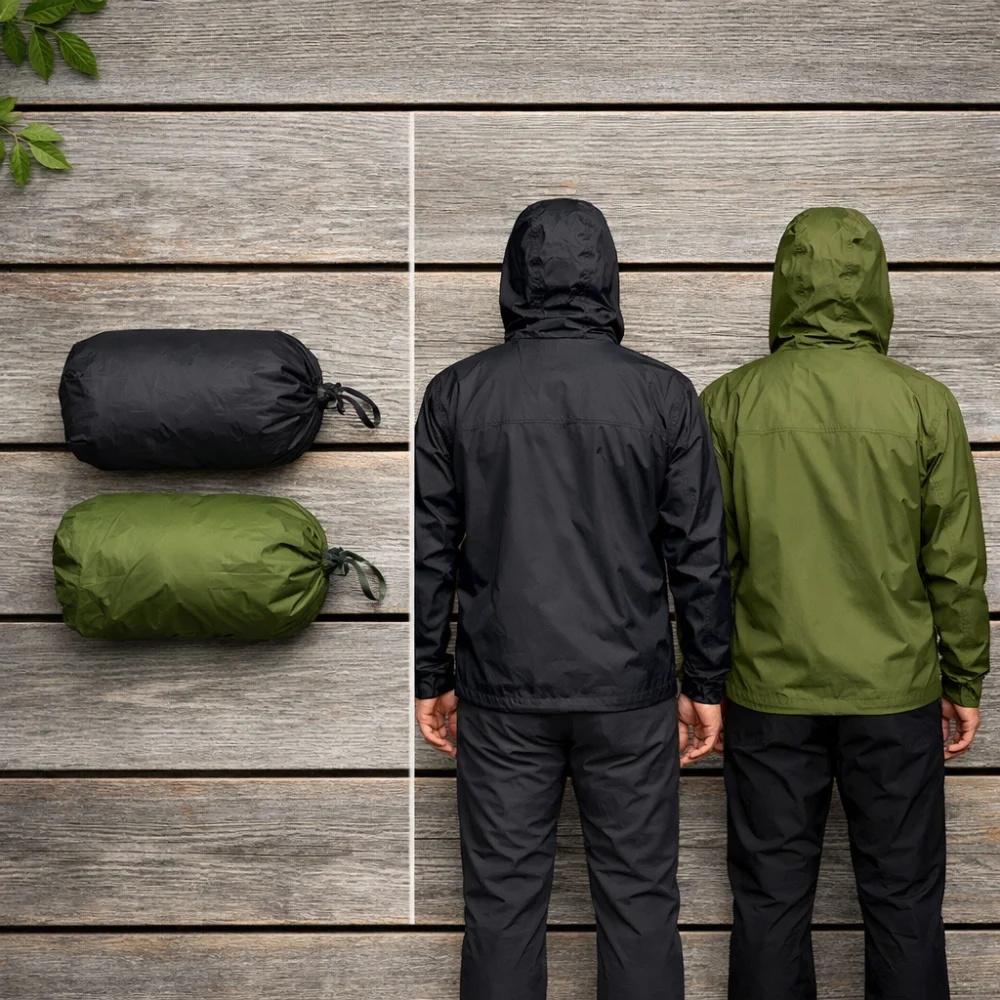
Packaway styles are appealing if you want a jacket to keep in a day bag, car or suitcase. They are convenient, but the lighter format may bring a trade-off in structure or long-wear comfort. If packability is important, check whether the jacket is described as foldable or supplied with a storage bag.
Types and variants within the category
This category usually includes a few broad styles rather than a single uniform product. The right choice depends on how and where you expect to wear it.
- Lightweight packaway jackets suit travel, commuting and backup rain protection. Their main limitation is that they may feel less substantial for long sessions in poor weather.
- Walking and outdoor shells are more likely to suit regular outdoor use and layered outfits. Their main limitation can be a little extra bulk compared with the lightest options.
- Everyday rain jackets work well for general wet-weather use around town. Their limitation is that they may not be the first choice for highly active or more exposed conditions.
Which jacket suits which kind of buyer?
| Buyer need | What tends to matter most | What to prioritise |
|---|---|---|
| Daily commuting | Comfort, easy wear, quick coverage | A jacket that is simple to put on, comfortable over normal clothing and not too cumbersome |
| Walking and outdoor days | Weather protection, breathability, hood control | Better coverage, sensible venting and enough room for layers |
| Travel and backup use | Packability and light weight | A compact jacket that is easy to store and carry |
| Layering in colder weather | Fit and room for insulation underneath | A cut that allows a mid-layer without feeling tight |
| General wet-weather use | Balance of all-round practicality | A straightforward jacket with dependable coverage and simple features |
Common mistakes and misunderstandings
- Choosing only by weight. Very light jackets are easy to carry, but they are not always the most comfortable for long wear.
- Assuming all waterproof jackets feel the same. Breathability, hood design and fit can change how usable a jacket is day to day.
- Forgetting what you will wear underneath. A jacket that fits over a T-shirt may not be ideal with a fleece.
- Overlooking practical details. Pocket placement, cuffs, hem adjustment and zip coverage can matter more than people expect.
Safety and suitability caveats
A waterproof jacket is only useful if it suits the conditions you expect to face. If you plan to use it for exposed hills, long walks or frequent rain, check the product information carefully rather than relying on the category name alone. A jacket that works well for mild showers may not be the right choice for prolonged wet weather or high activity.
Think about visibility, mobility and comfort as buying factors, especially if you will wear the jacket often. If you need a specific level of protection or performance, the individual product page is the place to confirm the details.
Maintenance, storage and lifespan considerations
General care can make a big difference to how a waterproof jacket feels over time. It is sensible to follow the care guidance on the individual product page or label, and to store the jacket somewhere dry when not in use.
Some jackets are chosen because they can be packed away easily, while others are kept as a regular outer layer. Either way, think about how often you will use it, whether it needs room for layering, and whether the fabric finish is suited to frequent wear.
How to compare options efficiently
- Start with your main use: commuting, walking, travel or general everyday rain protection.
- Decide how much weight, bulk and packability matter to you.
- Check the jacket’s fit, layering room and hood adjustability.
- Compare breathability and weather coverage against your likely activity level.
- Read the individual product information carefully before deciding.
Summary buyer decision checklist
- Will you wear it mainly in town, outdoors or while travelling?
- Do you need a packaway option or a more substantial everyday jacket?
- Is there enough room for your usual layers underneath?
- Does the hood and closure setup suit the weather you face most often?
- Are breathability and comfort important for active use?
- Have you checked the individual product page for the key details?
Frequently asked questions
Are men’s waterproof jackets suitable for everyday use?
Yes, many are designed for exactly that purpose. The main question is whether you want something lightweight and simple or a jacket that feels more substantial for regular outdoor wear. If you will wear it often, comfort and fit matter as much as weather protection.
What is the difference between a waterproof jacket and a raincoat?
In shopping terms, the distinction is often about style and construction rather than a strict technical difference. Some raincoats are cut for everyday city wear, while waterproof jackets may be aimed more at outdoor activity and layering. The best choice depends on how you plan to use it.
Is a packaway jacket enough for hill walking?
It may be suitable as a lightweight backup, but suitability depends on the individual jacket and the conditions you expect. For longer periods in wet weather, many buyers prefer something with more coverage and a stronger all-round feel. Check the product page details carefully for the intended use.
Should I choose a looser fit for layering?
If you plan to wear a fleece or other mid-layer underneath, a bit of extra room is usually helpful. Too much space can feel bulky, though, so the aim is comfortable layering rather than a size up by default. Think about what you will normally wear with the jacket.
Why does breathability matter in a waterproof jacket?
Breathability helps reduce the clammy feeling that can build up when you are active. It does not remove the need for waterproof protection, but it can make a jacket more comfortable for walking or wearing for longer periods. This is one of the most useful features to compare if you move around while wearing the jacket.
What should I check on the product page before buying?
Look at the fit, hood details, weather coverage, packability and any wording about intended use. It is also worth checking whether the jacket is better suited to light showers, regular rain or more active outdoor wear. Specifications vary by model, so always check the individual product page before buying.