

Men’s waterproof trousers are a practical layer for wet weather, muddy ground and situations where staying dry matters more than breathability alone. They can be a simple overtrouser for packing in a bag, or a more specialised pair for regular outdoor use.
The right choice depends on how often you expect to wear them, how much movement you need, and whether you want quick emergency protection or a more comfortable all-day option. It also helps to think about what you will wear underneath, because fit and ease of pulling them on can matter as much as the waterproof rating.
Because product ranges vary, it is worth comparing the cut, fastening style and intended use rather than assuming all waterproof trousers behave the same way. Specifications vary by model, so always check the individual product page before buying.
What should you look for in men’s waterproof trousers?
Start with the way you plan to use them. Lightweight packable overtrousers suit sudden rain and backup carry, while heavier-duty options may feel more stable for frequent use or colder conditions. The main trade-off is usually between protection, breathability, bulk and ease of movement.
For most buyers, the most useful question is not simply whether the trousers are waterproof, but how easy they are to live with in real conditions. Consider how quickly you need to put them on, how much room they give over other trousers, and whether you will be walking, working, commuting or sitting still for periods of time.
| Feature | What it means | Why it matters | What to check |
|---|---|---|---|
| Intended use | Whether the trousers are for emergency rain cover, regular outdoor wear or colder weather | Different uses place different demands on comfort, bulk and ease of movement | Look for wording that matches your activity and how often you expect to wear them |
| Fit over other layers | How easily they go over walking trousers, workwear or base layers | A tight fit can be awkward to pull on and less comfortable in use | Check sizing guidance, leg opening details and whether they are designed as overtrousers |
| Breathability | How well moisture from inside can escape | Important if you will be active, climbing hills or wearing them for longer periods | Look for product wording that suggests comfort during exertion, not just rain protection |
| Weight and packability | How easy they are to carry when not being worn | Useful for travel, hiking or keeping a spare pair in a bag | Check whether they are packable and how much space they are likely to need |
| Fastenings and access | Zips, waist adjustment and ankle openings | Affects how quickly they can be put on and taken off over boots or shoes | Check for side openings, adjustable waist and practical ankle design |
| Durability and reinforcement | How robust the fabric and seams are for repeated use | More durable options may suit regular wear on rougher ground | Look for descriptions aimed at frequent outdoor use rather than occasional shower protection |
Key decision criteria
Waterproof protection and comfort
Waterproof trousers are designed to keep rain out, but the level of comfort can vary. Some are made mainly as emergency outer layers, while others are intended for longer wear in wet conditions. If you will be active, you may value comfort and breathability nearly as much as water resistance.
Overtrouser fit versus regular trouser fit
Many buyers want waterproof trousers to go over another pair of trousers. That means the cut needs enough room for movement without becoming baggy or awkward. If you plan to wear them on their own, the fit and lining feel may matter more, so check whether the product is designed for layering or standalone use.
Packability and convenience
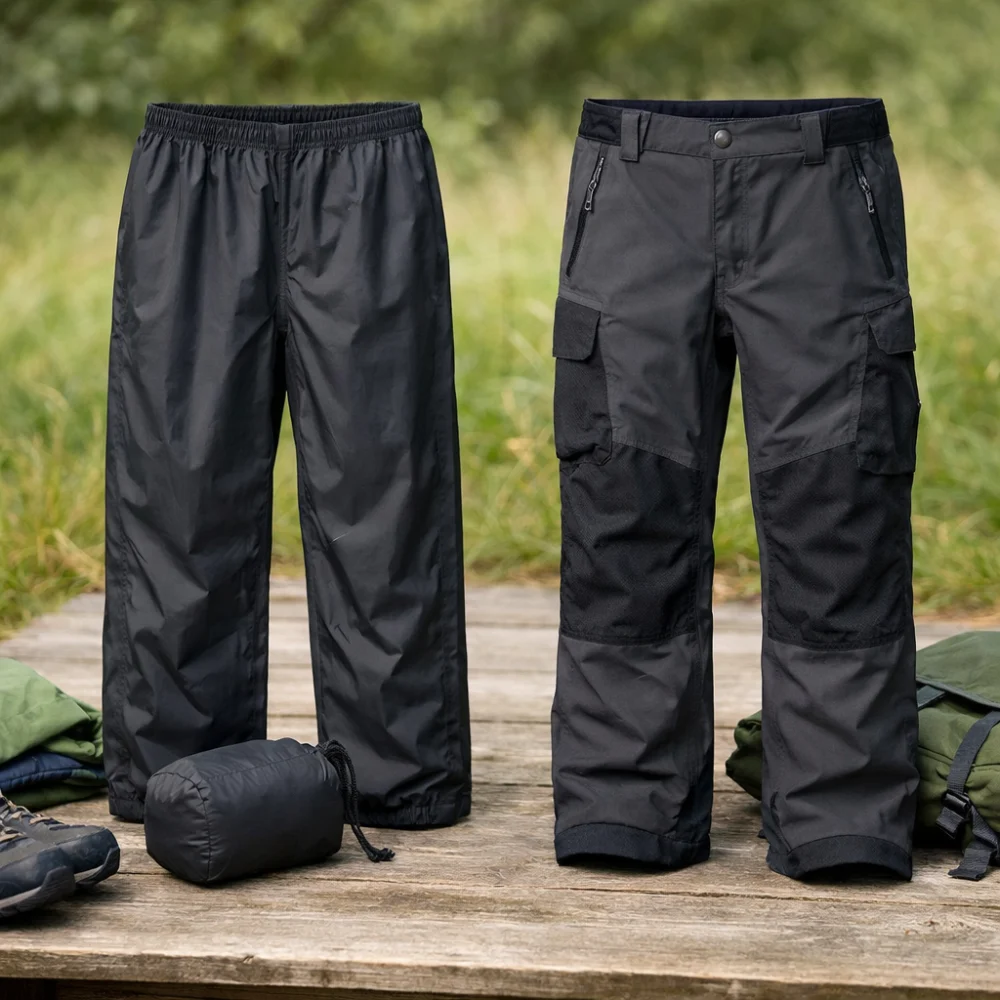
Some waterproof trousers are meant to live in a rucksack, car or work bag until needed. Others are more substantial and less convenient to carry around. If convenience is important, think about how often you want to have them with you and whether the design looks easy to pack away again after use.
Weather and activity level
Wet weather on a short commute is a different need from a full day on the hill or a cold, rainy work shift. More active use usually makes breathability and range of movement more important, while colder or less active use may put more emphasis on coverage and warmth.
Types and variants within the category
There are a few common ways men’s waterproof trousers differ. Packaway overtrousers are usually the simplest option for sudden rain and easy carrying. Heavier waterproof trousers may suit regular outdoor use where comfort and durability matter more.
You may also see models aimed at colder weather, which can feel less minimal and may be better for winter conditions. Another common difference is how easy they are to put on over footwear, especially if you need them for walking, cycling or work.
Which type suits different buyers?
| Buyer need | What usually helps | Main trade-off |
|---|---|---|
| Occasional rain backup | Lightweight, packable overtrousers | May be less comfortable for long periods of wear |
| Regular walking or hiking | Better breathability and ease of movement | Often less compact than the simplest packaway designs |
| Work outdoors | Durable fabric and practical openings | Can be heavier or less minimal |
| Cold, wet conditions | Models that support layering or offer a warmer feel | Extra warmth can reduce packability |
| Travel or commuting | Easy packing and quick on-off access | Convenience-focused options may sacrifice some durability |
Common mistakes and misunderstandings
- Assuming waterproof means equally comfortable. Some trousers keep out rain well but feel hot or restrictive. Check the intended use so you do not buy more protection than you actually need.
- Ignoring fit over other clothing. If you plan to wear them as overtrousers, make sure there is enough room for layering and movement.
- Choosing only by pack size. A very compact pair can be useful, but it may not be the most comfortable option for long wear.
- Overlooking access details. Easy-on leg openings and a sensible waist design can make a big difference when the weather turns quickly.
Safety and suitability caveats
Waterproof trousers are useful for wet conditions, but they are not all intended for the same level of exposure or activity. If you need them for regular outdoor work, hill walking or colder weather, check that the product description matches the use you have in mind. For long periods of exertion, breathability and fit become especially important.
It is also sensible to think about footwear and layering together. A trouser that works well over boots may not feel the same over slimmer shoes, and a pair that is fine in mild rain may be less suitable for a full day in persistent wet weather.
Maintenance, storage and lifespan considerations
General care matters because waterproof clothing can lose performance if it is neglected. After use, let the trousers dry fully before storing them, and follow any care advice shown on the individual product page. If a model is designed to be packed away often, it is worth thinking about how easily it will return to a small bag without creasing or taking on dirt.
For frequent use, durability is part of the buying decision too. A pair that suits occasional showers may not be the best choice if you expect repeated wear on rough ground, in work settings or during longer trips.
How to compare options efficiently
- Decide whether you need emergency rain cover, regular outdoor wear or a colder-weather option.
- Check whether the trousers are meant to go over other layers or be worn on their own.
- Compare the features that affect comfort in use, especially fit, breathability and access.
- Weigh packability against durability, because the easiest pair to carry is not always the most robust.
- Read the individual product page carefully and match the description to your actual activity.
Buyer checklist
- Will these trousers be used occasionally or often?
- Do you need overtrouser room for layering?
- Is quick packing and carrying important?
- Will you be active enough to care about breathability?
- Do the ankle and waist details suit your footwear and use case?
- Does the product description match your weather and activity level?
Frequently asked questions
Are waterproof trousers the same as overtrousers?
Not always. Many waterproof trousers are designed as overtrousers, but some are more substantial and intended for regular wear. Check the product description to see whether the fit is meant for layering or standalone use.
What matters more: waterproofing or breathability?
It depends on how you will use them. If you only need short-term rain protection, waterproofing may be the priority. If you will walk or work in them for longer periods, breathability becomes more important for comfort.
Should I size up for waterproof trousers?
If you plan to wear them over other trousers, a little extra room is often useful. That said, sizing can vary by model, so the best approach is to check the fit guidance on the individual product page rather than assuming a standard adjustment.
Are packaway waterproof trousers good for hiking?
They can be useful as backup rain protection, especially when portability matters. For longer or more active walks, you may want to pay closer attention to breathability, comfort and ease of movement.
Can I wear waterproof trousers on their own?
Some can, but many are primarily designed to go over other layers. If standalone wear matters to you, look for a cut and finish that seems comfortable without another trouser underneath.
What features make them easier to put on quickly?
Practical waist adjustment and leg openings can help, especially if you need to change in bad weather. If you expect to put them on over boots or work shoes, look closely at the opening design.
How do I choose between lightweight and heavier styles?
Choose lightweight styles for carrying convenience and occasional use. Choose a more substantial style if you expect frequent wear, harsher conditions or a greater need for durability.
Do I need waterproof trousers for mild rain?
Not necessarily. For light showers, some buyers are happy with a packaway pair kept as backup. If you only face brief wet weather now and then, convenience may matter more than heavy-duty construction.