

Outdoor belts may seem simple, but the right choice can make daily wear and activity use more comfortable and more practical. Buyers usually want something that stays secure, fits properly and works with the clothing they already wear.
This guide focuses on the decisions that matter before you pick a belt from the category. It helps you compare style, fastening, adjustability, comfort and durability without turning the choice into a guessing game.
Outdoor belts are usually chosen for fit, ease of use and how well they suit active clothing. The starting point is to match the belt type to the way you will wear it, then check the fastening and sizing details on the individual product page. Specifications vary by model, so always check the individual product page before buying.
What should you look for in an outdoor belt?
The best starting point is to decide whether you want a simple everyday belt, a more adjustable webbing style or a belt designed for quick fastening and easier on-off use. A more secure or more adjustable belt can be useful for active wear, but it may feel less familiar than a traditional leather-style option. The main trade-off is usually between convenience, comfort and the look you want.
| Feature | What It Means | Why It Matters | What To Check |
|---|---|---|---|
| Material | The belt construction, such as webbing, canvas or a more structured finish | It affects comfort, flexibility and how the belt feels in outdoor clothing | Check the product description for the material and whether it suits casual or active use |
| Buckle or fastening | The way the belt closes and loosens | It affects ease of use, security and how quickly you can adjust it | Look at the buckle style and whether it matches your preference for simple or quick adjustment |
| Adjustability | How precisely the belt can be fitted | Useful if you layer clothing or want a more exact fit | Check whether the belt is fixed-size, adjustable or trim-to-fit |
| Width | How broad the belt is across the waist | It can affect comfort, appearance and how well it works with belt loops | Confirm the belt width against your clothing and normal wear use |
| Intended use | Whether the belt is suited to outdoor walking, travel, workwear or general casual wear | Some belts are better for movement, others for everyday styling | Read the product page to see the use case it is designed around |
| Fit range | The waist range or sizing approach the belt covers | Fit is one of the most common reasons a belt is returned or left unused | Check sizing guidance carefully and compare it with how you normally wear belts |
Key decision criteria
Fit and sizing
Fit is the first thing to get right because a belt that is too short, too long or hard to adjust will not be comfortable in regular use. Some outdoor belts are sold by waist range, while others are trim-to-fit or adjustable, and those approaches suit different buyers. If you wear thicker layers outdoors, a little extra adjustability can be helpful.
Fastening style
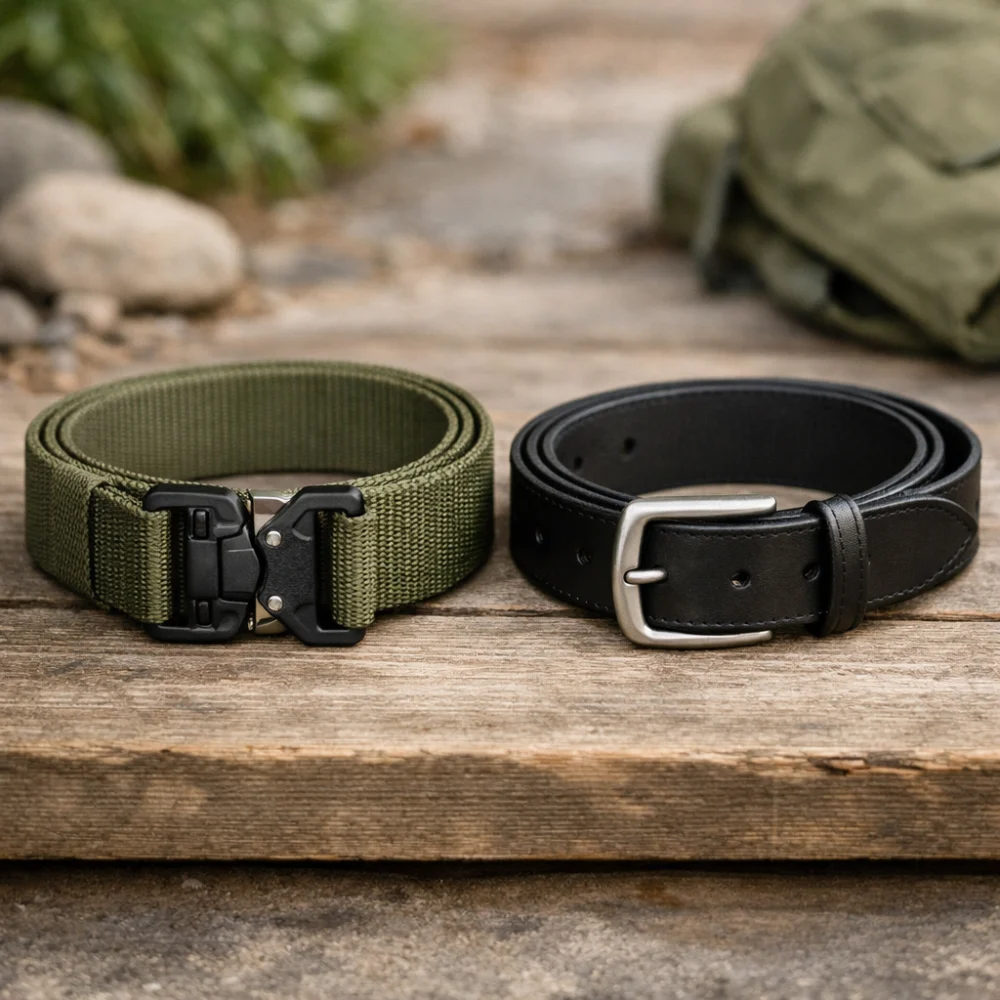
Fastening style affects both convenience and feel. A traditional buckle is familiar and usually simple, while quick-release or hook-style designs can be easier to open and retighten in active situations. The trade-off is that a simpler-looking fastening may not be the easiest for every user or outfit.
Material and comfort
Comfort matters because outdoor belts are often worn for longer periods than a purely decorative belt. Flexible webbing or canvas-style belts can feel more forgiving, while firmer constructions may hold shape better and feel neater with some clothing. Think about whether you want a belt that moves easily with you or one that feels more structured.
Versatility
Some belts work best as straightforward everyday accessories, while others are better suited to walking, travel or utility-style clothing. A versatile belt can reduce the need to buy several different options, but a more specialised one may feel more satisfying for a particular use. Choose the balance that matches how often you will actually wear it.
Types and variants you may see
Within outdoor belts, the main differences are usually in construction and fastening rather than in radically different product categories. That makes the buying decision more about practical features than about choosing from unrelated product types.
- Webbing belts: Often chosen for flexibility, casual outdoor wear and easy adjustment.
- Canvas-style belts: A practical option for everyday use where a slightly more traditional look is preferred.
- Quick-release or hook-style belts: Useful when fast fastening and easy adjustment matter more than a classic buckle feel.
- Trim-to-fit or adjustable belts: Helpful when you want a closer fit without relying on fixed waist sizes alone.
Each type has a trade-off. More adjustable styles can be convenient, while more traditional styles may feel familiar and work better for buyers who want a standard belt look.
Which type suits which buyer?
| Buyer need | What to prioritise | Why |
|---|---|---|
| Everyday casual wear | Comfort, simple fastening and a look that suits your clothing | It should be easy to wear regularly without feeling fussy |
| Active outdoor use | Secure fit, adjustability and a belt that stays comfortable in movement | Movement and layering can make a more adaptable belt more useful |
| Travel or on-the-go use | Easy fastening and quick adjustment | A belt that is simple to manage can be more practical when you are moving between activities |
| Replacement for an old belt | Similar width, similar fastening and the right fit range | Matching the old belt’s practical features avoids a surprise change in feel |
| Gift buying | Adjustability and a broadly usable style | It is easier to choose something flexible when you are less certain of exact preferences |
Common mistakes and misunderstandings
- Choosing by appearance only: A belt can look right but still feel awkward if the fastening or width does not suit the clothing it will be worn with.
- Ignoring sizing guidance: Belt fit is often more important than general style. Check the waist range or adjustment method before deciding.
- Assuming all outdoor belts feel the same: Some are much softer and more flexible than others, and that can make a difference over a full day of wear.
- Overlooking the buckle type: The fastening affects how easy the belt is to use in practice, especially if you expect frequent adjustment.
Safety and suitability caveats
Outdoor belts are straightforward accessories, but it is still worth checking that the belt is suitable for the clothing and activity you have in mind. A belt that is fine for casual wear may not be the best choice for heavier layering, and a more specialised fastening may not suit every user. If you are uncertain about fit or fastening, read the individual product details carefully before buying.
Maintenance, storage and lifespan considerations
Most outdoor belts need only simple care, but the materials and fastening style can affect how they age. Webbing and canvas styles may be easier to keep clean for everyday use, while more structured finishes may need a little more care to keep their appearance. Storing a belt flat or hanging it neatly can help it keep its shape.
If the belt has an adjustable or quick-release fastening, it is worth checking that the mechanism feels smooth and secure before regular use. The practical lifespan of any belt will depend on how often it is worn and how it is cared for.
How to compare options efficiently
- Start with how you plan to wear the belt: everyday, outdoor activity or occasional use.
- Pick the fastening style that feels easiest and most reliable for you.
- Check the fit range or adjustment method against your waist size and clothing layers.
- Compare width and material so the belt suits the garments you wear most often.
- Read the individual product page carefully for any model-specific details.
Summary buyer decision checklist
- Does the belt suit your main use: casual, active or travel?
- Is the fastening type one you are happy to use regularly?
- Does the sizing or adjustability match your waist and layering needs?
- Will the width work with your trousers or outdoor clothing?
- Is the material comfortable enough for the length of wear you expect?
- Have you checked the individual product page for model-specific details?
Frequently asked questions
What makes an outdoor belt different from an ordinary belt?
Outdoor belts are usually chosen for practical wear, so comfort, adjustability and fastening style often matter more than a formal look. They may be better suited to movement, layering or casual activity than a purely dress-style belt.
Is webbing better than canvas?
Neither is automatically better. Webbing can feel more flexible and easy to adjust, while canvas-style options may suit buyers who want a more traditional look. The better choice depends on how you plan to wear the belt.
How important is buckle type?
Very important, because it affects daily ease of use. Some buyers prefer a familiar buckle, while others want a quick-release or simpler fastening that is faster to manage.
Should I choose adjustable or fixed size?
Adjustable belts are often easier if you are uncertain about fit or expect to wear different layers. Fixed-size belts can be fine if you know your sizing and want a straightforward option.
Can one outdoor belt work for both casual and active wear?
Often yes, if the material, width and fastening are versatile enough. The key is to choose something comfortable and secure rather than something that is only stylish or only specialised.
What should I check if I am replacing an old belt?
Compare width, fastening style and fit range first. Matching those details usually matters more than choosing something that simply looks similar.
Why does belt width matter?
Width affects comfort and how well the belt works with your clothing loops. A belt that is too wide or too narrow for your usual trousers can feel inconvenient even if the size is otherwise correct.