

Pop-up canopies are a practical choice when you want quick shelter without a more involved pitch. They are commonly considered for garden gatherings, outdoor trading, spectator events, camping overflow and general shade from changeable weather.
The main buying question is not simply whether a canopy looks large enough, but whether it suits the space, the conditions and the way you will use it. A good choice depends on how often you will set it up, how much coverage you need and how much effort you are willing to spend on transport, anchoring and storage.
Because these products vary widely, it helps to compare the canopy shape, frame style and practical setup details rather than relying on the category name alone. Specifications vary by model, so always check the individual product page before buying.
What should I look for in a pop-up canopy?
Start with the job the canopy needs to do. If you mainly want fast shade for a family day out, ease of setup and compact packing may matter more than extra coverage. If you need more shelter at a fixed location, stability, anchoring options and side protection may be higher priorities.
The most useful trade-off is usually between convenience and robustness. Lighter designs are easier to move and store, while more substantial frames and accessories may take more time and effort to handle.
| Feature | What it means | Why it matters | What to check |
|---|---|---|---|
| Coverage area | The amount of space the canopy is intended to shelter | Affects how many people, tables or items can fit underneath | Check the stated footprint and whether the usable space suits your planned layout |
| Frame design | The supporting structure that holds the canopy up | Influences ease of setup, stability and how sturdy the shelter feels | Look for details on the frame style and any setup method shown on the product page |
| Portability | How easy it is to carry, pack and move between locations | Important if you transport it by car, store it indoors or set it up regularly | Check packed size, overall weight and whether a carry bag or case is included |
| Weather protection | The kind of shelter the canopy is intended to provide | Helps you judge whether it is mainly for shade, light rain cover or more adaptable shelter | Review the material description and any notes about side panels, drainage or wind sensitivity |
| Anchoring | How the canopy is secured in place | Important for safety, stability and everyday practicality outdoors | Check what fixing method is mentioned and whether extra weights or pegs are needed |
| Accessories | Optional or included extras such as sidewalls or weights | Can change how enclosed, adaptable or secure the setup feels | Confirm what is included in the box and what must be added separately |
Which details matter most?
Size and layout
Size is one of the easiest details to misunderstand. A canopy may sound suitable in general terms, but the real question is how much room you need for standing, seating, display items or cooking equipment. Think about the shape of the area as well as the footprint, especially if the canopy needs to fit a patio, pitch or event space.
Setup and packing
Some buyers want a shelter that can be deployed quickly and put away just as fast. Others will use it in one location for longer periods and care more about how stable it feels once in place. If you will move it frequently, compact storage and straightforward handling often matter more than extra features.
Frame and fabric
The frame and cover work together, so neither should be judged alone. A lighter canopy can be easier to handle, but it may not feel as reassuring in breezier conditions. A more substantial build can offer a steadier setup, but it may also be less convenient to transport.
Anchoring and accessories
Many buyers focus on the canopy itself and overlook how it will be held down. That can lead to disappointment if the shelter is used on hard ground, soft grass or in a space where added stability matters. Check what fixing method is supported and whether sidewalls or weights are part of the package or separate items.
Types of pop-up canopy buyer typically compare
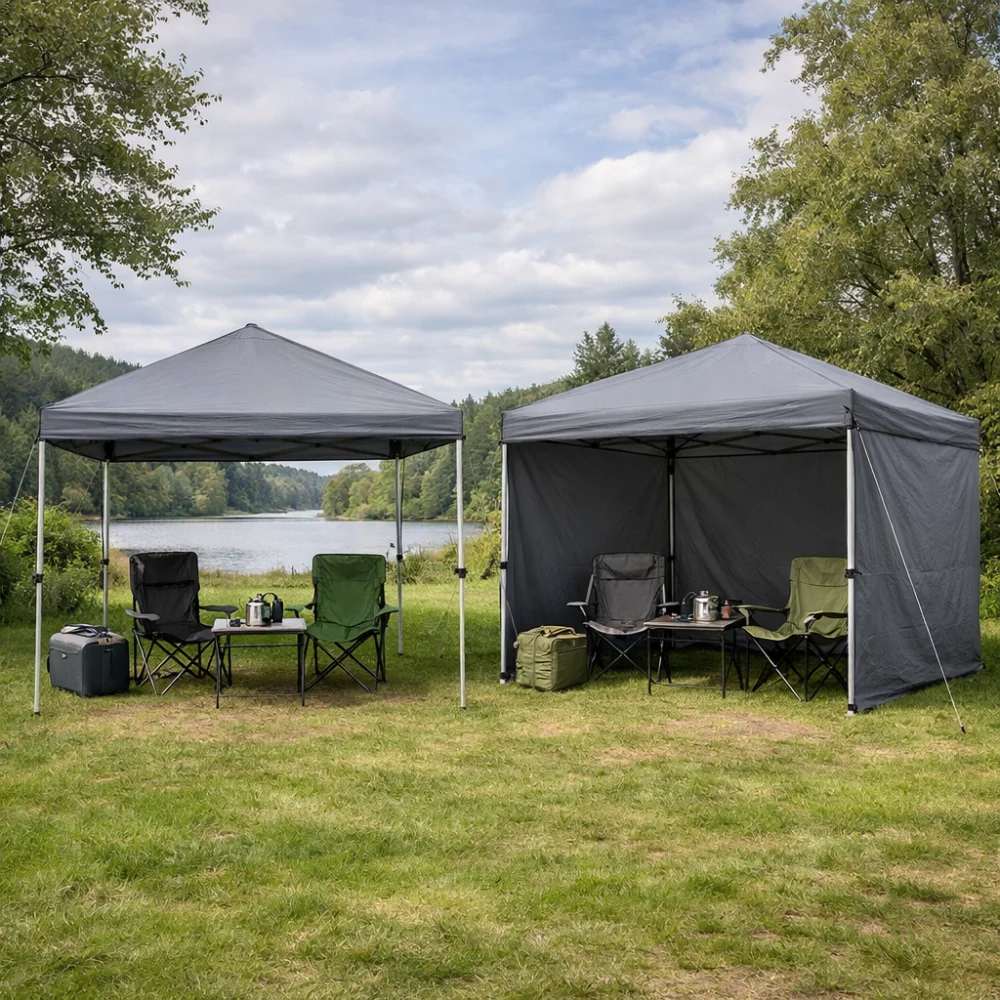
At category level, the useful distinctions are usually about use rather than highly specialised product types. Some shoppers want a simple open shelter for shade, while others want a more enclosed setup with extra protection at the sides.
- Open shelter style: suits quick shade and easy access, but offers less protection from wind or sideways rain.
- More enclosed style: may suit situations where extra side coverage is useful, but it can feel bulkier and may need more attention to anchoring.
- Accessory-led setup: buyers sometimes build the shelter with add-ons such as weights or sidewalls, which can improve flexibility but increases the number of things to check.
Which approach makes sense depends on how often the canopy moves, how exposed the location is and how much setup effort you want to accept.
How different buyers can compare options
| Buyer need | Useful characteristics | Trade-off to expect |
|---|---|---|
| Occasional garden use | Simple setup, easy storage, sensible coverage | May be less substantial than heavier event-focused options |
| Family days out | Portable format and straightforward assembly | Light handling can mean more attention to anchoring |
| Market, fair or display use | Stable frame, practical footprint, space for goods or people | More robust choices can take longer to handle and move |
| Camping overflow or group shelter | Useful coverage and adaptable layout | Extra space can mean a larger packed item and more setup time |
| Quick shade only | Fast pitching and modest storage demands | May not offer as much weather protection as a more enclosed setup |
Common mistakes to avoid
- Choosing by footprint alone: the usable space under a canopy depends on shape, clearance and how you plan to place people or equipment.
- Ignoring anchoring: a shelter that seems convenient may still need weights, pegs or other fixing methods to be practical outdoors.
- Overlooking packed size: a canopy that fits the intended space may still be awkward to store or transport.
- Assuming all-weather use: pop-up canopies are often used for shade and light shelter, but the level of protection can vary a lot by model.
- Forgetting the extras: sidewalls, weights and carry cases may change the overall value and convenience of the setup.
Safety and suitability caveats
Choose a pop-up canopy with the environment in mind. A setup that feels fine in a sheltered garden may not be equally suitable in a more exposed space, especially if wind or uneven ground is a factor. It is sensible to read the product information carefully and use only the shelter in ways the individual item is described for.
If you plan to use it around children, in a public setting or near valuable equipment, pay close attention to anchoring, layout and how much open space the canopy leaves around it. These are buying decisions rather than operating instructions, but they can make a real difference to whether the canopy is a good fit.
Maintenance, storage and lifespan considerations
Simple care can make a canopy easier to live with. Many buyers will want to dry and store it properly after use, keep the frame and cover clean, and make sure it goes back into its bag or storage place without strain. If the canopy uses separate accessories, keep them together so the next setup is less frustrating.
Think about how often you will pack it away. If it will be used repeatedly, convenience in storage and handling matters more than a purely visual impression. If it will stay unused for long periods, compact storage and clear labelling of included parts become especially helpful.
How to compare options efficiently
- Decide where and how the canopy will be used most often.
- Choose the level of coverage and enclosure that matches that use.
- Compare the frame, anchoring and portability details.
- Check which accessories are included and which are optional.
- Read the individual product page carefully before deciding.
Summary buyer decision checklist
- Does the size suit the space you actually have?
- Is the setup easy enough for the way you will use it?
- Will the packed size and weight be practical for transport and storage?
- Does the canopy offer the level of shelter you expect?
- Are anchoring and any needed accessories clear before you buy?
- Does the product page answer the specific questions for your intended use?
Frequently asked questions
Are pop-up canopies mainly for shade or rain?
They are often chosen first for shade, but some models also offer light shelter from rain. The important point is to check the product information rather than assuming every canopy is suited to the same conditions.
Do I need extra weights or anchors?
That depends on the model and where you plan to use it. Some canopies are intended to be secured with additional anchoring, so it is worth checking what is included and what is expected separately.
Is a larger canopy always better?
Not necessarily. A larger canopy can offer more usable space, but it may also be heavier, bulkier and more awkward to handle. The right size is the one that fits your space and your transport needs.
What should I check before using one at an event?
Focus on space, stability, access and how the shelter will be fixed in place. It is also sensible to confirm whether any accessories you need are included or must be sourced separately.
Are pop-up canopies easy to store?
Many are chosen because they pack down into a more manageable format than a fixed shelter, but storage convenience still varies. Packed size and whether a carry bag is included can make a meaningful difference.
Can I compare them by frame and cover alone?
Those are important, but not the whole picture. Anchoring, packed size and the intended use matter just as much when you are choosing between options.