

Portable camping air conditioners are a specialist comfort purchase for people who want more cooling than a fan can usually provide. They are most relevant for campers trying to improve sleep, reduce stuffiness or make a tent, van or sheltered camping setup more comfortable in warm weather.
Because this category can cover very different designs and power arrangements, the main buying job is to match the product to your campsite, power source and space. A useful guide is to focus on where it will be used, how it will be powered and how much cooling convenience you actually need.
It also helps to separate genuine air-conditioning needs from general airflow needs. In some situations a tent fan, ventilation and shade may be the more realistic choice, while in others a portable air conditioner may be the more suitable comfort upgrade.
What should you look for in a portable camping air conditioner?
Start with the intended setup, then compare power, size, noise, drainage and portability. The right choice is usually the one that suits your camping style rather than the one with the most features. Specifications vary by model, so always check the individual product page before buying.
| Feature | What It Means | Why It Matters | What To Check |
|---|---|---|---|
| Power source | How the unit is run, such as mains, battery or another supported supply | Determines whether it can realistically be used at your campsite | Match it to your available power and any lead or adapter needs |
| Cooling approach | The way the unit reduces heat or improves comfort | Affects how noticeable the cooling may feel in your space | Check the product description for the type of cooling and intended use |
| Portability | How easy it is to carry, move and store | Important if you pack light or move equipment often | Look at form factor, handling and packed size information |
| Noise level | How much operating sound it produces | Can affect sleep and general campsite comfort | See whether the listing gives any noise information or user guidance |
| Drainage or water management | How condensation or collected moisture is handled | Can affect convenience and where the unit can be placed | Check whether emptying, venting or drainage is needed |
| Room or tent suitability | The kind of space it is designed to cool | Helps avoid choosing a unit that is too large or too limited | Look for the intended environment and any size guidance provided |
Key decision criteria explained
Power and campsite setup
Power is usually the first filter. A unit that works well in one setup may be impractical in another if you do not have the right supply, connectors or runtime support. Think about whether you camp with mains hook-up, use a battery system or need something suited to a more self-contained trip.
Cooling versus simple airflow
Some shoppers mainly want fresher air, while others want a stronger cooling effect. That difference matters because a unit with more cooling capability may also be larger, heavier or more demanding to run. If your main problem is stale air in a tent, compare whether a fan or ventilated setup might solve enough of the issue before moving to a more complex product.
Noise and sleep comfort
If you plan to use the unit overnight, operating sound becomes part of the buying decision. A product that seems fine in daylight can be annoying when you are trying to sleep in a small space. If the listing provides any noise guidance, use it as part of your comparison rather than assuming quieter is always better in practice.
Drainage and condensation management
Cooling equipment may create moisture or need some form of water management. That is not necessarily a drawback, but it is a practical point to understand before you buy. Check whether the product needs regular emptying, venting or a particular placement to work sensibly in camp.
Size, weight and storage
Camping equipment often has to be carried, packed and stored more than household gear. A portable air conditioner that is awkward to handle can become a nuisance even if it performs well. Consider whether you have space in the car, tent or caravan for both use and transport.
Types and variants you may see
This category can include more than one style of product, and the differences matter more than the marketing wording. Some units may be aimed at small enclosed spaces, while others are designed around simpler spot cooling or comfort support.
- More compact units: Usually easier to move and store, which can suit shorter trips or smaller setups. The trade-off is that they may be more limited in coverage or convenience.
- Units for fixed or semi-fixed setups: These may suit longer stays, awnings or caravan-style arrangements where portability is still useful but not the only concern. The trade-off is often less flexibility in packing and carrying.
- Comfort-focused cooling products: Some products in this area may be better thought of as cooling aids rather than full room chillers. They can make sense if you want improved sleeping comfort without expecting domestic-air-con behaviour.
Which type suits which kind of buyer?
| Buyer need | Useful characteristics | Why it helps | What to confirm |
|---|---|---|---|
| Occasional weekend camper | Simple setup, easy storage, modest size | Keeps the kit manageable for short trips | Check portability and whether the power needs fit your usual site |
| Family campsite use | Practical operation, sensible noise, reliable power fit | Comfort matters when several people share the same space | Review how it is powered and whether the unit suits the space you use most |
| Caravan or awning user | More stable placement, easier long-term use | Setups with more fixed space can justify a less compact unit | Look at placement needs and any drainage or ventilation requirements |
| Buyer replacing a fan | Clear cooling intent rather than just airflow | Helps avoid buying something that feels too similar to existing kit | Check whether the product is designed for stronger cooling support |
| Space-limited packer | Compact form, straightforward storage | Reduces the burden of carrying and stowing extra equipment | Compare packed size and handling before looking at extras |
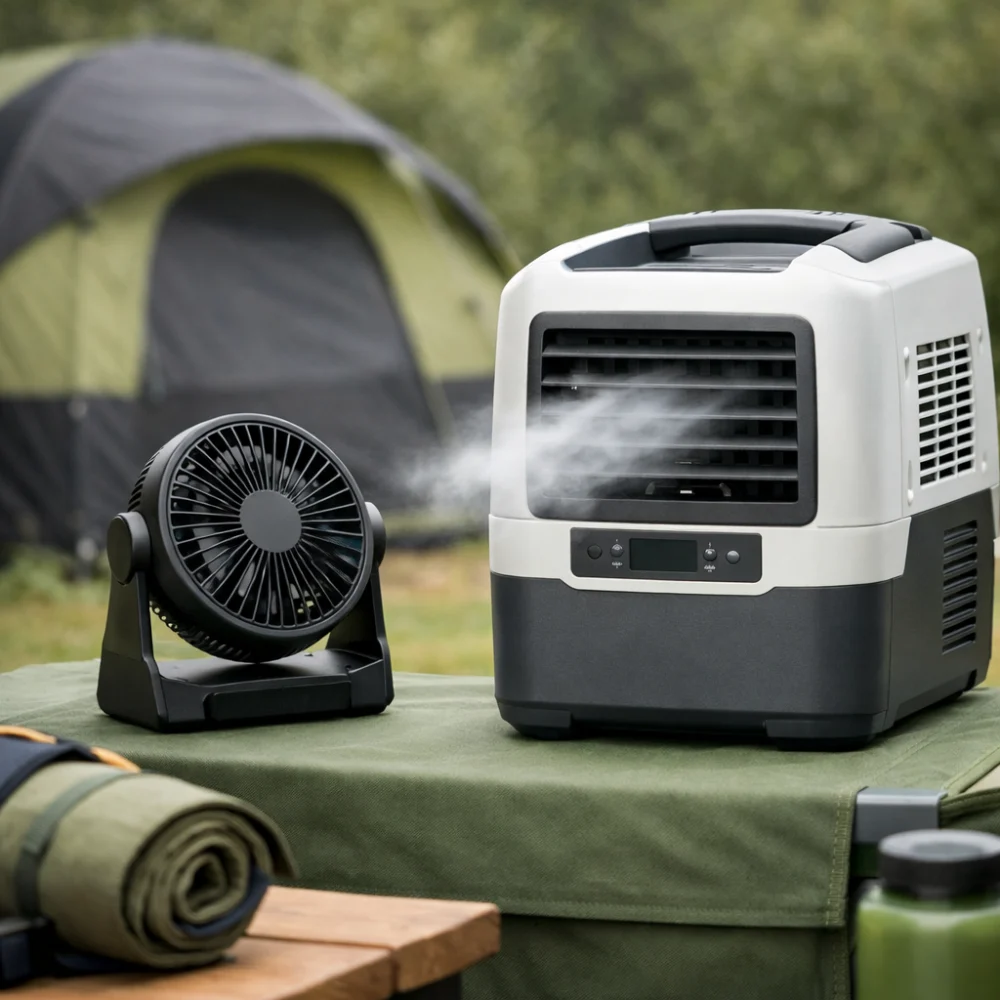
Common mistakes and misunderstandings
- Assuming all portable cooling products do the same job: Some are mainly about airflow, while others are intended to provide more direct cooling support. Check the product description carefully so you know which category of comfort you are really buying.
- Ignoring power requirements until late in the process: A unit can look ideal on paper but still be awkward if your campsite power arrangement does not suit it. Confirm the supply type and any connection needs first.
- Overlooking noise: A quieter product is often more pleasant in a tent or overnight setup. If sleep is part of the use case, treat sound as a key factor rather than a minor detail.
- Choosing by size alone: Smaller is not automatically better if the product becomes too limited for the space. Balance portability against the kind of comfort improvement you actually want.
Safety and suitability caveats
Portable camping air conditioners should be chosen with the campsite environment in mind. Make sure the unit is suitable for the space, power source and conditions where you intend to use it, and avoid assuming it will behave like a domestic air conditioner in an enclosed home setting. If a product needs ventilation, drainage or a particular setup, treat those requirements as part of the buying decision.
It is also sensible to consider how the unit will be handled in a busy camp environment. Equipment that is heavy, awkward or dependent on a narrow setup may be less practical than it first appears.
Maintenance, storage and lifespan considerations
Cooling equipment often needs a little more attention than a simple fan. Depending on the model, you may need to think about cleaning, emptying moisture collection, checking connections or storing the unit somewhere dry between trips. Those practical needs are worth comparing because they affect how easy the product is to live with over time.
If you only camp occasionally, convenience may matter more than advanced capability. If you travel often, easier storage and lower upkeep can make a noticeable difference to long-term satisfaction.
How to compare options efficiently
- Start with your camping setup and power source.
- Decide whether you need true cooling support or simply better airflow.
- Compare size, portability, noise and moisture management.
- Check the intended use and any space guidance on the product page.
- Balance convenience against how much cooling improvement you really need.
Summary buyer decision checklist
- Does it suit your campsite power setup?
- Is it intended for the kind of space you want to cool?
- Will the size and weight be practical for travel and storage?
- Is the noise level likely to suit sleep or shared use?
- Are drainage, ventilation or other setup needs acceptable?
- Does it offer the level of comfort improvement you are actually after?
Frequently asked questions
Are portable camping air conditioners the same as fans?
No. Fans mainly move air, while portable camping air conditioners are bought for a stronger cooling purpose or a more specific cooling setup. The difference matters because a fan may be simpler and more suitable for many camping trips.
Do I need mains power for one of these?
Not always, but the power source is one of the most important checks. Some products may suit mains hook-up more naturally, while others may be designed around different supplies. Always confirm the individual product page before deciding.
Will a portable camping air conditioner cool a whole tent?
That depends on the product and the size of the space, so it is not safe to assume whole-tent cooling. In many cases, buyers are really looking for improved comfort rather than household-style cooling. Check the intended use carefully.
Are these useful for caravan or awning setups?
They can be, if the model is suitable for the space and power arrangement. More fixed or semi-fixed setups often make the practical side of cooling easier, but you should still check portability, drainage and ventilation needs.
How important is noise?
Very important if you plan to sleep near the unit or use it in a small shared space. Even modest sound can become noticeable overnight. If a product listing gives noise guidance, treat it as a meaningful comparison point.
What is the main mistake shoppers make?
The most common mistake is buying for the idea of camping air conditioning without checking how the unit actually fits the campsite setup. Power, placement and intended use matter just as much as the cooling claim.