Putting Mats
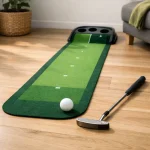
Putting mats are designed for golfers who want a simple way to practise short putts and build a more repeatable stroke at home or in another indoor space. They offer a convenient surface for working on pace, aim and confidence without needing a full putting green.
When comparing putting mats, it is worth looking at length, putting surface and how the mat sits on the floor. Some options are better for tight spaces, while others give a longer roll for more varied practice.
 Buyers guidePutting Mats Buyer GuideWhat to compare before you choose
Showing 1–12 of 90 results
-
Putting Mats
2 Pack Plastic Putting Green Hole Cup Rings, 7.2 cm
Original price was: £8.34.£7.99Current price is: £7.99. View on Amazon -
Putting Mats
5x4ft Golf Hitting Mat with Dual Tee and Chipping Areas
Original price was: £89.99.£79.99Current price is: £79.99. View on Amazon -
Putting Mats
Amazon Basics Golf Putting Mat 3-Hole Kidney-Shaped Practice Green, 270 x 86 cm
Original price was: £37.45.£30.01Current price is: £30.01. View on Amazon -
Putting Mats
Amazon Basics Golf Putting Mat with Automatic Ball Return, 274 x 37 cm
Original price was: £42.72.£32.04Current price is: £32.04. View on Amazon -
Putting Mats
CHAMPKEY Professional Hazard Golf Putting Green with Gates and Mirror
£69.99 View on Amazon


Putting mats give golfers a practical way to practise putting away from the course. They are commonly used for short, repeated drills that help you work on alignment, start line and speed control. Because this category focuses on practice surfaces rather than full greens, the main value is convenience: you can set up a putting space at home and revisit the same stroke regularly.
What to compare in a putting mat
Length is one of the first things to check. A shorter mat can suit limited indoor space, while a longer one may offer more room for varied practice and longer rolls. It is also worth considering the surface finish, since that affects how smoothly the ball travels and how realistic the practice feels.
Some mats are designed to sit flat and stay in place easily, while others may need a little more care when laying them out. If you plan to move the mat between rooms or store it after use, portability and ease of rolling or folding may matter as much as the practice area itself.
How the layout can affect practice
Many putting mats are intended for simple repetition, which is useful when you want to focus on stroke consistency. Others may include target areas or marked lines to help with alignment and aim. These features can be helpful, but the right choice depends on how you prefer to practise and how much visual guidance you want.
It is also sensible to check the width of the mat if you want a little more tolerance during practice. A narrower mat may suit compact spaces, while a wider one can feel more forgiving. For regular use, think about how easy the mat is to clean and whether the backing or base is suitable for the floor where you plan to use it.
Choosing the right fit for your space
Before comparing listings, think about where the mat will be used most often. A spare room, hallway or office space may call for something easy to position and store, while a dedicated practice area may justify a larger layout. Checking the individual product details will help you match the mat to your available space and the type of practice you want to do.