

Quickdraw carabiners are part of the connection between rope, protection and the rest of a climbing system, so the right choice depends on how and where they will be used. If you are comparing options for climbing or mountaineering, it helps to think about gate style, clipping feel, compatibility and the overall role each carabiner will play.
This guide is for buyers who want a clear way to compare quickdraw carabiners without getting lost in technical detail. It focuses on the features that usually matter most, the common trade-offs and the checks that are worth making on the individual product page.
Because climbing equipment is safety-sensitive, it is sensible to treat category-level advice as a starting point rather than a substitute for the exact product information. Specifications vary by model, so always check the individual product page before buying.
What should you look for first?
Start with the intended use, then compare the gate shape, the size and feel of the carabiner, and how easily it will be clipped in the situations you expect. The main trade-off is usually between easier handling and the specific demands of your route, system or experience level. A good first choice is the one that fits the way you climb, not simply the one with the most features.
| Feature | What it means | Why it matters | What to check |
|---|---|---|---|
| Gate style | The way the carabiner opens and closes | Affects clipping feel and how intuitive it is to use | How it suits your intended climbing use and preferences |
| Shape | The overall form of the carabiner | Can influence handling and whether clipping feels straightforward | Whether the shape looks comfortable for the way you plan to use it |
| Handling | How easy it is to hold, clip and unclip | Important when you want efficient, confident use | Any product details that describe clipping behaviour or ergonomics |
| Compatibility | How well it suits your rope, system and wider gear | Prevents poor matches between equipment choices | Product notes on intended use and any restrictions |
| Pack and pair consistency | Whether one or more are being used together | Useful when building a matched set for the same style of use | Whether the listing describes a single item or a pair, and any included components |
Key decision criteria
Gate style and clipping feel
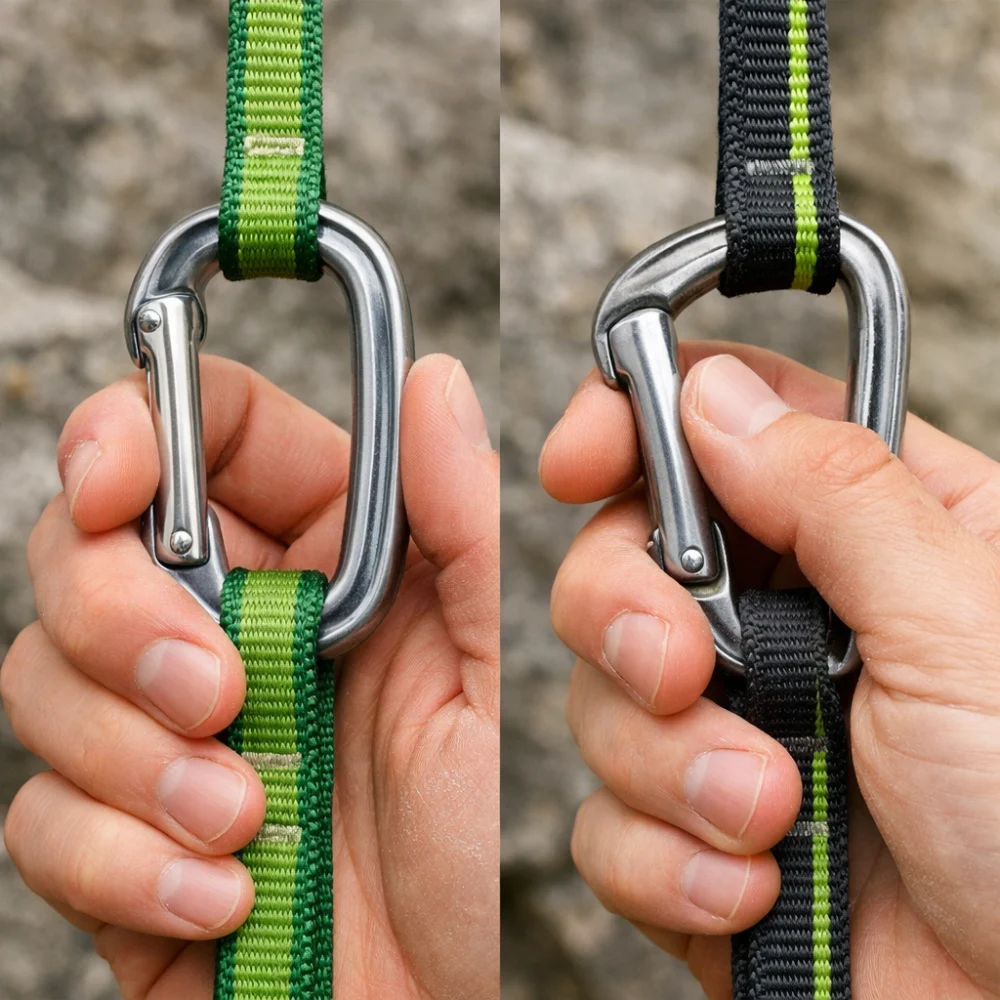
The gate is central to how a quickdraw carabiner behaves in use. Some buyers want the simplest, most familiar feel, while others are mainly looking for easier clipping in awkward positions. The better choice depends on whether you value straightforward handling, reduced fuss or a particular style of use.
Shape and handling
Shape affects how the carabiner sits in the hand and how clearly it presents the clipping end. A more compact feel may suit some users, while others prefer something easier to grasp quickly. The trade-off is often between compactness and a more obvious, easy-to-handle form.
Intended use
Think about where the quickdraw carabiners will be used and whether they are meant for a specific climbing context. A buyer who wants gear for occasional use may prioritise simplicity, while a more frequent user may care more about consistent handling and ease of clipping. The key is to match the product to the intended environment rather than assuming one shape suits everything.
Product information quality
For this category, the most useful details are usually the ones that explain how the item is intended to behave in practice. Look for clear wording on the product page and avoid assuming that a familiar-looking design automatically means the same experience across models.
Specifications vary by model, so always check the individual product page before buying.
Product types and variants
Within quickdraw carabiners, the main variation is usually around how the carabiner is shaped and how the gate is designed to feel during clipping. Some options are likely to prioritise easier handling, while others may be chosen for a more specific use case or preference. The important point is not to look for a universally superior design, but for the design that matches your intended use.
If you are comparing more than one option, it helps to ask whether the difference is about comfort, speed, familiarity or suitability for a particular climbing style. That makes it easier to judge whether a feature is genuinely useful or just different on paper.
Who needs what?
| Buyer need | What to prioritise | Why it may matter |
|---|---|---|
| Beginner-friendly choice | Straightforward handling and clear product information | Helps reduce uncertainty and makes the first purchase easier to assess |
| Frequent use | Consistent clipping feel and comfortable handling | Small differences become more noticeable over repeated use |
| Route or system-specific use | Suitability for the intended climbing context | The best fit depends on how the equipment will actually be used |
| Gift purchase | Clear, general-purpose design and easy-to-understand listing details | Makes it easier to choose without over-specialising |
Common mistakes and misunderstandings
- Choosing by appearance alone. A carabiner can look familiar while still being better suited to a different kind of use.
- Assuming all quickdraw carabiners feel the same. Small design differences can affect clipping and handling more than buyers expect.
- Ignoring the intended context. The best option is the one that matches your climbing plans, not the one with the most general appeal.
- Overlooking the product page details. Even within one category, the useful differences are often in the listing information rather than the name.
Safety and suitability caveats
Quickdraw carabiners are part of equipment used in climbing and mountaineering, so it is important to check that any item is suitable for your intended activity and wider system. Do not rely on a category page alone for exact details, and avoid assuming that one product will suit every setup.
Pay attention to the exact product information, especially where the listing explains use, compatibility or any limitations. If anything is unclear, treat that as a reason to compare more carefully rather than to guess.
Maintenance, storage and lifespan considerations
Buyers often focus on clipping feel and overlook long-term care, but storage and general handling can affect how well equipment stays in use. Consider how easy the item will be to keep clean, where it will be stored and whether you prefer a design that is simple to inspect at a glance.
Because needs vary, it is sensible to check the individual product information for any care guidance or model-specific notes. For climbing equipment, regular inspection and sensible storage habits are part of choosing a product that suits the way you intend to use it.
How to compare options efficiently
- Decide what kind of use you need the quickdraw carabiner for.
- Compare the gate style and overall handling feel.
- Check whether the shape and design suit your preferences.
- Read the product page for any use, compatibility or limitation notes.
- Choose the option that balances ease of use with the intended climbing context.
Summary buyer decision checklist
- Does the carabiner suit your intended climbing use?
- Does the gate style feel likely to match how you want to clip?
- Is the shape comfortable and practical for your needs?
- Have you checked the individual product page for model-specific details?
- Does the item fit the rest of your equipment plan?
- Are you clear on any limitations before buying?
Frequently asked questions
What is a quickdraw carabiner used for?
It is part of a climbing connection system and is chosen for how it clips and handles in use. Buyers usually compare them on ease of use, intended application and how well they fit the rest of the setup.
Are all quickdraw carabiners the same?
No, the main differences are usually in gate style, shape and handling. Those differences can change how comfortable or intuitive the item feels, especially over repeated use.
Should I choose the simplest design?
Often the simplest choice is a good place to start, especially if you want clear, predictable handling. That said, the best option still depends on the way you plan to use it.
What should I check on the product page?
Look for the intended use, any notes on compatibility and anything that helps explain how the design is meant to feel in practice. If the listing is vague, compare it more carefully against other options.
Is one shape always better than another?
No single shape suits every buyer. Shape affects comfort, clipping feel and overall handling, so the better choice depends on personal preference and intended use.
Why does model-specific information matter so much?
Because products in the same category can differ in useful ways even when they look similar. The safest approach is to treat the category as a starting point and then confirm the exact details on the individual product page.