

Sailing instruments help you read conditions, monitor performance and make better decisions on the water. For some sailors, a simple setup that covers the essentials is enough; for others, it is more useful to compare how clearly data is displayed, how the unit is powered and how well it fits the boat’s existing setup.
This guide focuses on choosing the right type of sailing instrument for your needs, rather than on any one model. It is useful whether you are replacing a worn unit, adding instruments for the first time or refining a system you already use.
What should you look for in sailing instruments?
The best starting point is to match the instrument to the information you actually want at the helm or below deck. A compact, easy-to-read display may be ideal if you want simple sailing data at a glance, while a more detailed setup may suit sailors who want to compare several readings together. Specifications vary by model, so always check the individual product page before buying.
| Feature | What It Means | Why It Matters | What To Check |
|---|---|---|---|
| Display clarity | How easily the readings can be seen in bright light, spray or from a distance | Clear data is easier to use quickly when conditions change | Screen size, number layout and whether the display suits your viewing position |
| Information shown | The type of sailing data the instrument presents | Different sailors need different levels of detail | Whether it shows the readings you rely on most often |
| Power and wiring | How the unit is powered and connected | Installation complexity and upkeep can vary | Compatibility with your boat’s existing electrical setup and cabling |
| Mounting style | How and where the instrument fits on the boat | Placement affects visibility and convenience | Available space, viewing angle and whether the location suits your crew |
| System compatibility | How the instrument works with other onboard equipment | Some buyers want a standalone display; others want a wider system | Accepted connections, interfaces and any required matching equipment |
Which factors matter most?
Readability
Readability is often the first thing to consider because an instrument only helps if you can interpret it quickly. Larger digits, a sensible layout and a display position that is easy to glance at can matter more than extra features. If you sail in mixed light or want the display visible from more than one position, prioritise clarity over complication.
The data you actually use
Some sailors mainly want a small number of core readings, while others prefer a broader set of information. It is easy to overbuy on features that are rarely checked. A better approach is to note the readings you use most often and compare each product page against that shortlist.
Installation and fit
Mounting, power and cabling can shape both convenience and cost. A neat fit is important on a boat because awkward placement can make the instrument harder to read or less practical to use. Check the available space carefully and think about where the display will be easiest to see while sailing.
Compatibility with existing equipment
If you already have onboard electronics, compatibility can be the deciding factor. Some buyers want a self-contained unit, while others need an instrument that works within a wider system. That is one of the most important details to verify on the product page rather than assuming a device will suit every setup.
Types and variants you may come across
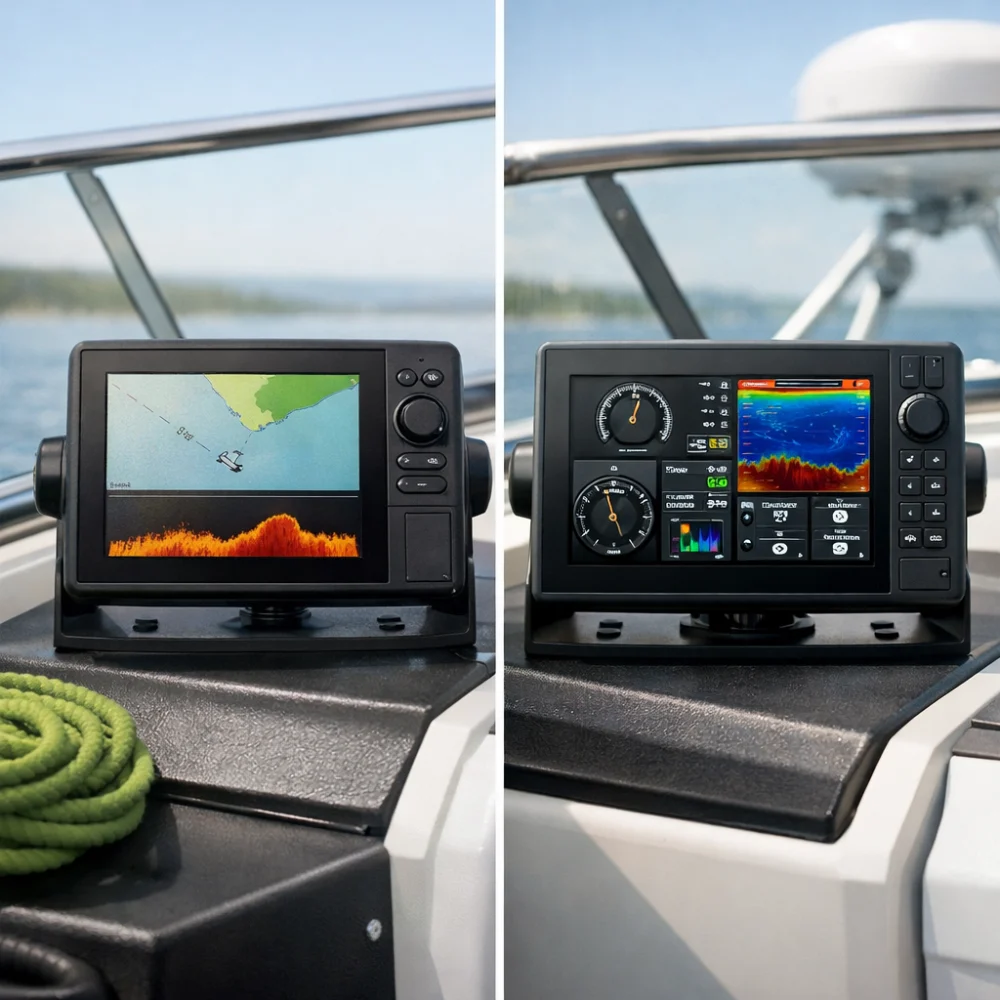
Sailing instruments are often chosen by function rather than by a single fixed style. You may see simpler readouts intended for basic monitoring, more information-rich displays for active performance tracking, or units intended to integrate into a broader onboard system.
A simpler instrument can suit sailors who want direct, easy-to-read information without much setup. A more feature-rich option may suit people who want to compare several values at once or use the display as part of a larger electronics arrangement. The trade-off is usually between simplicity and the extra configuration that more advanced systems may need.
Choosing by sailor type or use case
| Buyer need | Likely priority | What that means in practice |
|---|---|---|
| First-time buyer | Simplicity | Focus on a clear display, straightforward setup and only the readings you are most likely to use |
| Replacement buyer | Fit and compatibility | Check dimensions, mounting approach and whether the new unit suits the existing arrangement |
| Performance-focused sailor | More detailed information | Look for the readings and display style that support quicker, more informed decisions |
| Casual or occasional sailor | Ease of use | A compact, easy-to-understand instrument may be more practical than a complex system |
| Upgrade buyer | Integration | Compare how the new instrument will sit alongside current onboard equipment and power arrangements |
Common mistakes to avoid
- Choosing for extra features you are unlikely to use, instead of the readings that matter most.
- Overlooking where the display will actually be viewed from on board.
- Assuming a replacement will fit or connect exactly like the old one without checking the details.
- Prioritising a large amount of information over ease of reading in real conditions.
- Forgetting to check whether the instrument is intended to work alone or as part of a wider system.
Safety and suitability checks
Sailing instruments support decision-making, but they should be treated as aids rather than the only source of information. The right choice depends on how and where you sail, how much data you need and whether the display will remain practical when conditions are less comfortable. For anything that affects installation or system compatibility, check the product page carefully before deciding.
Maintenance, storage and lifespan considerations
Instruments used on boats are exposed to moisture, movement and regular handling, so it makes sense to think about upkeep before you buy. Ease of cleaning, the robustness of the housing and how neatly the unit can be stored or covered when not in use may all affect long-term satisfaction. If a model depends on wiring, batteries or a connected system, factor in those practical ownership details as well.
How to compare options efficiently
- Decide what information you want the instrument to provide.
- Work out whether you need a simple standalone unit or something that fits into a wider setup.
- Compare display clarity, mounting style and power or connection requirements.
- Check the product page for compatibility, installation needs and any limitations.
- Choose the option that matches your sailing style without adding unnecessary complexity.
Summary buyer decision checklist
- Does the instrument show the readings you actually need?
- Will the display be easy to read from your normal position?
- Does the mounting style suit the space available on your boat?
- Is the power or connection method suitable for your setup?
- Will it work as a standalone unit or with the equipment you already have?
- Have you checked the individual product page for model-specific details?
Frequently asked questions
What are sailing instruments used for?
They help sailors monitor information that supports navigation, performance and general onboard awareness. The exact readings depend on the model, so it is worth focusing on the data you actually want to see rather than assuming every unit does the same job.
Do I need a full instrument system?
Not always. Some buyers are well served by a simple display, while others prefer a broader system that brings several readings together. The right choice depends on how much information you need and how much complexity you are comfortable with.
Are all sailing instruments compatible with every boat?
No, compatibility varies. Mounting space, power arrangements and system connections can all affect whether a unit is suitable, so it is important to check the individual product page carefully before buying.
What matters more: features or readability?
For many buyers, readability comes first because an instrument that is hard to read quickly is less useful in practice. Extra features are only worthwhile if they support the way you sail and do not make the display more confusing.
Can I use a sailing instrument as a replacement for an older unit?
Often yes, but only if the replacement suits the existing space, connections and intended use. A like-for-like replacement may still differ in display style or setup requirements, so compare details rather than relying on the old unit’s appearance alone.
How do I avoid buying more instrument than I need?
Start with the readings you use most often and the viewing position you need to serve. If a simpler unit covers those needs clearly, there is usually little reason to choose a more complex option.