

Saltwater fishing lures are chosen as much for the conditions as for the fish you hope to catch. The right option depends on where you are fishing, how you plan to retrieve it and whether you need something for casting, working near the surface or fishing deeper water.
If you are comparing lures for sea fishing, it helps to think about target species, water clarity, current, casting distance and the tackle you already have. A lure that looks similar on a shelf can behave very differently once it is in the water.
This guide is for anglers who want a practical way to compare saltwater lure options without getting lost in product names or cosmetic details.
What should you look for in a saltwater fishing lure?
The best starting point is to match the lure to your fishing situation, then compare the details that affect how it swims, casts and holds up in saltwater. For many buyers, the main trade-off is between a lure that is easy to use and one that is better suited to a specific technique or condition.
Specifications vary by model, so always check the individual product page before buying.
| Feature | What it means | Why it matters | What to check |
|---|---|---|---|
| Lure type | The general style of lure and how it is meant to move | Different styles suit different depths, retrieves and fishing situations | Whether it is intended for surface, mid-water or deeper presentation |
| Action | How the lure behaves in the water when retrieved or paused | Action affects how natural or noticeable the lure appears | Whether the product description mentions wobble, darting, sinking or floating behaviour |
| Size and profile | The overall shape and visible silhouette of the lure | Profile can influence casting, presentation and how closely the lure matches local baitfish | Whether the size suits your target fish and conditions |
| Weight | How much the lure weighs | Weight affects casting distance and how the lure fishes in wind or current | Whether it works with your rod and line setup |
| Hooks and hardware | How the lure is rigged and connected | Hardware affects convenience, durability and what checks you may need to make before use | Hook arrangement, split rings and any note about corrosion resistance |
Key decision criteria explained
Fishing depth and presentation
Some lures are intended to work on or near the surface, while others are made to sink or run deeper. Your choice should match the water you want to cover and the part of the water column where fish are feeding. A surface lure can be exciting and visible, but it is not always the right choice if fish are holding lower down.
Castability
For shore fishing, castability can matter as much as appearance. A lure that casts well may help you reach feeding fish, especially where wind, surf or distance are factors. Heavier lures can often cast farther, but they may not suit every rod or fishing style.
Action versus simplicity
Some anglers want a lure that produces a clear action with relatively simple retrieves, while others prefer something that rewards a more specific technique. There is often a trade-off between an easy all-round option and a lure that needs more from the angler but offers finer control.
Durability in saltwater
Saltwater use places more demand on finishes and fittings than freshwater fishing. Look for product information that explains the lure’s materials, hooks and any corrosion-resistant features. Even then, sensible care after use still matters.
Target species and local bait
A lure does not need to be an exact copy of local prey, but colour, size and profile should make sense for the species and water you are fishing. Clear water, coloured water and low-light conditions can all change which look is most convincing.
Common saltwater lure types and how they differ
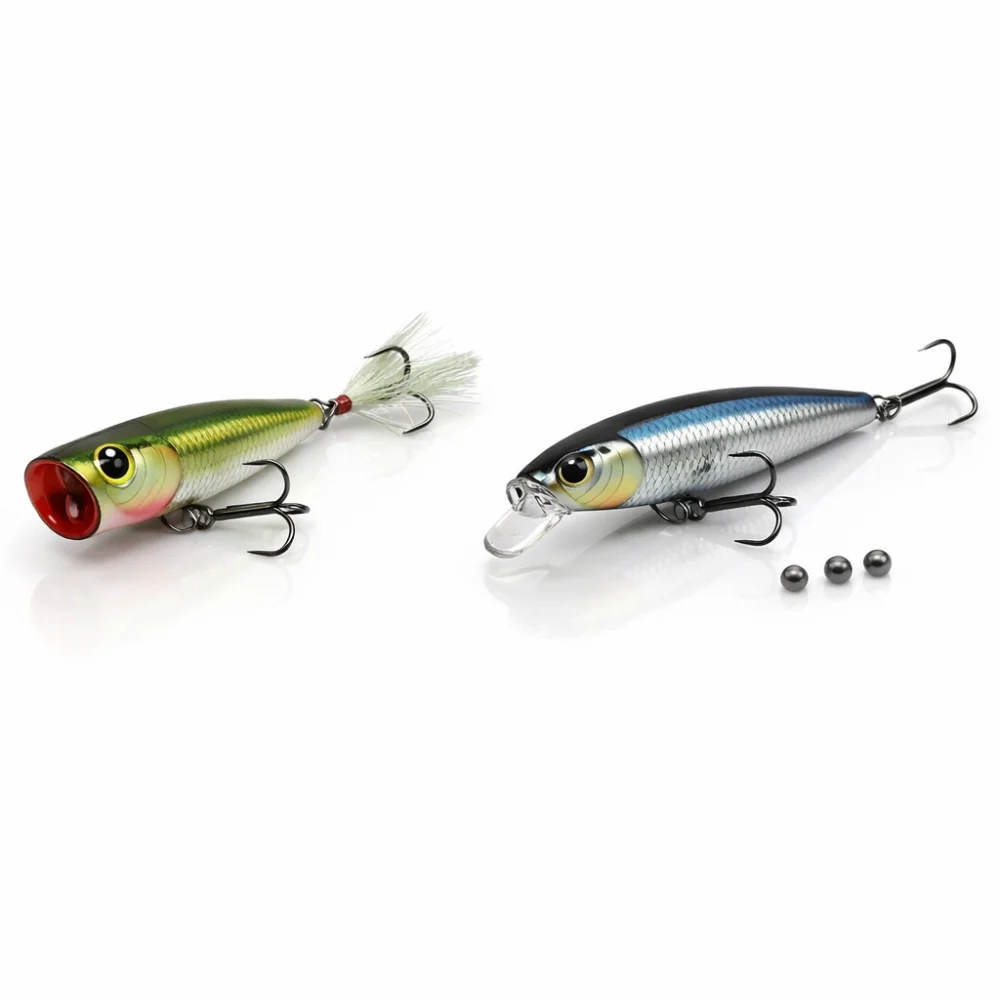
Saltwater lure ranges often include a mix of surface, suspending, sinking and casting-friendly designs. The useful comparison is not just how they look, but how they are meant to be fished.
- Surface lures: Useful when fish are feeding high in the water or you want visible strikes. Their main limitation is that they are less suited to situations where fish are deeper.
- Sinking lures: Helpful when you need to cover more depth or fish in moving water. The trade-off is that they usually require more attention to retrieve speed and count-in time.
- Floating or suspending styles: These can be useful when pauses matter or when you want a lure to hold a certain level. Their behaviour depends on the exact design and the retrieve used.
- Long-casting styles: Often chosen for reaching distance from shore or working in wind. They are practical, but may not give the same movement as a more specialised presentation lure.
Which type suits your needs?
| Your need | What to prioritise | Why |
|---|---|---|
| Shore fishing with long casts | Castability, weight and stable flight | Distance and control can matter more than an elaborate action |
| Fishing around surface-feeding fish | Surface or shallow-running behaviour | It keeps the lure in the strike zone |
| Fishing deeper water | Sinking or deeper-running presentation | It helps reach the level where fish are holding |
| Simple all-round choice | Clear action and straightforward retrieve requirements | It is easier to use across different sessions |
| Angler replacing worn tackle | Hooks, fittings and saltwater suitability | Small details can affect reliability over time |
Common mistakes and misunderstandings
- Choosing by colour alone: Colour matters, but size, depth and action usually have a bigger effect on whether a lure is suitable.
- Ignoring rod and line match: A lure may look ideal but still be awkward if it is too light, too heavy or badly balanced for your setup.
- Assuming one lure suits every sea condition: Calm water, surf, tide and visibility can all change which option makes sense.
- Overlooking durability: Saltwater use can be hard on fittings, so it is worth checking the build and looking after the lure after use.
Safety and suitability caveats
Choose lures that suit the fishery, the conditions and your equipment. If you are unsure about local rules, access restrictions or the suitability of a particular setup, check the individual product details and the guidance relevant to where you fish. For any specific model, the product page should be the source of truth for features and intended use.
Maintenance, storage and lifespan considerations
Saltwater lures generally benefit from sensible after-use care, especially if they include hooks, split rings or moving parts. Rinsing and drying practices, storage and how often a lure is used can all affect how long it stays in good condition. It is also worth checking whether the lure needs any consumable parts or periodic replacement items.
How to compare options efficiently
- Start with where and how you fish: shore, boat, shallow water or deeper water.
- Narrow the choice to the lure type that matches that situation.
- Compare size, weight, action and casting behaviour.
- Check the fittings, hooks and any saltwater-specific construction details.
- Look at the individual product page to confirm the lure suits your rod, line and target use.
Summary buyer decision checklist
- Does the lure suit the depth and presentation you need?
- Is the size and weight appropriate for your target fish and conditions?
- Will it cast well enough for your usual fishing spot?
- Does the action match the retrieve style you prefer?
- Are the hooks and fittings suitable for saltwater use?
- Have you checked the individual product page for the exact specifications?
Frequently asked questions
What is the main difference between saltwater and freshwater lures?
Saltwater lures are generally chosen with sea conditions and salt exposure in mind. That can mean different materials, finishes or fittings, but the key buying point is still whether the lure suits the water and the way you plan to fish.
Do I need different lures for shore fishing and boat fishing?
Not always, but the priorities often differ. Shore anglers may care more about casting distance, while boat anglers may focus more on depth, presentation and control close to structure.
How important is lure colour?
Colour can matter, but it is only one part of the decision. Depth, action, profile and visibility in the water are often more important starting points.
Should I choose a heavier lure for saltwater?
Heavier lures can help with casting distance and stability in some conditions, but they are not automatically better. The right weight depends on your rod, the depth you want to fish and how the lure is designed to move.
Are saltwater lures reusable after a few trips?
Many are, provided they are cared for sensibly. Their condition depends on use, exposure to saltwater and how well the fittings and finishes hold up over time.
What should I check before buying a lure online?
Check the lure type, weight, size, action and any notes about saltwater suitability. It also helps to confirm whether it is intended for surface, mid-water or deeper presentation.