


Saltwater gaffs are specialist landing tools for fishing situations where a net may not be the right option. Buyers usually want enough reach, control and strength for the fish they expect to handle, without choosing a gaff that is awkward to store or use on their setup.
This guide focuses on the practical decisions that matter before you compare individual products: shaft length, hook size, handle style, materials and how the gaff will be used aboard a boat or from a fixed fishing position.
If you are choosing your first gaff, start with the way you fish rather than the label on the product. The right choice is usually the one that matches your target fish size, available space and comfort level, not simply the largest or most aggressive-looking option.
Compare Saltwater Gaffs


As an Amazon Associate we earn from qualifying purchases.
What should you look for in a saltwater gaff?
The main trade-off is between reach, control and portability. A longer gaff can help when you need distance, but it may be less convenient in tight spaces. A shorter gaff is easier to manage, but it may not suit every boat layout or landing situation. Specifications vary by model, so always check the individual product page before buying.
| Feature | What It Means | Why It Matters | What To Check |
|---|---|---|---|
| Overall length | How much reach the gaff gives you | Affects how safely and comfortably you can land fish from your position | Match it to your boat, dock or shore setup and the distance you need |
| Hook size and shape | The size and profile of the gaff point | Influences how confidently it engages different fish sizes | Look for a shape suited to the species and landing style you have in mind |
| Shaft material | The material used for the handle or pole | Can affect weight, stiffness, durability and handling feel | Check whether you prefer a lighter carry or a more robust feel |
| Handle grip and control | The surface and ergonomics where you hold it | Improves control when you are using the gaff in wet conditions | Look for a grip that seems secure and comfortable for one-handed use |
| Storage and transport | How easy it is to stow between uses | Important if space is limited on a boat or vehicle | Consider whether the design suits your storage area and carrying needs |
Key decision criteria explained
Length and reach
Length is one of the first things to decide because it affects both usability and confidence. Too short can leave you working awkwardly at the waterline; too long can be harder to control and store. Think about where you fish, where you stand and how much clearance you have around you.
Hook size and intended use
The hook end should make sense for the size and type of fish you expect to land. A more substantial hook may suit bigger, heavier fish, while a smaller one can feel less cumbersome for lighter work. Avoid assuming that bigger is automatically better; the useful choice is the one that matches the task.
Material and handling feel
Materials influence how a gaff feels in use and how easy it is to carry. Some buyers prioritise lighter handling, while others prefer a more solid feel. If the product page gives material details, compare them in terms of weight, stiffness and how easy they may be to rinse and store after use.
Grip, balance and control
A gaff is easier to manage when it feels balanced and secure in the hand. That matters especially in wet conditions or when you need to react quickly. Look for descriptions that suggest a practical grip or handle design, then judge whether that suits your hand size and working space.
Common gaff types and variants
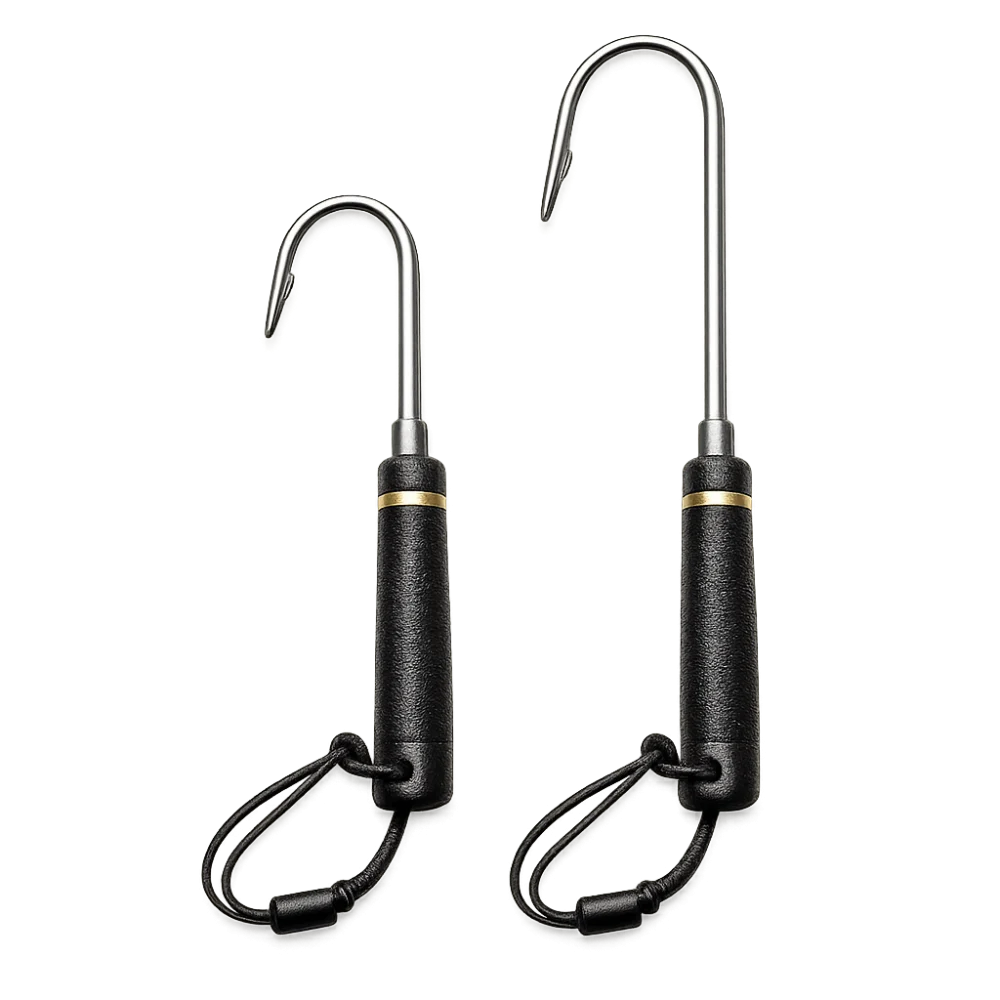
Saltwater gaffs are usually chosen by length, hook style and how they are carried rather than by a long list of complex features. Some buyers want a straightforward fixed design for dependable use, while others may prefer a format that is easier to stow. The main limitation is that a design optimised for compact storage may not offer the same feel as a longer, more specialised landing tool.
Because these products can vary, it helps to think in terms of use case rather than assuming all gaffs are interchangeable. A compact option may be practical on smaller craft, while a longer one may better suit situations where distance matters more than easy storage.
Which gaff suits which buyer?
| Buyer need | What to prioritise | Why |
|---|---|---|
| Small-boat use | Manageable length, good grip, easy stowage | Space is limited and control matters more than maximum reach |
| Shore or dock fishing | Reach, control and comfortable handling | You may need to land fish from a less predictable position |
| Targeting larger saltwater fish | Appropriate hook size and a sturdy feel | The landing tool needs to suit the size and strength of the fish |
| Occasional use | Simplicity and easy storage | A straightforward design is often easier to keep ready when needed |
Common mistakes and misunderstandings
- Choosing for size alone: a longer or more aggressive-looking gaff is not always easier to use.
- Ignoring storage space: if a gaff is awkward to stow, it may become inconvenient to carry and use.
- Overlooking grip comfort: a secure handhold can matter as much as the hook itself in wet conditions.
- Assuming one design suits every fish: the best match depends on what you normally target and how you land it.
Safety and suitability caveats
Choose a saltwater gaff only for the situations it is intended to handle, and make sure its size and reach suit your setup. Consider who will use it, how much space is available and whether the product page provides enough detail for your needs. If a specification is not clear, it is safer to keep comparing rather than assume it will suit every use.
Maintenance, storage and lifespan considerations
Saltwater use can be hard on metal and fittings, so it is sensible to think about rinsing, drying and storage before you buy. A design that is easy to clean and stow is often more practical than one that only looks robust on the page. If a gaff has any moving parts or separate fittings, check whether they may need extra attention after use.
How to compare options efficiently
- Decide how and where you will use the gaff most often.
- Choose the length that gives enough reach without making control awkward.
- Compare the hook shape, handle feel and storage practicality.
- Check the material and any care considerations that affect ownership.
- Read the individual product page carefully before deciding.
Summary buyer decision checklist
- Does the length suit your boat, dock or shore setup?
- Is the hook style appropriate for the fish you expect to land?
- Will the handle feel secure in wet conditions?
- Can you store and carry it conveniently?
- Have you checked the individual product page for the exact details you need?
Frequently asked questions
Do I need a long gaff for saltwater fishing?
Not always. A longer gaff gives more reach, but that only helps if you can still control it comfortably and store it safely. The right length depends on where you fish and how far you need to reach.
What matters more: hook size or handle length?
Both matter, but they solve different problems. Hook size affects how the gaff engages the fish, while handle length affects reach and handling. For most buyers, the best choice balances both rather than maximising either one.
Is a lighter gaff always better?
A lighter design can be easier to carry and manoeuvre, but weight is only one part of the decision. Balance, stiffness and grip can matter just as much. A slightly heavier gaff may still be the better practical choice if it feels more controlled in use.
Can one saltwater gaff suit every type of fishing trip?
Usually not. A gaff that works well on one boat or for one target fish may be less convenient elsewhere. It is better to match the product to your typical fishing conditions than to expect one tool to cover every situation.
What should I check if I am buying a gaff as a gift?
Focus on the recipient’s usual fishing style, the space they have for storage and whether they already use a gaff of a particular size. If you are unsure, choose a practical, straightforward option rather than a highly specialised design.
How important is material choice?
Material affects handling feel, weight and how the gaff may cope with regular saltwater use. It does not have to be the deciding factor, but it is worth considering alongside length and grip. Specifications vary by model, so always check the individual product page before buying.
More Saltwater Gaffs
See all 97 Saltwater Gaffs →


As an Amazon Associate we earn from qualifying purchases.