

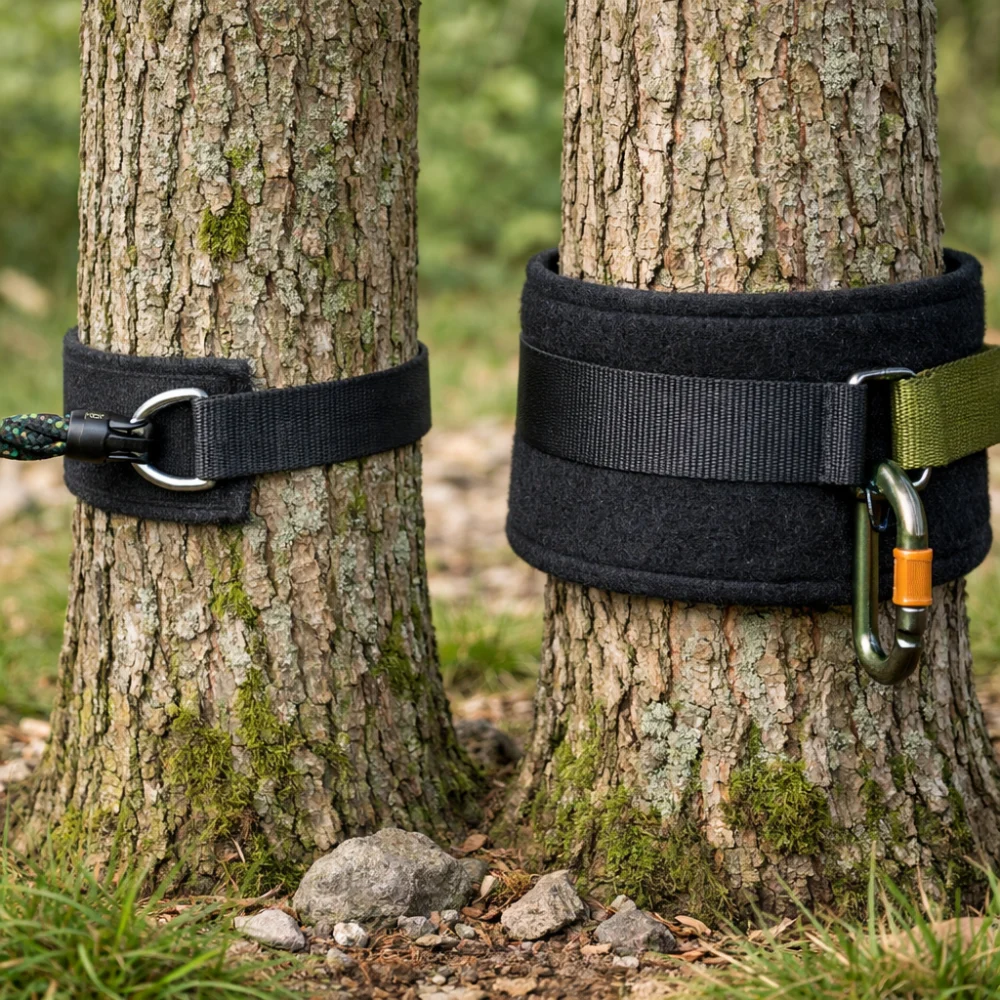
Slackline tree protection is a simple but important part of setting up a slackline responsibly. It sits between the tree and the line or anchor area to help reduce rubbing and spreading pressure over a wider contact area.
If you are buying for a home garden, park session or regular practice spot, the main decision is not just whether you need protection, but what kind is appropriate for the tree size, line width and way the system is used. The right choice should fit the setup neatly without being awkward to place or remove.
This guide keeps the focus on buying decisions rather than setup instructions. It is here to help you compare the common features that matter and avoid choosing protection that is too small, too narrow or unsuitable for the rest of your slackline kit.
Compare Slackline Tree Protection


As an Amazon Associate we earn from qualifying purchases.
What should you look for in slackline tree protection?
The best starting point is a product that matches the scale of your setup and gives enough coverage for the tree and contact area involved. The main trade-off is usually between broader coverage and easier handling: more coverage can be reassuring, but bulky protection may be less convenient to position and store.
Specifications vary by model, so always check the individual product page before buying.
| Feature | What It Means | Why It Matters | What To Check |
|---|---|---|---|
| Coverage area | The size of the protected contact zone | Helps spread load and reduce rubbing at the tree | Whether it suits the tree size and the placement used in your setup |
| Width and length | The physical dimensions of the protection | Affects how well it wraps or covers the contact point | That it is not too narrow for the line or attachment area |
| Attachment method | How the protection stays in place | Influences ease of use and how securely it sits | Whether the fixing method works with your slackline system |
| Padding or construction | The material and structure used to cushion contact | Can affect comfort, durability and packability | How robust it appears and whether it suits regular use |
| Portability | How easy it is to carry and store | Important if you move between locations often | Whether it folds, rolls or packs away conveniently |
Key decision criteria explained
Coverage and fit
Coverage is the first thing to think about because it determines how much of the tree is shielded at the contact point. A larger tree or a wider contact area generally calls for more generous protection, while a smaller setup may only need a more compact option. The trade-off is that bigger protection can be slightly less convenient to carry and fit neatly into a bag.
Width, length and line position
Width and length affect whether the protection actually sits where it should. If it is too short or narrow, part of the contact area may remain exposed; if it is oversized, it may be fiddly to place. Check the stated dimensions against your slackline arrangement and the size of the tree or anchor point you expect to use.
Material and construction
Tree protection can be made in different constructions, and the useful question is how that construction balances cushioning, durability and bulk. Softer materials may be easier to handle around the tree, while more structured options may feel sturdier or stay in shape better. The best choice depends on whether you prioritise compact packing, repeated use or a more substantial feel.
Attachment and usability
How the protection attaches matters because a poorly matched fixing method can make the whole system awkward. Some buyers prefer a simple wrap-style approach, while others want a design that is quicker to position and adjust. Look for clear product information on how it is intended to be held in place and whether that suits your existing slackline kit.
Types and variants within this category
Within slackline tree protection, the main differences are usually about shape, size and how the product is secured rather than about radically different product types. Some options are more compact and minimal, while others are broader or more heavily padded. A compact version may suit occasional use and easy carrying, while a larger one may suit a more established setup where coverage is the priority.
Which option suits which buyer?
| Buyer need | What tends to matter most | Why |
|---|---|---|
| Occasional home use | Simple handling and sensible coverage | It should be easy to put on, remove and store between sessions |
| Regular practice | Durability and repeatable fit | Frequent use makes robust materials and reliable placement more important |
| Portable kit | Compact packing and manageable weight | You may want protection that travels easily with the rest of the line |
| Broader contact point | Generous size and suitable dimensions | The tree and setup may need more coverage than a minimal option provides |
Common mistakes to avoid
- Choosing by appearance alone: a neat-looking piece is not enough if the size does not suit the tree or contact area.
- Assuming one size suits every setup: line position, tree thickness and attachment style can all affect fit.
- Overlooking portability: a bulky protector may be fine if it stays in one place, but less convenient if you move often.
- Forgetting compatibility with the rest of the system: the fixing method should make sense alongside the slackline kit you already use.
Safety and suitability considerations
Tree protection should be chosen with the intended use in mind, but it does not replace careful setup or good judgement. Check that the product is suited to the trees and slackline arrangement you plan to use, and do not assume every protector will work equally well in every situation.
If you are unsure about fit, coverage or attachment method, compare the product information closely before buying rather than relying on the category name alone. That is especially important if you are using the same equipment in more than one location.
Maintenance and storage
Most tree protection is chosen for simple, practical use, so easy cleaning and straightforward storage are worth considering. If it will be used outdoors, think about how it packs away after wet or muddy sessions and whether it can be stored without becoming awkward or damaged.
For regular use, durability and ease of drying or cleaning may matter more than a very compact fold. The more often you move the kit, the more helpful it is when the protection is easy to roll, fold or stow with the rest of your gear.
How to compare options efficiently
- Decide where and how often you will use the slackline.
- Check the likely tree size and contact area.
- Compare the width, length and coverage of each option.
- Look at the attachment method and whether it suits your existing kit.
- Balance portability against durability and coverage.
- Read the individual product page carefully before choosing.
Summary buyer decision checklist
- Does the size look suitable for your tree and setup?
- Is the coverage broad enough for the contact area?
- Does the attachment method fit your slackline system?
- Is it easy to carry, store and clean?
- Does the product information match the way you plan to use it?
Frequently asked questions
Do I need slackline tree protection for every setup?
It depends on where and how you are using the slackline. If your setup involves a tree contact point, protection is generally worth considering because it is designed for that kind of use. The exact level of coverage or padding you need can vary with the tree size and the rest of the system.
How do I know what size to choose?
Start with the likely contact area rather than the product name. A larger tree or wider contact point usually needs more generous protection, while a compact setup may work with a smaller piece. Check the dimensions on the product page and compare them with your intended use.
Is thicker padding always better?
Not necessarily. Thicker or broader protection may suit some setups, but it can also be bulkier and less convenient to handle. The better choice is the one that gives appropriate coverage without making the kit unnecessarily awkward.
Can I use the same protector with different slacklines?
Sometimes, but only if the size and attachment method suit each setup. A protector that works well with one line arrangement may not be ideal for another. It is worth checking fit and compatibility carefully before assuming it will transfer across different kits.
What makes one tree protector easier to live with than another?
Practical details such as how it folds, how it attaches and how much space it takes up matter a lot. If you move equipment often, a simpler and more portable option may be more convenient than a larger one, even if both provide similar coverage.
Should I prioritise portability or durability?
That depends on how often you use the slackline and where you take it. Occasional users often value easy storage and transport, while regular users may place more weight on sturdier construction. The right balance is the one that suits your actual routine.
More Slackline Tree Protection
See all 95 Slackline Tree Protection →


As an Amazon Associate we earn from qualifying purchases.