

Fishing spoons are a straightforward lure category, but there are still plenty of choices that affect how they move, how far they cast and when they are most useful. If you are comparing spoons for the first time, the main task is to match the lure’s shape and weight to your target species, water conditions and retrieve style.
This guide focuses on buying decisions rather than fishing technique. It should help you understand the common design choices, the trade-offs between them and the checks worth making before you pick a spoon.
Spoons can suit anglers who want a simple lure with a strong wobble, a compact profile or an option that can cover water efficiently. The details matter, though: a spoon that looks similar on paper may behave very differently once it is in the water.
What should you look for when choosing a spoon?
The best starting point is usually the spoon’s shape and weight. Those two factors influence the action, casting distance and the speed at which the lure works effectively. From there, the finish, hook setup and intended fishing conditions help narrow the choice. Specifications vary by model, so always check the individual product page before buying.
| Feature | What it means | Why it matters | What to check |
|---|---|---|---|
| Shape | The overall body profile and curvature of the spoon | Changes the wobble, flash and how the lure tracks through the water | Whether it is designed for a broad, fluttering action or a tighter movement |
| Weight | How heavy the lure is | Affects casting distance, sink rate and the depth you can reach | Whether the weight suits your rod, line and the water you fish most often |
| Finish | The visible surface appearance | Can influence how much flash or contrast the lure shows | Whether you want a more reflective or more subdued look |
| Hook setup | The way the hook is fitted to the spoon | Affects presentation, snagging risk and replacement convenience | How the hook is mounted and whether any components are replaceable |
| Intended use | The conditions or style the lure is designed around | Helps you avoid choosing a spoon that is awkward for your target waters | Any notes on freshwater, saltwater, casting, trolling or general use |
Key decision criteria explained
Shape and action
Spoon shape is one of the biggest influences on how the lure behaves. A wider profile is often associated with a more pronounced flutter, while a slimmer spoon may track differently and feel easier to work quickly. The important point is not whether one shape is universally better, but whether its action suits the way you want to fish.
Think about the retrieve speed you usually prefer and whether you want more flash, more wobble or a more controlled movement. The shape should support that choice rather than forcing you to fish a style that feels unnatural.
Weight and casting feel
Weight affects more than just distance. It also changes how quickly the spoon reaches working depth and how stable it feels on the retrieve. A heavier spoon may suit situations where you want easier casting or faster sink, while a lighter one may feel more manageable in shallower or slower presentations.
Check the lure weight against your rod and line setup, and think about the water depth you are likely to fish. A spoon that is comfortable to cast is often easier to use consistently.
Finish, flash and visibility
Different finishes can alter how visible the spoon appears under changing light or water clarity. A highly reflective finish may create stronger flash, while a more muted look can be useful when you want a subtler presentation.
It is sensible to think of finish as one part of the presentation rather than a guarantee of results. The right look depends on the conditions, not on a single universally ideal colour or sheen.
Hooks and attachment points
Hook setup matters because it affects both presentation and practicality. Some buyers want a simple arrangement that is ready to use straight away, while others care more about ease of replacement or how the hook sits during the retrieve. It is worth checking how the hook is attached and whether any split rings or similar components are included.
If you prefer to keep tackle simple, a straightforward setup may be more appealing than a more configurable one. If you like to fine-tune, the attachment details become more important.
Common spoon types and how they differ
Within spoons, the main differences are usually about action and intended use rather than radically different construction. That makes it easier to compare options by asking what kind of movement you want and where you plan to fish.
- General-purpose casting spoons suit anglers who want a simple lure that can cover water and offer a clear flash-and-wobble profile.
- More compact spoons may appeal if you want a smaller silhouette or a lure that feels easier to throw repeatedly.
- Heavier spoons can be useful when longer casts or quicker sink are a priority.
- More specialised spoons may be aimed at a narrower style or condition, so their product-page notes deserve extra attention.
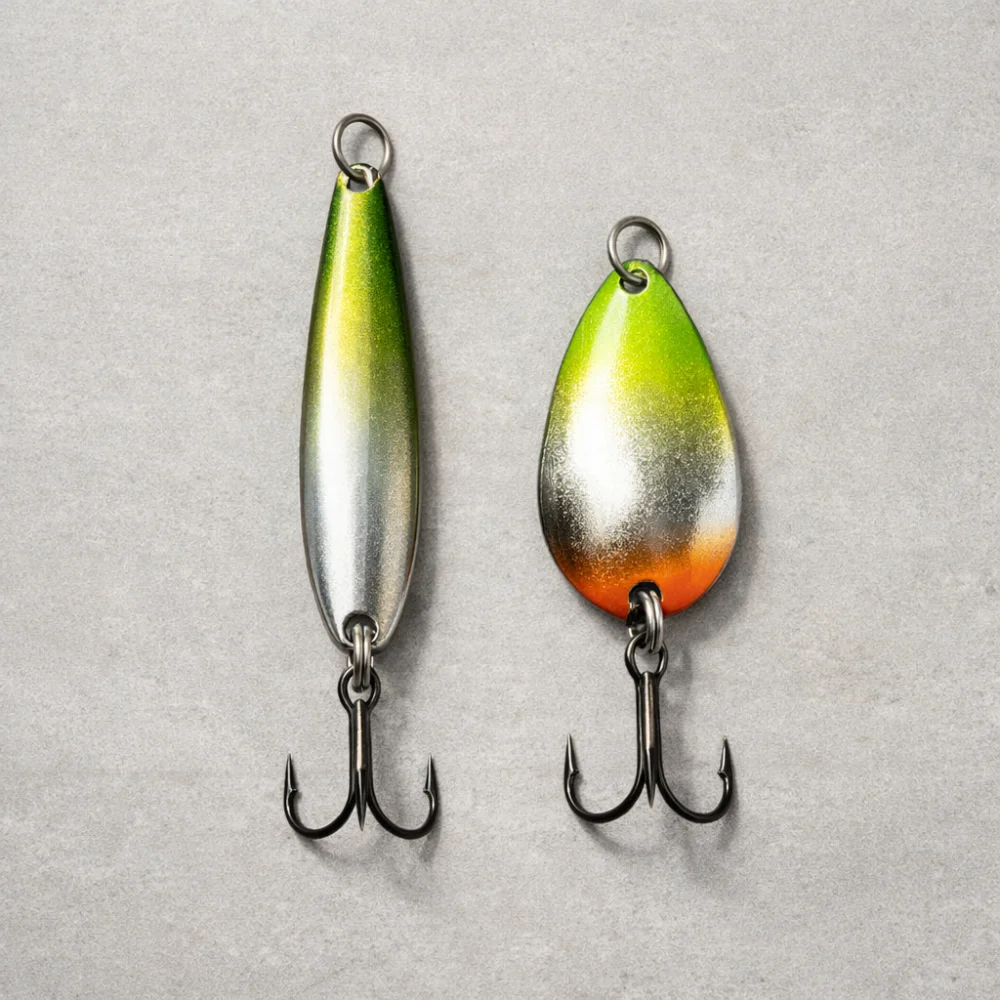
The useful question is not which spoon type is “better”, but which style is easiest to match to your intended use. A buyer fishing one set of conditions all season may want something different from someone who wants one lure to handle a broader mix of situations.
Which spoon suits which kind of buyer?
| Buyer need | What to prioritise | Why |
|---|---|---|
| Beginner buyer | Simple shape, clear product description, easy-to-understand weight | Makes it easier to choose a spoon that is straightforward to use and compare |
| Angler focused on casting distance | Weight and how the spoon is shaped for throwing | These features have the biggest effect on how far and how comfortably the lure casts |
| Angler wanting a subtler presentation | Less aggressive action and a more muted finish | Helps narrow the choice away from highly flashy options |
| Buyer building a small lure selection | Different weights and actions rather than near-duplicates | Gives more useful variety across conditions |
| Gift buyer | Clear, broadly usable spoon description | Reduces the risk of picking a lure that is too specialised for the recipient |
Common mistakes and misunderstandings
- Choosing by appearance alone: a spoon can look attractive but still be a poor match for the retrieve style or water you fish most often.
- Ignoring weight: weight affects castability and depth, so it should be one of the first things you compare.
- Assuming all spoons behave the same: small changes in shape can produce noticeable differences in action.
- Overlooking the hook setup: the attachment and replacement options may matter more in day-to-day use than the finish does.
- Buying for every situation at once: it is often better to choose a spoon that suits your main use case than to chase a compromise that suits nothing particularly well.
Safety and suitability caveats
Fishing tackle should always be chosen with the intended fishing environment in mind. Check whether a spoon is presented as suitable for the conditions you plan to fish, and make sure it fits your rod, line and usual casting style. If you are fishing in mixed conditions, it is especially useful to confirm the spoon’s weight and intended use on the individual product page.
Keep in mind that product descriptions can vary in detail, so the absence of a claim does not mean a spoon is unsuitable; it may simply mean the listing does not explain the point fully.
Maintenance, storage and lifespan considerations
Spoons are generally simple lures to own, but they still benefit from basic care. After use, many anglers like to rinse and dry tackle before storage, especially if it has been used in harsher conditions. Storing spoons so that hooks do not tangle or rub against other tackle can also help keep them in better condition.
Over time, finishes can show wear and hooks can need attention, so it is worth thinking about replaceability and upkeep when comparing options. That is less about exact lifespan and more about whether the lure feels practical to keep using comfortably.
How to compare spoons efficiently
- Start with your main use: the waters, species and retrieve style you expect to use most often.
- Narrow the choice by shape and weight, since those have the biggest effect on action and casting.
- Check finish and visibility if you care about flash, contrast or a more subdued presentation.
- Look at hook setup and any product notes that affect day-to-day use.
- Compare the remaining options by how closely each one matches your practical needs, not by appearance alone.
Summary buyer decision checklist
- Does the spoon shape suit the action you want?
- Is the weight appropriate for your rod, line and casting needs?
- Does the finish match the kind of visibility you want?
- Is the hook setup practical for how you fish?
- Does the product description match your intended conditions of use?
- Have you checked the individual product page for the exact specification details?
Frequently asked questions
Are spoons a good choice for beginners?
They can be, because the category is generally easy to compare and the main decisions are fairly clear: shape, weight and finish. A beginner usually benefits from a spoon with a straightforward description and a use case that is easy to understand.
What matters more, shape or weight?
Both matter, but in different ways. Shape has a strong effect on action, while weight has a strong effect on casting and sink rate, so the more important one depends on what you are trying to achieve.
Should I choose a flashy finish every time?
Not necessarily. A more reflective finish can be useful in some conditions, but a subtler look may be better when you want a less aggressive presentation.
Do all spoons work the same way?
No. Two spoons that look similar can still move differently because small differences in shape, weight and construction change how they behave in the water.
What should I check on the product page before buying?
Check the weight, the stated use case, the hook setup and any notes about intended conditions. If those details are not clear, it is sensible to compare another option with a fuller description.
Is one spoon size enough for every situation?
Usually not. Many buyers prefer to think in terms of a main spoon for their usual conditions, plus other options only if they fish very different waters or styles.