

Streamer flies are a broad part of fly fishing, and the right choice depends less on a single “best” pattern and more on where you fish, what you hope to imitate and how you plan to fish it. If you are building a first selection or narrowing down a replacement, it helps to compare streamer style, size, movement and intended water rather than choosing by name alone.
This guide focuses on the buying decisions that matter before you pick individual flies. It is aimed at anglers who want a practical way to compare options for trout, predator fishing or mixed fly boxes without overcomplicating the decision.
What should I look for in streamer flies?
Start with the water and the fish you are targeting, then look at how much movement and visibility you want from the fly. Streamer flies are generally chosen to suggest baitfish, fry, leeches or other moving food items, so silhouette and retrieve style matter as much as appearance. The most useful starting point is usually a small, versatile group of flies that cover a few different sizes and profiles, then expanding once you know what works in your conditions.
Specifications vary by model, so always check the individual product page before buying.
| Feature | What It Means | Why It Matters | What To Check |
|---|---|---|---|
| Profile | The overall shape and bulk of the fly | Influences how the fly suggests prey and how visible it is in the water | Look at whether it is slim, bulky, weighted or lightly dressed |
| Size | The physical scale of the fly | Changes casting ease, presentation and how selective or bold the fly appears | Check the stated size if given, or compare visually with your usual patterns |
| Movement | How the materials pulse, trail or animate in the current | Can affect attraction on the retrieve or in flowing water | Consider materials that suggest motion without becoming too hard to cast |
| Sink and depth | How quickly the fly reaches the fishing depth | Important if the fish are holding deeper or the current is strong | Check whether the fly is tied to ride high, suspend or sink more readily |
| Visibility | How easily the fly stands out in clear or coloured water | Helps when fish need a clearer target or when light is low | Look at contrast, flash and body shape rather than colour alone |
| Hook and build | The way the fly is put together and the hook style used | Affects durability, balance and how the fly fishes | Check the hook type, dressing style and whether the fly looks robust enough for repeated use |
Which details matter most when comparing streamer flies?
Profile and silhouette
Many anglers focus on colour first, but profile is often more important. A slim fly and a fuller fly can behave very differently, even if the colours are similar. If you fish clear water or want a subtler option, a simpler silhouette may be easier to present; if you need a stronger trigger, a more noticeable shape can help.
Weight and depth control
Some streamer flies are better suited to being fished higher in the water, while others are intended to get down faster. That matters because a fly that reaches the right layer quickly can be more useful than one that looks attractive but fishes too shallow for the conditions. Think about your line setup and the depth you usually need to cover, then choose accordingly.
Materials and action
Streamers often rely on movement to create interest. Soft fibres, flash and flowing materials can help, but too much bulk can make the fly harder to cast or control. A balanced fly usually gives you enough movement without becoming awkward on the line.
Durability and finish
If you plan to fish the same patterns repeatedly, build quality matters. Look for neat tying, secure materials and a finish that looks able to withstand repeated casts and fish handling. A well-made fly does not have to be complicated, but it should feel consistent and tidy when you inspect it closely.
Common streamer fly types and how they differ
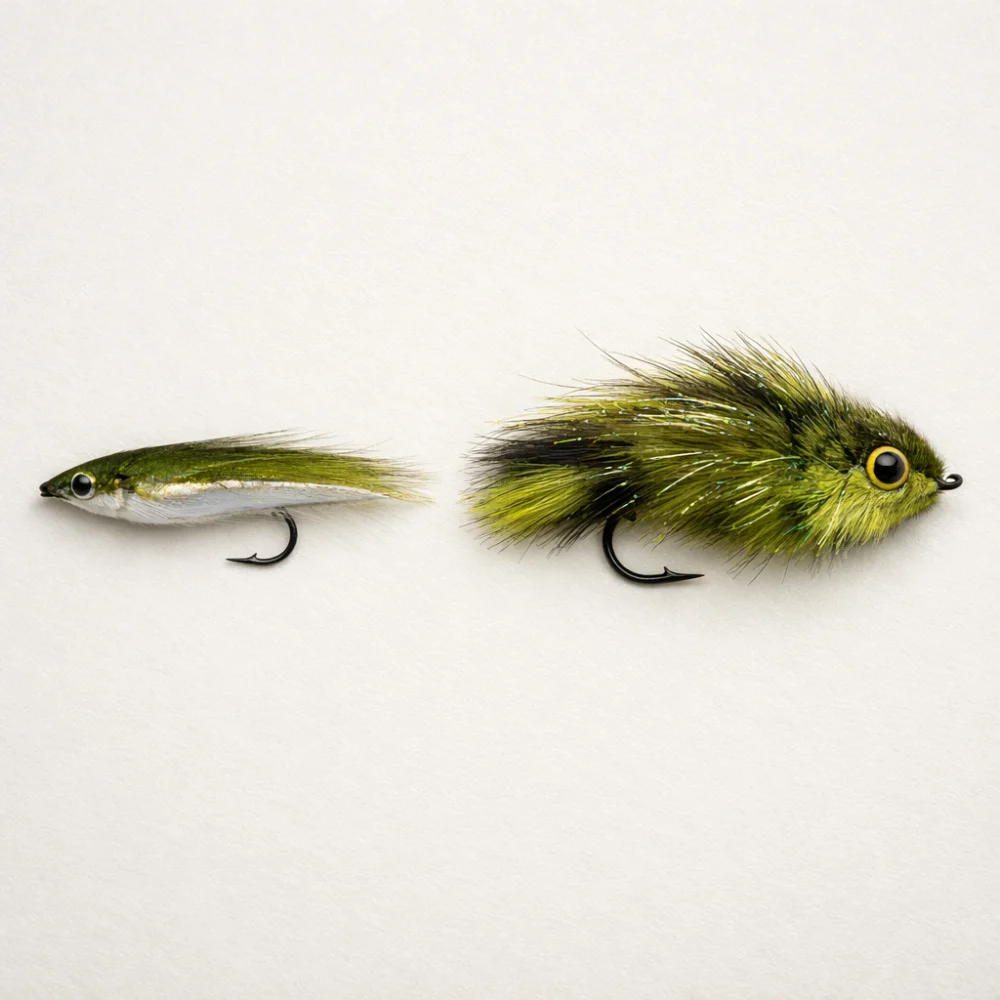
Streamer flies cover a range of styles, but the main buying question is usually whether you want a baitfish-style fly, a slimmer lure-like pattern or something with more pulsing movement. Some are designed to suggest a specific food source, while others are general attractor patterns that aim to trigger a response. The useful distinction is often not the name of the pattern, but how it fishes.
- Slim baitfish-style streamers: Often suit clear water or situations where a more restrained profile helps.
- Bulkier attractor streamers: Can be useful when you want extra visibility or a stronger silhouette.
- Soft and mobile patterns: May appeal when movement matters more than exact imitation.
- Heavier or deeper-fishing patterns: Better when you need the fly to work down in the water quickly.
The right choice depends on the water, the retrieve and the kind of response you are trying to provoke. A small mix of styles is often more useful than several very similar flies.
How different buyers can narrow the choice
| Buyer need | What to prioritise | Why it helps |
|---|---|---|
| Beginner building a first box | Versatile profiles and a few different sizes | Makes it easier to learn what your local waters respond to |
| Angler fishing clear water | Cleaner silhouettes and less overpowering movement | Can present a more natural look when fish are wary |
| Angler covering deeper water | Patterns that reach the right depth more reliably | Helps keep the fly in the zone where fish are feeding |
| Angler wanting a stronger trigger | More visible shapes, contrast or movement | Can stand out when fish respond to action rather than detail |
| Replacement or backup buyer | Fly consistency and durability | Useful if you already know a style works and want dependable repeats |
Common mistakes to avoid
- Choosing only by colour: Colour matters, but silhouette, depth and movement often have a bigger effect on how a streamer fishes.
- Buying too many similar flies: A broader mix of profiles is usually more useful than several near-identical patterns.
- Ignoring casting comfort: Larger or heavily dressed flies may be harder to fish well if they do not suit your tackle or casting style.
- Overlooking the water conditions: Clear, coloured, shallow and deeper water can favour different styles.
Safety and suitability notes
For buying purposes, the main check is whether the fly suits the intended species, venue and fishing method. If you fish mixed waters, it is sensible to choose patterns that you can present confidently rather than relying on an overly specialised option. Keep any local rules or venue requirements in mind, and check the individual product page for the exact fly style before buying.
Care, storage and practical ownership
Streamer flies are small tackle items, but how you store them still affects how useful they remain. Keep them organised so hooks do not tangle, and make sure damp flies are dried before long-term storage if that applies to the materials used. A tidy fly box makes it easier to compare similar patterns and grab the right one quickly on the water.
If you buy flies with delicate or mobile materials, expect them to need a little more care than simpler patterns. That does not mean they are fragile in every case, only that the way they are tied and stored can influence how long they stay neat and effective.
How to compare streamer flies efficiently
- Decide what kind of water and species you are fishing for most often.
- Choose a small mix of profiles rather than several near-duplicates.
- Compare depth, movement and visibility before worrying about fine detail.
- Check how robust the fly looks and whether it suits your tackle and casting style.
- Use the individual product page to confirm the exact fly style and any relevant details.
Summary buyer checklist
- Does the fly suit the water you fish most often?
- Is the profile appropriate for the level of visibility you need?
- Will it fish at the depth you usually want to cover?
- Does it offer enough movement without becoming awkward to cast?
- Have you chosen a useful mix of sizes or styles rather than duplicates?
- Have you checked the individual product page for the exact fly details?
Frequently asked questions
Are streamer flies only for big fish?
No. Streamer flies are often associated with larger or more predatory fish, but they can also be useful for trout and other species when the presentation suits the conditions. The important point is whether the fly matches the food source, water depth and retrieve style rather than fish size alone.
Should I buy weighted or unweighted streamer flies?
That depends on where you fish and how quickly you need the fly to get down. Weighted patterns can be helpful in deeper or faster water, while lighter flies may be easier to present delicately or fish higher in the water. If you are unsure, a mix of both can be more flexible.
How many streamer fly patterns do I need?
Most buyers do better with a small, varied selection than with many similar flies. A compact box with a few different profiles and sizes often covers more situations than a large number of near-duplicates. Once you know what works locally, you can narrow or expand from there.
Does colour matter more than shape?
Both matter, but shape and movement are often the first things fish respond to. Colour can help refine the choice for clear water, low light or coloured water, but it is rarely the only factor worth checking. A well-shaped fly in the wrong colour is sometimes less useful than a balanced pattern in a sensible size and profile.
Can one streamer fly cover every situation?
Usually not very well. A versatile pattern can be useful, but water depth, clarity and fish behaviour change enough that a small range of options is generally more practical. The aim is not one perfect fly, but a few sensible choices that cover the conditions you meet most often.