

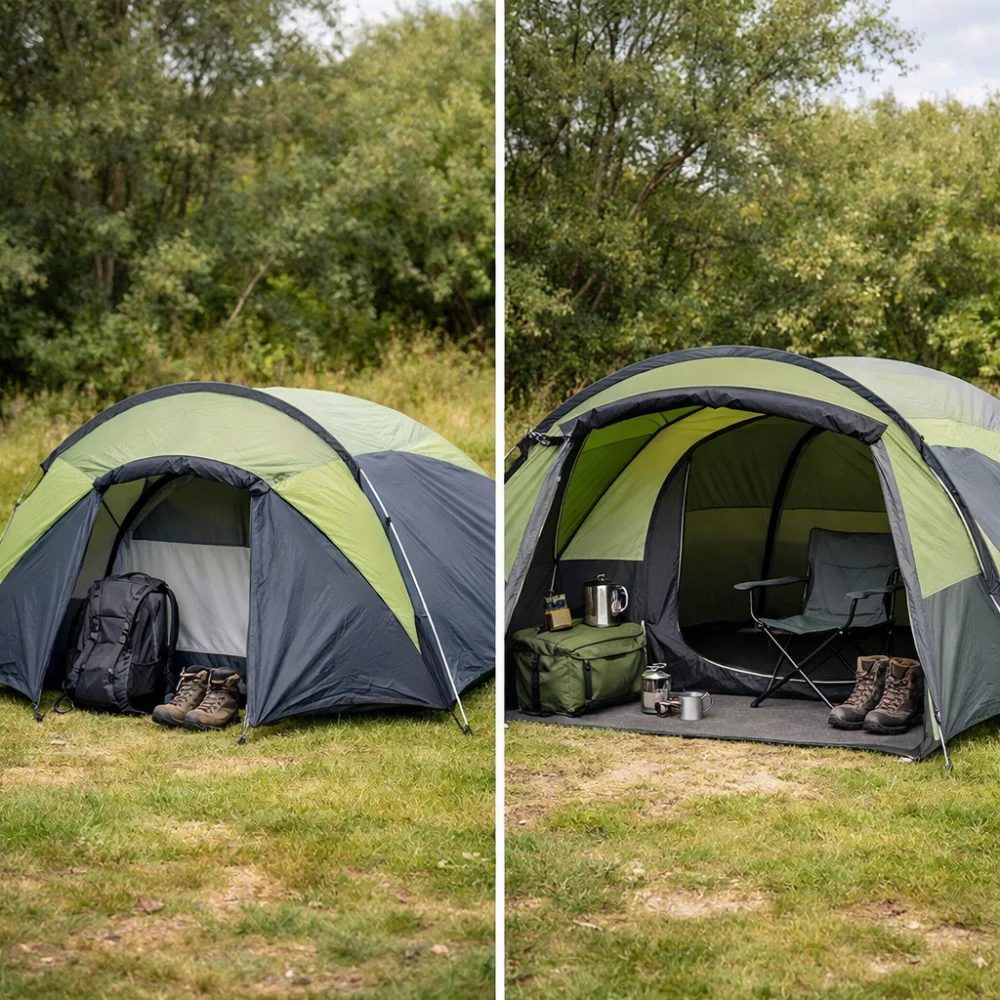
Tent vestibules add sheltered space at the entrance of a tent, usually for muddy boots, wet packs or a bit of extra room when you are getting organised. They are most useful when you want better day-to-day campsite convenience without moving to a larger tent.
Because vestibules sit between the inner sleeping area and the outdoors, the main buying questions are usually about fit, weather protection and how much useful space they really add. The right choice depends less on a headline description and more on how you camp, how many people are using the tent and how much weight or bulk you are willing to carry.
Specifications vary by model, so always check the individual product page before buying.
What should I look for in a tent vestibule?
Start with compatibility and intended use. A vestibule needs to suit the tent it is designed for, then it should offer the kind of sheltered space you actually want, whether that is a simple dry porch or a more generous area for kit. The main trade-off is usually between extra convenience and added bulk, complexity or weight.
A useful vestibule is one that fits securely, gives enough covered room for your routine and does not make access awkward. If you camp in changeable weather, the details of coverage and how well the entrance remains usable matter more than the idea of “extra space” on its own.
| Feature | What it means | Why it matters | What to check |
|---|---|---|---|
| Compatibility | How the vestibule attaches to the tent | Fit affects stability and whether it can be used as intended | Check the tent model, attachment style and any stated compatibility notes |
| Usable space | The amount of sheltered area created outside the inner tent | Determines whether there is room for boots, bags or moving around at the entrance | Look for clear descriptions of the footprint and entrance layout |
| Weather coverage | How well the vestibule shields the entrance from rain or wind | Improves comfort and keeps the doorway more practical in poor conditions | Review the shape, overlap and how the sheltered area is positioned |
| Access | How easy it is to get in and out with the vestibule in place | A vestibule that blocks the doorway can be more frustrating than helpful | Check door placement, opening style and whether both sides remain usable |
| Packed size and weight | How much extra carrying burden it adds | Important for backpacking and any trip where space is limited | Compare packed dimensions and weight against your own carrying priorities |
Key decision criteria
Fit and attachment
The first question is whether the vestibule suits your tent design. Some are made for specific tent layouts, while others are more general in concept but still depend on the right structure and attachment points. A poor fit can leave gaps, reduce stability or make setup awkward, so this is not a detail to gloss over.
How you will use the space
Think about what will actually go in the vestibule. If it is mainly for boots and wet gear, a compact shelter may be enough. If you want somewhere to sit under cover, sort kit or keep more items dry, the shape and depth of the sheltered area become more important.
Weather exposure
Vestibules are most helpful when they improve the practicality of the entrance in wet or breezy conditions. The key trade-off is that a larger sheltered area may feel more comfortable, but it can also mean more fabric, more setup and more pack volume. Look at how much of the doorway is protected, not just the existence of an added porch area.
Ease of setup
Some buyers want a simple add-on that goes up quickly, while others are happy to spend longer for a more substantial sheltered area. If you move camp often or arrive late, straightforward setup may matter more than maximum space. If you stay put longer, a little extra effort can be worthwhile.
Types and variants
Tent vestibules are usually best thought of by how they extend the tent rather than by a long list of radically different types.
- Compact vestibules are suited to small amounts of gear and minimal added bulk.
- Larger vestibules suit campers who want more sheltered changing or storage space, but they may be less convenient to carry or pitch.
- Model-specific vestibules can offer a closer fit, while more general options may be easier to compare but still need careful checking.
The most important limitation is that a vestibule is only useful if it works with the tent and the way you camp. Extra space is helpful, but only when it does not compromise access or convenience.
Which vestibule suits which buyer?
| Buyer need | More suitable characteristics | Why |
|---|---|---|
| Weekend camper | Simple fit, quick setup, modest extra space | Convenience matters more than maximum coverage |
| Family or group user | More sheltered room and easier access | Shared gear and busier entrances need more practical space |
| Backpacker | Lightweight, compact, minimal bulk | Every added item affects carrying comfort |
| Wet-weather camper | Better doorway protection and usable covered area | Keeping the entrance practical in poor weather is the priority |
| Occasional camper | Easy-to-understand compatibility and straightforward use | Simple choices reduce the risk of buying something awkward to use |
Common mistakes to avoid
- Assuming all vestibules fit all tents. Compatibility is the first check, not the last.
- Focusing only on extra space. A vestibule that is awkward to enter may not feel useful in practice.
- Ignoring pack size and weight. Small differences matter if you carry kit far or travel light.
- Overlooking weather use. The real value of a vestibule is often how it changes the entrance in rain, wind or damp conditions.
- Not checking how it changes the tent layout. Some add-ons can affect where you place kit or how easily people move in and out.
Safety and suitability caveats
A vestibule should be chosen for the tent and conditions it is intended for. Check any compatibility notes carefully and avoid assuming that a more enclosed space will suit every campsite or weather situation. If you camp in exposed places, small differences in fit and coverage can matter more than decorative or descriptive product wording.
Maintenance, storage and lifespan considerations
General care usually comes down to keeping the fabric clean, letting it dry properly before storage and avoiding unnecessary strain on attachment points. If a vestibule is packed away damp or crumpled for long periods, it may age less well than one stored carefully. Consider whether you want something you can rinse and dry easily after muddy or wet trips.
How to compare options efficiently
- Decide what problem you want the vestibule to solve: storage, dry access or extra sheltered space.
- Check that it suits your tent and attachment style.
- Compare the space offered against the weight and packed size you are willing to carry.
- Look at how the doorway remains usable once the vestibule is attached.
- Read the individual product page closely before deciding.
Summary buyer decision checklist
- Does it suit your tent and setup style?
- Will the covered space actually meet your needs?
- Is the entrance still easy to use?
- Is the added bulk acceptable for your type of camping?
- Does the product page give enough detail on fit and layout?
Frequently asked questions
What is the main benefit of a tent vestibule?
The main benefit is sheltered space just outside the sleeping area. It can help keep muddy or wet items out of the inner tent and make the doorway more practical in poor weather.
Do I need a vestibule if my tent already has a porch area?
Not always. If your tent already has enough protected entrance space for your gear and routine, an added vestibule may not add much value. The decision depends on how you camp and how much extra cover you want.
Are larger vestibules always better?
No. Larger options may be more useful for gear or changing, but they can also add bulk and sometimes complicate pitching or access. The better choice is the one that matches your actual use.
Can a vestibule make a tent more weather-ready?
It can improve sheltered access, but it is not the same as upgrading the tent itself. The value depends on fit, coverage and the conditions you expect to face.
What matters most when comparing different options?
Compatibility, usable space, entrance access and packed size are usually the main points. If those are clear, the rest of the decision is usually about how much convenience you want versus how much extra kit you are willing to carry.
Is a vestibuled tent accessory suitable for casual camping?
Yes, if you value tidier storage or a drier entrance. For very occasional use, simplicity may matter more than maximum coverage, so it is worth keeping the choice straightforward.