


Women’s heated gilets are designed for people who want extra warmth in the core without the bulk of a full jacket. They can be a useful layering choice for outdoor walks, commuting, dog walking, spectator sports and other cool-weather activities where freedom of movement still matters.
The main buying challenge is not just finding a heated layer, but choosing one that suits how and where you will wear it. Fit, heating coverage, battery setup and ease of layering often matter more than headline claims.
If you are comparing this category for the first time, it helps to think about warmth, comfort and practicality together. A heated gilet can be a convenient middle ground between a standard bodywarmer and a heavier outer layer, but the details vary by model.
Compare Women’s Heated Gilets


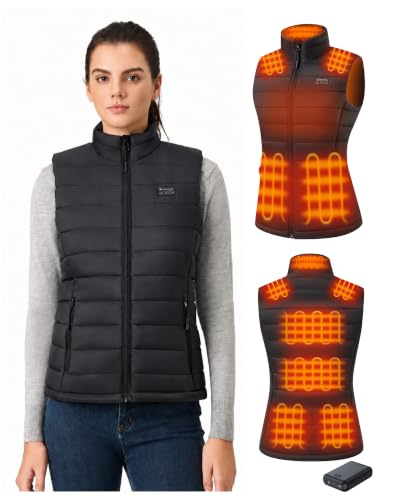

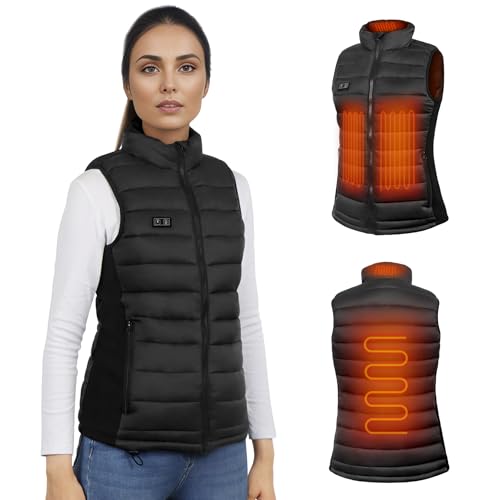
As an Amazon Associate we earn from qualifying purchases.
What should you look for in a women’s heated gilet?
Start with the way you will use it: as a daily layer, for occasional outdoor use, or for longer periods in cold conditions. The best starting point is usually fit and heat coverage, because a gilet that feels awkward to wear or does not sit well under your outer layers is unlikely to be useful. After that, compare battery arrangement, controls, fabric feel and how easy it is to wash or care for. Specifications vary by model, so always check the individual product page before buying.
| Feature | What it means | Why it matters | What to check |
|---|---|---|---|
| Fit and cut | How closely the gilet follows the body and where it sits at the shoulders, waist and hem | Good fit improves comfort and helps the heat feel more effective | Size guidance, layering room and whether the shape suits your build |
| Heating zones | The areas of the gilet that can warm up | Affects where the warmth is felt most and how evenly it is spread | Which zones are included and whether they suit your priorities |
| Heat settings | The number of warmth levels or control options | More control can help you adjust for changing weather and activity level | How the settings are selected and whether the controls are easy to use |
| Power source | How the gilet is powered, such as a rechargeable battery setup | Determines runtime convenience and what you need to carry | Whether a battery is included, where it fits and how it affects weight |
| Fabric and comfort | The outer feel, lining and general wearability | Comfort affects how often you will actually use the gilet | Breathability, softness, bulk and how it works under a coat |
| Care and cleaning | How the garment needs to be washed and stored | Heating apparel can need more careful handling than a basic bodywarmer | Cleaning instructions, battery removal and storage guidance |
Key decision criteria explained
Fit and layering
A heated gilet should fit closely enough to sit comfortably and help the warmth feel consistent, but not so tightly that it limits movement or feels restrictive over a midlayer. Think about whether you want to wear it on its own indoors, over a fleece outdoors, or under a waterproof shell. A slimmer cut may suit everyday wear, while a roomier fit may be more comfortable over thicker clothing.
Heating coverage
Different models can place heat in different parts of the torso. For some buyers, warmth across the chest and back will be the main priority; for others, more targeted coverage may feel better for light activity. The useful question is not simply how many heating points a product has, but whether the heated areas match the places where you feel cold most often.
Controls and settings
Simple controls are often better than complicated ones if you plan to use the gilet regularly. More heat settings can help you adapt to changing temperatures, but only if they are easy to adjust without fuss. Look for a control layout that makes sense to you, especially if you expect to change settings while walking or commuting.
Battery convenience
Battery setup can affect both comfort and practicality. Some buyers want the simplest possible arrangement, while others are happy to carry a battery for longer use. Check where the battery sits, how visible or noticeable it may feel, and whether the product includes the power source or expects you to provide one separately.
Fabric, bulk and everyday wear
A heated gilet is usually meant to be a wearable layer rather than specialised technical kit. The fabric feel, general bulk and finish matter because they influence whether you will reach for it often. If you want something for regular errands or casual outdoor use, comfort may be more important than having the most technical-looking design.
Types and variants you may see
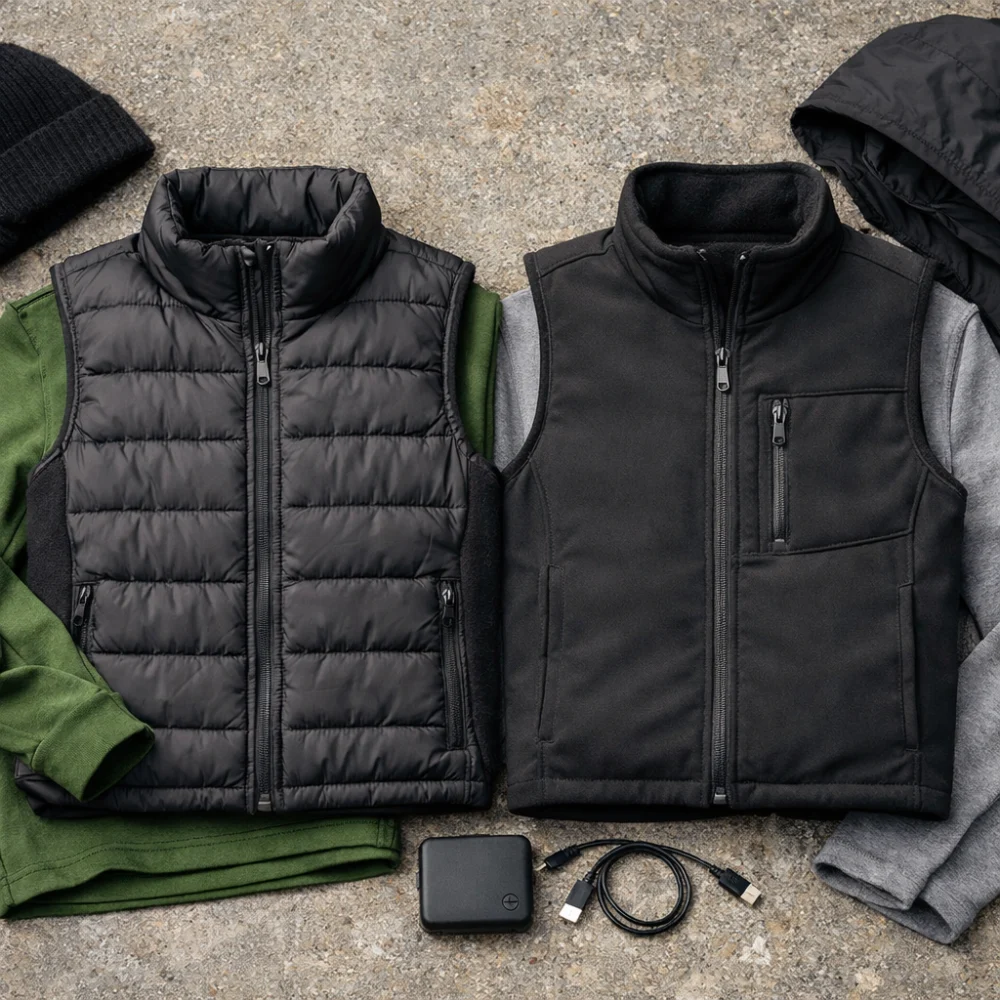
Within this category, the most useful differences are usually about style and construction rather than dramatically different product families. Some heated gilets aim for a lighter, more flexible feel, while others are designed to feel warmer or more insulated. You may also see differences in control layout, battery inclusion and how the garment is intended to be layered.
If you prefer easy everyday wear, a lighter option may be more comfortable under a coat. If you want warmth to be felt more directly, a model with more structured heating coverage may suit you better. The trade-off is usually between lightness, warmth, bulk and battery convenience.
Which features suit different buyers?
| Buyer need | What tends to matter most | What to prioritise on the product page |
|---|---|---|
| Daily walking or commuting | Comfort, simple controls and easy layering | Fit, weight, and how discreet the battery setup feels |
| Outdoor hobbies and sideline use | Warmth when standing still for periods | Heating zones, coverage and how well it works under outer layers |
| Casual wear in cool weather | Versatility and comfort | Fabric feel, cut and whether it looks and feels easy to wear |
| Gift buying | Broad usability and low guesswork | Size guidance, care notes and whether the heating setup seems straightforward |
| Layering for colder days | How well it fits under other clothing | Bulk, hem shape and room for a midlayer or shell |
Common mistakes and misunderstandings
- Choosing on heat claims alone. Warmth is important, but fit, coverage and comfort decide whether the gilet is actually practical to wear.
- Ignoring battery details. A heated gilet may be sold with or without a battery setup, so check what is included before comparing options.
- Forgetting about layering. A style that feels fine on its own may be awkward under a jacket if it is too bulky or the cut is too close.
- Assuming every model feels the same. Heating placement, fabric and control design can change the experience quite a bit.
Safety and suitability checks
A heated gilet should be chosen with the intended user and environment in mind. Check the product information for care guidance, power requirements and any suitability notes that affect how and where it should be worn. If you are buying for someone else, make sure the size, fit and control setup are likely to be comfortable for them.
It is also sensible to think about how often the garment will be used and whether the battery and charging arrangements fit that routine. Heated clothing is still clothing first, so comfort, movement and sensible use matter as much as the warming function.
Maintenance, storage and lifespan considerations
Heated gilets often need a little more care than a standard bodywarmer. Check whether the battery is removable before cleaning, how the garment should be washed, and whether it needs any special storage between uses. Keeping the item clean, dry and stored neatly can help it stay comfortable to wear.
If you expect regular use, it is worth considering how easy the gilet will be to look after over time. A simpler design may be easier to manage day to day, while a more feature-rich one may need a bit more attention when cleaning and storing.
How to compare options efficiently
- Decide when you will wear the gilet most often and how much layering room you need.
- Compare the fit and cut before looking at extra features.
- Check the heating coverage and controls to see whether they suit your routine.
- Look at the battery arrangement and what is included with the product.
- Review the care instructions so you know what ownership will involve.
Summary buyer decision checklist
- Does the fit leave enough room for the layers you plan to wear?
- Are the heating zones in the places you want warmth most?
- Are the controls simple enough for everyday use?
- Do you know whether a battery or power source is included?
- Will the fabric, bulk and cut suit your intended activity?
- Are the care and cleaning instructions practical for you?
Frequently asked questions
Are women’s heated gilets suitable for everyday wear?
They can be, especially if you want extra warmth without the bulk of a full jacket. Everyday comfort depends on the cut, fabric and battery setup, so look for a design that feels easy to move in and simple to layer.
Do heated gilets replace insulated gilets?
Not necessarily. A heated gilet adds active warmth, while an insulated gilet provides passive warmth through fill and construction. Some buyers prefer one, some use both for different situations, and the better choice depends on how much control and convenience you want.
Should I choose more heating zones?
Not automatically. More zones can be useful if the heated areas match where you feel cold, but coverage and comfort matter more than simply having a high number. Check the product page to see where the heat is placed.
Is a battery included with every model?
No, not always. This is one of the details worth checking carefully because the product description may state the battery arrangement clearly. If the battery is sold separately, that affects overall convenience and comparison.
Can a heated gilet be worn under a coat?
Often yes, if the fit and bulk allow it. This is a useful option for colder days, but a snug outer layer may feel restrictive if the gilet is too bulky. Check the cut and think about your usual outerwear.
How important is size accuracy?
Very important, because the best heating setup is less useful if the garment does not sit well. A close but comfortable fit usually works better than one that is too loose, especially if you plan to layer it.
What should I check before buying as a gift?
Focus on size guidance, ease of use and whether the power setup is clear. Gift buyers often benefit from choosing something practical and straightforward rather than a more complicated design.
More Women’s Heated Gilets
See all 174 Women’s Heated Gilets →
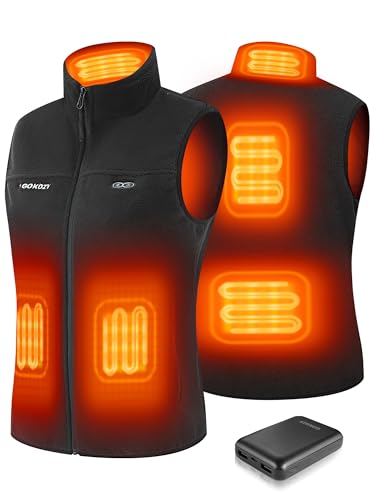


As an Amazon Associate we earn from qualifying purchases.