

Women’s riding chaps are a practical layer for riders who want extra grip, protection and coverage over their lower leg without switching away from their usual riding trousers or jodhpurs. They are often chosen for everyday schooling, hacking and yard work, where comfort and ease of movement matter as much as appearance.
If you are comparing options for the first time, the main question is not simply which style looks best, but which one fits your leg shape, your riding clothes and the kind of riding you actually do. A well-chosen pair should feel secure without restricting your leg or creating bulk where you need contact with the saddle.
Because riding habits and product details vary, it helps to focus on fit, material, fastening and intended use rather than any single feature on its own.
What should you look for first?
Start with fit and purpose. The right pair should sit comfortably over your riding trousers, stay in place as you ride and give the level of coverage you need for your usual routine. After that, look at the material, closure system and shape around the calf and ankle, since these have the biggest effect on comfort and practicality.
Specifications vary by model, so always check the individual product page before buying.
| Feature | What it means | Why it matters | What to check |
|---|---|---|---|
| Fit | How closely the chap follows the shape of your lower leg | A poor fit can feel loose, restrictive or awkward in the saddle | Calf size, length, stretch and how the style is meant to sit over riding wear |
| Material | The main surface or construction used | Affects flexibility, grip feel, durability and ease of cleaning | Whether the finish suits your comfort preference and regular use |
| Closure | How the chap fastens on the leg | Influences ease of putting on, adjusting and removing | Type of fastening and whether it feels secure enough for your routine |
| Coverage | How much of the lower leg is protected | Different riders want different levels of protection and contact | Length, height on the calf and how it works with your boots |
| Flexibility | How easily the chap moves with your leg | Comfort matters if you ride regularly or spend longer in the saddle | Any stretch panels, shaping or features that reduce stiffness |
Key decision criteria explained
Fit and leg shape
Fit is usually the most important factor because riding chaps are worn close to the body. A style that is too tight can feel uncomfortable, while one that is too loose may move around and feel distracting. Look for sizing information that helps you judge calf width, leg length and how the chap is intended to sit over your normal riding clothes.
Material and feel
Materials influence comfort, grip and how formal or casual the chap feels in use. Some riders prefer a smoother finish, while others want a little more structure. Think about how often you ride, how much yard use the item will get and whether easy wiping or simple care is a priority.
Fastening and adjustability
The fastening should make it easy to get the chaps on and off without struggling, while still feeling secure once fitted. Adjustable details can help if you are between sizes or want a closer fit over different layers, but more adjustment can also mean more to check each time you dress.
Coverage and compatibility with boots
Chaps are worn with riding footwear, so the lower edge and overall length should make sense alongside your boots. If the chap is too short or sits awkwardly at the ankle, it can reduce comfort. If it is too long, it may bunch or interfere with your leg position.
Common types and how they differ
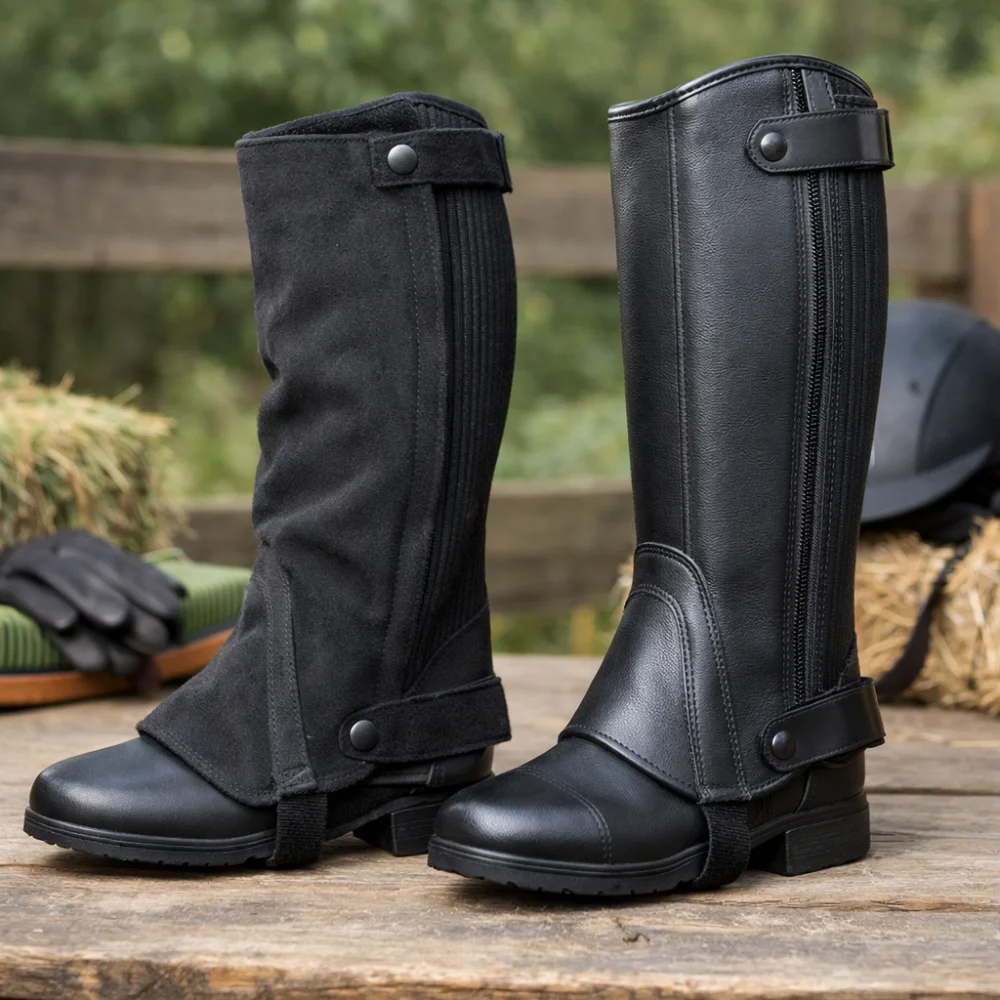
Within this category, riders are usually comparing styles that differ by material, fastening and level of structure rather than by highly technical performance. A softer, more flexible pair may suit someone who wants easy movement and a lighter feel. A more structured pair may suit riders who want a neater outline and firmer support around the calf.
Some designs are better for frequent everyday wear, while others may appeal more if you want a simpler occasional-use option. The useful question is not which type is universally superior, but which one matches your routine and the fit you can comfortably live with.
Which style suits which rider?
| Your need | What to prioritise | Why |
|---|---|---|
| Everyday riding | Comfort, secure fit and easy fastening | You will notice small fit issues more if you wear them often |
| Occasional use | Simplicity and straightforward care | You may prefer a practical option that is easy to put on when needed |
| Longer sessions | Flexibility and reduced bulk | Comfort becomes more important the longer you stay in the saddle |
| Layering over riding clothes | Enough room for your usual trousers or jodhpurs | Fit can change when chaps are worn over different fabrics |
Common mistakes to avoid
- Choosing by looks alone. A neat appearance is useful, but fit and comfort matter more for regular riding.
- Ignoring leg measurements. Calf shape and length are central to whether the chap stays comfortable and secure.
- Overlooking what you wear underneath. Riding chaps need to work with your usual trousers or jodhpurs, not just on their own.
- Assuming every style feels the same. Material and construction can change how flexible, supportive or structured the chap feels.
Safety and suitability caveats
Riding chaps are a clothing choice, not a substitute for proper riding footwear or suitable equestrian kit. Check that the style you choose works with your intended use and does not restrict movement, rub or interfere with your normal riding position. If you are buying for a young rider or someone with unusual leg proportions, the most useful check is still the individual product information.
Maintenance, storage and everyday care
Care needs vary by material, but it is sensible to think about how much cleaning and storage effort you are willing to take on. If you ride regularly, a more practical finish may be easier to keep presentable. After use, allow the chaps to dry properly and store them so they do not lose shape or pick up dirt from other gear.
How to compare options efficiently
- Decide how often and where the chaps will be used.
- Work out the fit details that matter most, especially calf size and length.
- Compare material, fastening and flexibility rather than just appearance.
- Check how the style works over your usual riding clothes and with your boots.
- Read the individual product page carefully before making a final choice.
Summary buyer decision checklist
- Does the fit suit your calf shape and leg length?
- Will it sit comfortably over your usual riding clothes?
- Is the fastening easy enough for everyday use?
- Does the material match your comfort and care preferences?
- Will the level of coverage work with your riding boots and routine?
Frequently asked questions
Are riding chaps meant to be worn on their own?
No. They are normally worn over riding trousers or jodhpurs and paired with suitable boots. The point is to add coverage, comfort or a different feel rather than replace your base riding clothing.
How do I know if the fit is right?
The best fit should feel secure without pinching, slipping or creating excess bulk. Look for product information that helps you judge calf width, length and whether the shape suits your leg.
What matters more, material or fastening?
Both matter, but for many buyers fit comes first, then fastening, then material feel. A comfortable chap that stays in place is usually more useful than one with appealing material but awkward sizing.
Can I use the same pair for everyday riding and yard tasks?
Sometimes, but the best choice depends on how much wear you expect and how easy the material is to maintain. If you plan to use them often, prioritise practicality and a fit that can handle regular movement.
Do I need a structured style?
Not necessarily. A more structured chap may suit riders who like a firmer feel, but a softer option may be better if you want flexibility and a lighter fit. The better choice is the one that matches your comfort preference and routine.
What should I check before ordering online?
Check sizing guidance, leg measurements, fastening details and how the style is meant to be worn. If the product page does not answer those basics clearly, it is worth slowing down before buying.