

Women’s running hats are a small part of a running kit, but they can make a noticeable difference to comfort. The right choice depends on whether you want shade, light rain protection, warmth, or simply something that helps manage sweat and stray hair.
This guide focuses on practical buying decisions rather than brand names. It helps you compare the main styles, understand the features that matter, and decide what is likely to suit your usual runs.
What should you look for in a women’s running hat?
Start with the conditions you run in most often. A lightweight cap, a visor, a thermal skull cap or a water-resistant style can each solve a different problem, but no single option suits every run. The best starting point is the weather and the kind of coverage you actually want, then the fit and breathability that support it.
The main trade-off is usually between coverage and ventilation. More protection can mean a warmer feel, while lighter designs may be cooler but offer less shelter from sun, wind or drizzle. Specifications vary by model, so always check the individual product page before buying.
| Feature | What It Means | Why It Matters | What To Check |
|---|---|---|---|
| Style | Cap, visor, thermal skull cap or other running-specific design | Different styles suit different weather and coverage needs | Whether you want sun shade, warmth, rain cover or a lighter feel |
| Fit | How the hat sits and adjusts on your head | A poor fit can distract you while running | Adjustment method, size range and whether the shape suits your head |
| Breathability | How easily heat and moisture can escape | Helps with comfort on longer or warmer runs | Lightweight construction, vents or mesh panels where relevant |
| Coverage | How much of the head, face or ears is covered | Coverage affects protection and warmth | Brim size, ear coverage and whether the design suits sun or cold conditions |
| Moisture handling | How the hat deals with sweat or damp weather | Helps reduce discomfort during exercise | Quick-drying materials and whether the fabric is intended for active use |
Key decision criteria
Weather and season
The most useful question is when you are most likely to wear the hat. For warmer months, a lighter design with a brim or visor can help with shade without feeling heavy. For colder runs, a closer-fitting thermal style may be more appropriate if you want extra warmth around the head and ears.
Fit and adjustability
Running hats should stay put without feeling tight. Adjustable closures, stretch construction or ponytail-friendly designs can all improve comfort, but each approach feels different in use. Check whether the fit is described as one size, size-specific or adjustable, and consider whether your hair style matters to you.
Breathability and sweat management
If you run hard or often run for longer periods, breathability becomes more important. A hat that traps too much heat can feel uncomfortable even if it looks suitable at first glance. Look for materials and panel designs that suggest quick drying and ventilation, while remembering that exact performance depends on the specific model.
Coverage and shape
Some buyers want a full cap with a brim, while others prefer a visor or a lighter shape that leaves more of the head exposed. Brim shape can affect glare control and rain shedding, but a deeper crown may feel warmer. Choose the level of coverage that matches your main use, not just the appearance of the hat.
Packability and everyday convenience
If you like to carry a hat in a pocket, belt or small running bag, weight and flexibility can matter more than looks. Foldable or soft-brim designs may be easier to stow, while structured caps can hold their shape better. Think about whether the hat will be worn for a full run or carried as an occasional backup.
Common women’s running hat types
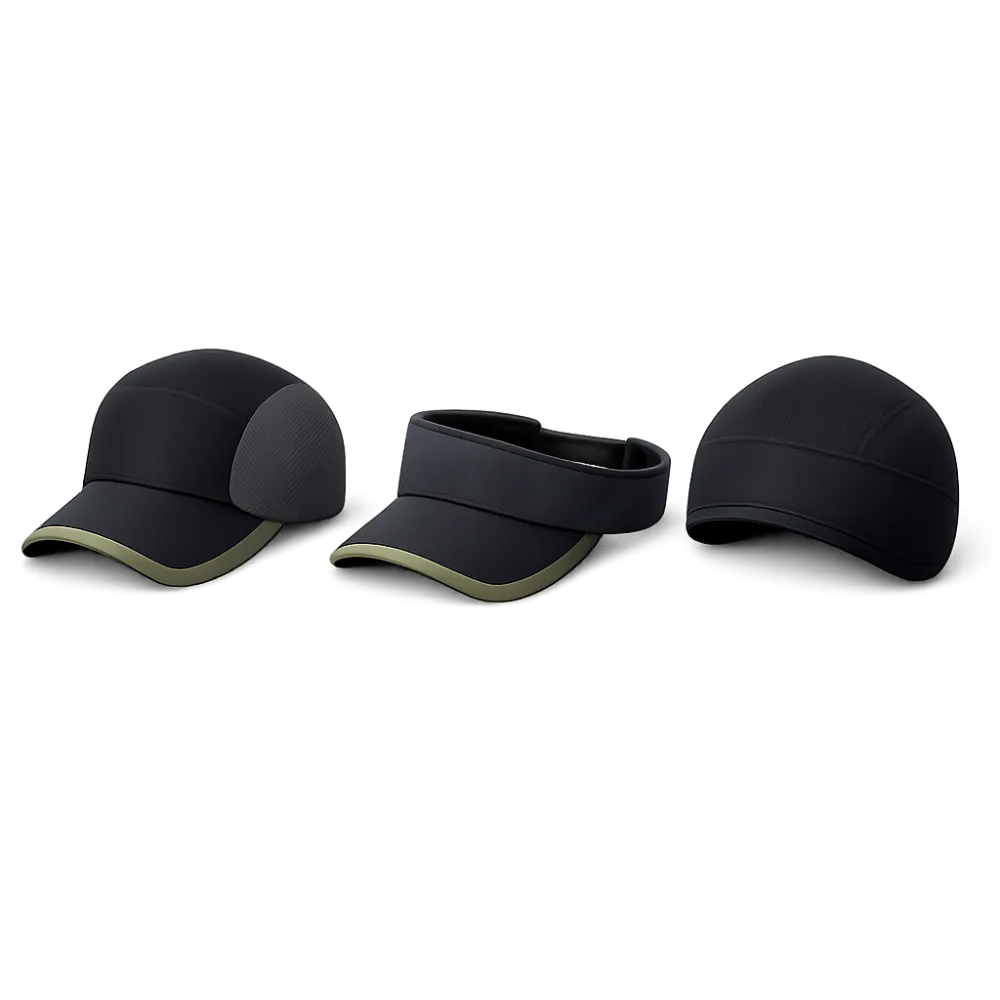
Running caps
These are the most familiar option and suit many everyday runs. They usually offer a brim for shade and a more all-purpose feel, but they may feel warmer than lighter alternatives.
Running visors
Visors provide shade for the face while leaving the top of the head more open. They can feel cooler in warm weather, but they offer less overall coverage and are not ideal if you want extra warmth.
Thermal running hats or skull caps
These are geared towards colder conditions and a closer fit. They may be a better choice for winter runs, though they can feel too warm in milder weather.
Ponytail-friendly styles
Some hats are shaped to work better with longer hair. They may improve comfort and convenience, but the head shape still matters, so it is worth checking the fit as well as the ponytail opening or rear design.
Choosing by runner type
| Buyer need | What to prioritise | Why it helps |
|---|---|---|
| Warm-weather runner | Lightweight feel, breathability and sun shade | Helps reduce overheating and glare |
| Cold-weather runner | Closer fit and added warmth | More comfortable in lower temperatures |
| Runner with longer hair | Ponytail-friendly shaping or a comfortable rear opening | Can improve fit and reduce awkward pressure |
| Occasional runner | Simple, versatile design | Easier to choose if you only need one hat for varied use |
| Runner who packs light | Foldable or soft construction | More convenient to carry when the weather changes |
Common mistakes and misunderstandings
- Choosing for appearance alone: a hat that looks right may still be too warm, too loose or too shallow for running.
- Ignoring the weather you actually run in: a sun-focused style and a cold-weather style solve different problems.
- Overlooking fit details: a small adjustment difference can matter once you start moving and sweating.
- Assuming one-size will suit everyone: many options are adjustable, but the feel can still vary a lot from head to head.
Safety and suitability caveats
A running hat is mainly a comfort and weather-management choice, not a universal solution. Think about visibility, ventilation and how much coverage you want for your usual route and conditions. If you run in changing weather, it is sensible to compare more than one style rather than assuming a single hat will handle every situation.
Maintenance, storage and lifespan considerations
General care can affect how long a hat stays comfortable. Running hats may need simple cleaning after sweaty use, and some shapes hold up better than others when packed into a bag. Check the care guidance on the individual product page and consider whether you want a design that is easy to dry between runs.
How to compare options efficiently
- Decide whether you need sun shade, warmth, rain help or a lighter all-round option.
- Pick the style that matches that need best, such as cap, visor, thermal or ponytail-friendly design.
- Check fit, adjustability and coverage so the hat will stay comfortable while moving.
- Look at breathability and moisture handling if you run in warmer conditions or at higher effort.
- Read the individual product page carefully for model-specific details before choosing.
Summary buyer decision checklist
- Have you matched the hat style to the weather you run in most often?
- Does the fit sound comfortable and adjustable enough for movement?
- Is the level of coverage right for your needs?
- Will the material feel suitable for your pace, temperature and sweat level?
- Do you need a ponytail-friendly shape or a packable design?
- Have you checked the individual product page for the exact model details?
Frequently asked questions
Do I need a running hat if I already wear a cap casually?
Not always, but running-specific hats are often chosen for comfort during movement. The difference is usually in how they fit, breathe and handle sweat, so it is worth comparing the details rather than assuming a casual cap will feel the same.
What is the difference between a running cap and a visor?
A running cap gives more overall coverage, while a visor leaves the top of the head more open. A visor can feel cooler in warm weather, but a cap is usually more versatile if you want broader protection.
How important is a ponytail opening?
It matters most if you regularly wear your hair tied back. A ponytail-friendly design can improve comfort and reduce pressure, but you should still check the overall fit because a rear opening alone does not guarantee a good feel.
Should I choose a waterproof or water-resistant style?
That depends on how often you run in wet conditions. A water-resistant hat may be enough for light drizzle, while a more weather-focused design may be more suitable if rain is a regular concern. Check the individual product page for the exact intended use.
What matters most for summer running?
Lightweight feel, breathability and shade are usually the main priorities. A hat that traps too much heat may be less comfortable than one that offers a simpler, cooler design.
What matters most for winter running?
Warmth and a secure fit usually come first. A closer-fitting style that covers more of the head may be more useful than a lighter cap, although your exact preference depends on how cold and windy your routes are.
How do I know if a hat will fit properly?
Check whether it is adjustable, size-specific or described as one size. If possible, compare the product description with the kind of fit you usually find comfortable in running headwear.