


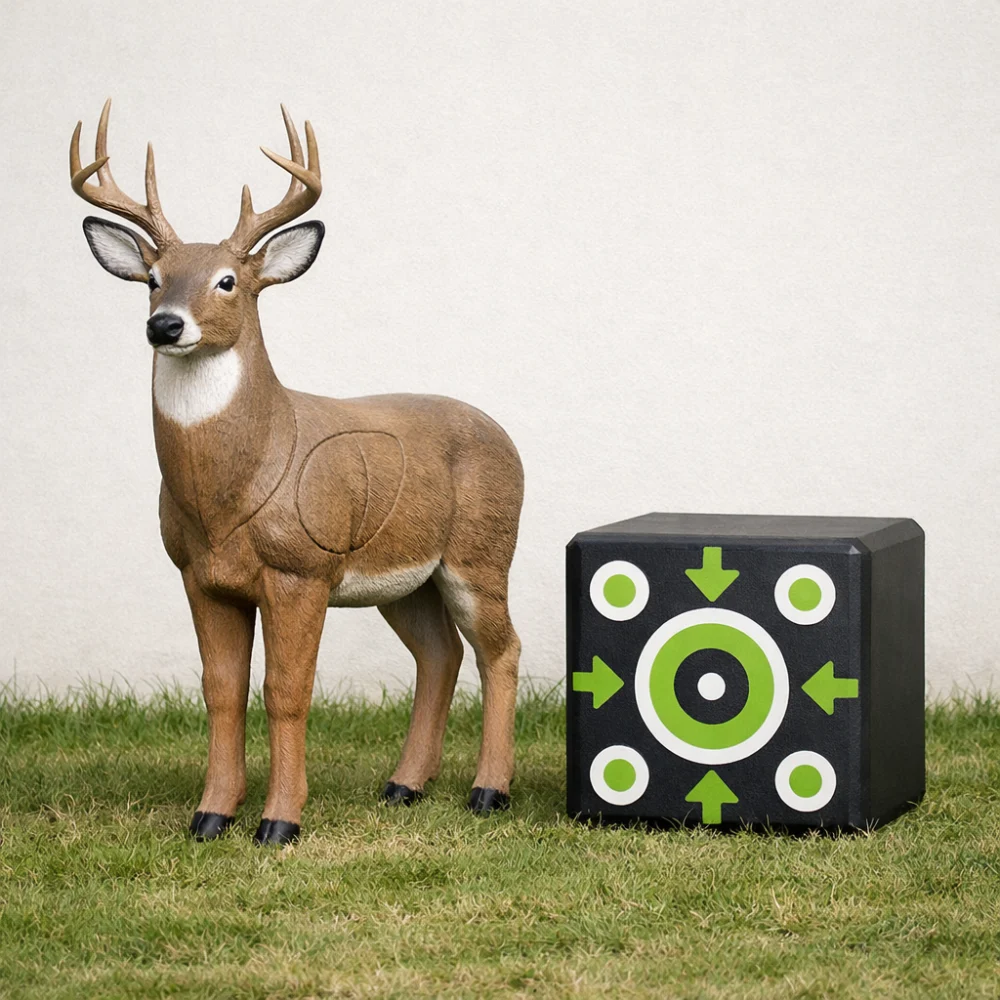
3D archery targets are chosen for a very different feel from flat target faces or simple block targets. They are often used by archers who want a more realistic aiming experience, especially where judging angle, target placement or simulated field conditions matters.
If you are comparing options for home practice, club use or informal field-style shooting, the main job is to match the target type to your arrows, space and expected level of use. The shape alone does not tell you enough, so it helps to look closely at material, size, recovery ease and how the target will be used.
Compare 3D Archery Targets


As an Amazon Associate we earn from qualifying purchases.
What should you look for in a 3D archery target?
Start with the intended use. A target that looks realistic may still be a poor fit if it is too hard to pull arrows from, too light for your setup or too delicate for the arrows you use most often. The most useful choice is usually the one that balances realism, durability and practical handling for your shooting style.
For many buyers, the key decision is whether they want a target mainly for repetition and broad practice, or for a more lifelike field-archery feel. Specifications vary by model, so always check the individual product page before buying.
| Feature | What it means | Why it matters | What to check |
|---|---|---|---|
| Target shape | The animal or form the target is designed around | Affects realism and the style of practice | Whether the shape suits field-style shooting or general practice |
| Target material | The body material used to stop arrows | Influences arrow pull, wear and how long it may remain usable | Look for material notes and any guidance about arrow types |
| Size and profile | The overall dimensions and depth of the target | Changes visibility, aiming feel and how much space it needs | Check the stated dimensions and whether it suits your practice area |
| Arrow recovery | How easily arrows can be removed after shooting | Important for repeated practice and user comfort | See whether the product page mentions easy arrow removal or dense foam |
| Stability | How well the target stays in position | Matters outdoors or in breezy conditions | Check if a stand, stake or base is needed |
| Use intensity | How often and how hard the target is likely to be shot | Helps you judge durability against wear | Match the target to your shooting frequency and arrow setup |
Key decision criteria
Realism versus convenience
One of the main reasons people choose 3D archery targets is realism. A lifelike shape can make practice feel more like a field round or hunting-style session, but the trade-off is that these targets may be more awkward to move, position or store than a flatter target.
Material and arrow pull
Material affects how the target behaves after repeated hits. Some targets are made to be easier to remove arrows from, while others are designed for longer wear or denser stopping power. If you shoot often, arrow recovery becomes a practical comfort factor, not just a minor detail.
Size and where you will use it
Before choosing, think about where the target will live. A larger target may be easier to aim at from a distance, but it also needs more room and may be less convenient to store. Outdoor users should also consider whether the target will need additional support or a stable base.
Arrow and practice suitability
Not every target suits every practice style equally well. The same target can feel very different depending on draw weight, arrow type and how frequently it is used. If you shoot a lot, choose a target that looks sensible for the volume of practice rather than only for appearance.
Types and variants within 3D targets
Within this category, the main difference is usually the style of the 3D form and the way the target body is built. Some buyers want a target that is mainly about realistic silhouette and scoring zones, while others care more about durability and ease of use.
- More realistic animal-style targets: suited to field-style practice and visual engagement, but they may be larger or less convenient to store.
- Compact 3D targets: useful where space is limited, though they may offer less of the full field-archery feel.
- Higher-durability practice targets: better for repeated shooting, with the trade-off that they may be denser or less natural-looking.
Which target suits which buyer?
| Buyer need | What to prioritise | Typical trade-off |
|---|---|---|
| Field-archery practice | Realistic shape, stable placement and clear aiming points | May take up more room and be less easy to store |
| Frequent home practice | Durable material and easier arrow removal | May be less lifelike in appearance |
| Smaller garden or limited storage | Compact size and easier handling | Less realism or a reduced target profile |
| Club or shared use | General durability and practical repositioning | Heavier or bulkier options can be harder to move |
Common mistakes to avoid
- Choosing on appearance alone: a realistic shape is helpful, but it should not outweigh material, size and handling.
- Ignoring space requirements: a target that looks suitable in a photo may be awkward once you try to position and store it.
- Overlooking arrow recovery: if arrows are difficult to remove, regular practice becomes less enjoyable.
- Assuming all 3D targets suit all arrows: check the individual product information for any guidance relevant to your setup.
Safety and suitability caveats
Choose a target that suits the space and shooting context you actually have, not just the style you like. A 3D target still needs enough clear room around it and a sensible backstop or placement arrangement where appropriate. If you are unsure about suitability, review the product page carefully and match the target to your normal practice conditions.
Maintenance, storage and lifespan
Most 3D archery targets benefit from sensible storage, especially if they will be kept outdoors. UV exposure, moisture and repeated impacts can all affect how long a target stays in good condition, so buyers should think about where it will be kept between sessions. Light cleaning and regular repositioning can also help if the same face or section is hit repeatedly.
If you expect frequent use, it is worth choosing a target that feels appropriate for your shooting volume rather than the lightest-duty option. That does not guarantee a longer life, but it can help the target match your normal routine more closely.
How to compare options efficiently
- Decide whether you want realism, practice convenience or a balance of both.
- Check the target shape and size against your available space.
- Compare the material and arrow-pull feel described on the product page.
- Think about how often you will shoot and whether the target needs to be easy to move or store.
- Confirm any notes about support, placement or intended use before choosing.
Summary buyer decision checklist
- Does the target suit your practice style?
- Is the size practical for your space and storage?
- Does the material seem suitable for the amount you will shoot?
- Will arrow removal be comfortable enough for regular use?
- Does it need a stand, base or extra support?
- Have you checked the individual product page for model-specific details?
Frequently asked questions
What is a 3D archery target used for?
It is used to give archers a more realistic aiming experience than a flat face target. Many people choose one for field-style practice, general repetition or to make sessions feel closer to shooting in varied outdoor conditions.
Are 3D archery targets better than foam blocks?
Not always. 3D targets are usually better if you want realism and a field-style feel, while foam blocks may be more convenient for some practice setups. The right choice depends on what you value most: appearance, convenience, durability or space.
Do 3D archery targets need a stand?
Some do and some do not, depending on the design. Check the individual product page to see whether it is freestanding, needs a base or benefits from extra support in use.
How do I choose the right size?
Think about both your shooting distance and your available space. A larger target may be easier to see and aim at, but it can be harder to store and position. The best size is usually the one that fits your practice area without becoming awkward to handle.
Can one target suit different types of arrows?
Sometimes, but you should not assume that without checking the product information. Arrow type, shooting style and target material all affect suitability, so always review the details for the specific item.
How do I know if a 3D target is durable enough?
Look at the target material, the intended use and any notes about repeated shooting. A target aimed at regular practice is usually a better fit for high use than one chosen mainly for display or occasional sessions.
What should I check before buying for outdoor use?
Check the target’s size, how it will stay in place and whether storage conditions may affect it between sessions. Outdoor use also makes weather exposure and stability more important than they might be for indoor or sheltered practice.
Check whether the target has a replaceable insert
Some 3D targets are designed with a replaceable insert or core, while others are not. If this matters to your choice, check whether the specific target accepts a replacement part and confirm the exact model compatibility; a similar-looking insert should not be assumed to fit.
- Check whether the listing is for a complete target or a replacement insert only.
- Confirm the replacement part is intended for the exact target model.
- Consider whether replacing a worn section suits your preferences, without assuming that a compatible part will always be available.
More 3D Archery Targets
See all 44 3D Archery Targets →


As an Amazon Associate we earn from qualifying purchases.