


Archery target stands are the support that holds a target in place so you can practise more comfortably and set up a shooting area that makes sense for your space. They are often chosen alongside a target face, bag target, foam block or other archery target type, but the stand itself is about stability, fit and convenience.
If you are comparing stands, the main question is rarely “which one is best” and more often “which one suits my target and how I shoot?” A simple, stable stand may be enough for occasional practice, while a more adjustable option may suit a broader range of target sizes or changing conditions.
Because archery setups vary, it is worth checking the target style, the size range the stand is intended for and how easy it is to move or store. Specifications vary by model, so always check the individual product page before buying.
Compare Archery Target Stands


As an Amazon Associate we earn from qualifying purchases.
What should I look for in an archery target stand?
Start with the target you want to support, then work outward from there. The most useful stand is one that suits the shape and size of the target, stays stable where you plan to use it and is easy enough for you to handle without unnecessary fuss. For most buyers, the best trade-off is between sturdiness, adjustability and convenience.
If you shoot in a fixed place, simplicity may matter more than portability. If you move your setup often, easier handling and quicker assembly may be more valuable than a heavier, more permanent design.
| Feature | What it means | Why it matters | What to check |
|---|---|---|---|
| Target support style | How the stand holds the target in position | Affects whether the target sits securely and sensibly for your setup | Whether it suits your target type and mounting method |
| Stability | How well the stand resists movement during use | Important for consistent shooting and reducing nuisance wobble | The base design, footprint and any notes about ground conditions |
| Adjustability | Whether height, angle or fit can be changed | Useful if you use more than one target size or want flexibility | Which adjustments are actually offered on the product page |
| Portability | How easy it is to carry, move and store | Matters for shared spaces, home use and regular transport | Whether it folds, breaks down or is intended to stay in one place |
| Target compatibility | The kinds of targets the stand is intended to support | Prevents buying a stand that does not fit your target style | Target dimensions, shape and any stated compatibility notes |
Key decision criteria
Target compatibility
This is the first check to make, because a stand that does not suit your target is not a practical choice. Look for wording that relates to target size, shape or intended target style rather than assuming one stand will fit everything. If you are comparing a stand for a bag target against one for a foam block, the support method may be different even if the products look similar.
Stability versus portability
Heavier or wider designs can feel more planted, but they may be less convenient to move. Lighter designs are often easier to handle, yet may be less forgiving on uneven ground or in a setup that gets moved frequently. Think about whether the stand will mostly stay in one place or travel with you.
Setup and storage convenience
Some buyers want a stand that can be assembled quickly and stored neatly between sessions. Others prefer a more fixed arrangement that does not need to be taken apart very often. Consider how much time and effort you want to spend each time you set up your practice area.
Ground conditions and location
Where you shoot can affect how well a stand works. A stand that performs well on firm, level ground may be less convenient on softer or uneven surfaces. If you plan to use it outdoors, check whether the design looks suitable for the place you actually intend to shoot.
Types and variants
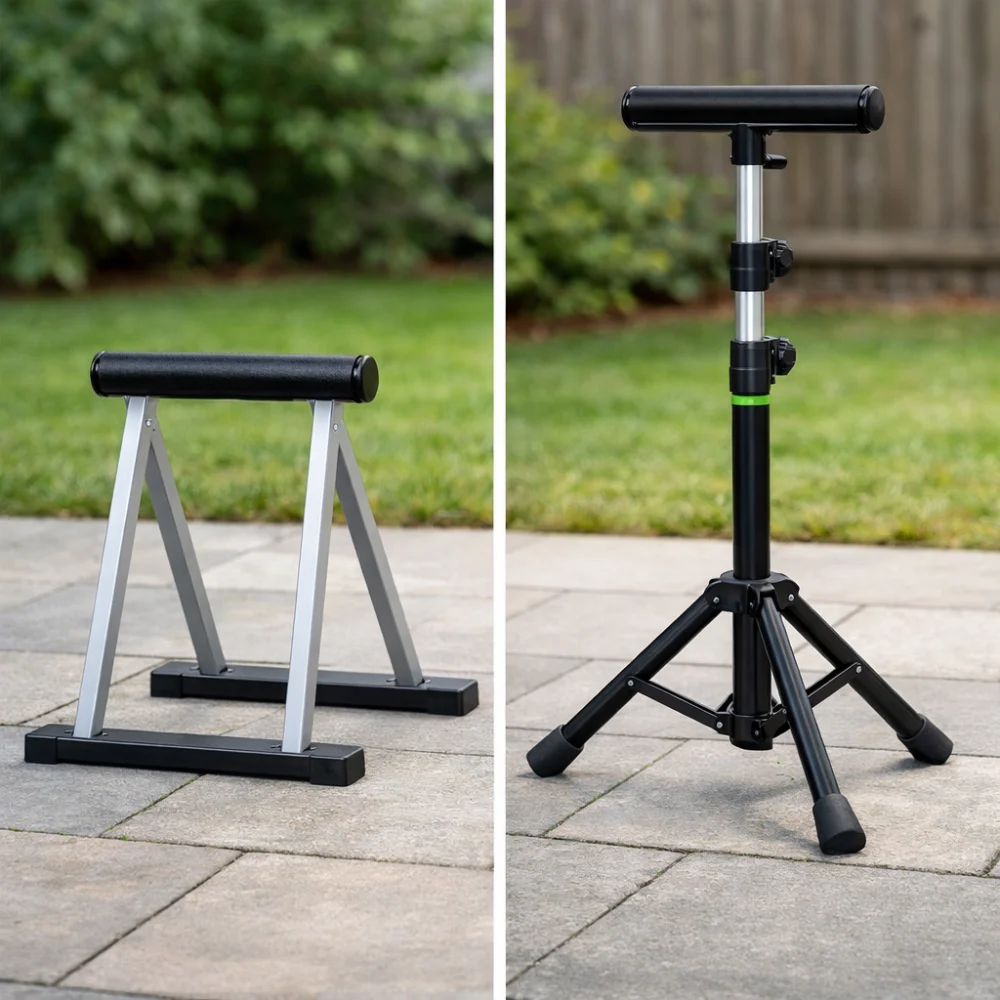
There are usually a few practical ways stands differ, even within one category. Some are simpler fixed-support designs aimed at straightforward use, while others offer more adjustment or a different footprint for flexibility.
- Simple support stands: Often suited to buyers who want a straightforward setup and do not need many adjustments.
- Adjustable stands: Useful when you want more flexibility around target position or changing target types.
- Portable or foldable stands: Better when storage space is limited or the stand needs to be moved regularly.
The right variant depends on whether your priority is a steady practice setup, easier transport or broader target compatibility.
Which stand suits which buyer?
| Buyer need | What to prioritise | Why it helps |
|---|---|---|
| Beginner setting up a first practice area | Clear compatibility and simple assembly | Makes it easier to get started without confusion |
| Regular home user | Stability and easy storage | Supports repeat use without turning setup into a chore |
| Buyer with limited space | Compact or easy-to-store design | Helps the stand fit a smaller garage, shed or indoor storage area |
| Buyer who moves the target often | Portability and manageable handling | Reduces effort when relocating the setup |
| Buyer using more than one target style | Adjustability and stated compatibility | Increases the chance the stand works across different sessions |
Common mistakes and misunderstandings
Assuming all stands fit all targets. Fit is one of the most important checks in this category. The safer approach is to match the stand to the actual target style and dimensions you plan to use.
Focusing only on appearance. A stand can look sturdy without being the best choice for your ground, target type or storage needs. Practical details usually matter more than visual bulk.
Overlooking where it will be used. Indoor, garden and range setups can place different demands on a stand. Thinking about the real shooting location helps narrow the choice quickly.
Choosing convenience without considering stability. A very portable stand may be easy to move but less settled in use. The right balance depends on how often you relocate it.
Safety and suitability caveats
Choose a stand that matches the target and the setting you plan to use, and avoid assuming that a universal description means universal fit. For outdoor use, think about ground firmness, available space and whether the setup is appropriate for the location. If a product page does not clearly explain compatibility, treat that as a reason to pause rather than guess.
Maintenance, storage and lifespan considerations
Archery target stands usually benefit from simple care and sensible storage. Keeping them clean, dry and stored in a way that avoids unnecessary strain or bending can help them stay usable for longer.
If a stand has moving parts, joints or foldable sections, it is worth checking how easily it packs away and whether it will still be convenient after repeated use. For buyers who shoot regularly, ease of storage is often part of the value, not just an afterthought.
How to compare options efficiently
- Decide what target type you need the stand to support.
- Check whether the stand is meant to be fixed, adjustable or portable.
- Compare stability, storage convenience and ease of handling.
- Look for any compatibility notes that affect your setup.
- Read the individual product page carefully before choosing.
Summary buyer decision checklist
- Does the stand suit the target type you plan to use?
- Will it stay stable in your shooting space?
- Is it easy enough to move, assemble and store?
- Does the design fit your ground conditions and setup location?
- Have you checked the individual product page for compatibility details?
Frequently asked questions
Do I need a stand for every archery target?
Not always, but a stand is useful when the target needs support to sit at a practical height or position. The important point is whether your specific target is designed to be used with a stand or can sit safely in another way. Check the product information rather than assuming.
Are all archery target stands adjustable?
No. Some stands are simple support designs, while others offer more flexibility. If adjustment matters to you, look for it explicitly on the product page instead of relying on the category name alone.
What matters more: weight or stability?
That depends on how you plan to use the stand. A more substantial stand may feel steadier, but a lighter one may be easier to move and store. The best choice is the one that fits your routine rather than one single feature.
Can I use the same stand indoors and outdoors?
Sometimes, but only if the design and the space suit both uses. Outdoor conditions can be different from indoor setups, especially if the ground is uneven or softer. Check the intended use notes and think about where you will actually place it.
How do I know if a stand will fit my target?
Look for target type, size and compatibility details on the individual product page. If the listing is unclear, do not assume a match just because the stand looks similar to another one you have seen. Compatibility is one of the key buying checks in this category.
Is a foldable stand better than a fixed one?
Not necessarily. Foldable designs are often more convenient to store and move, while fixed designs may feel simpler or more settled in use. The better option depends on whether portability or permanence matters more to you.
Check what the stand is meant to support
A target stand provides support for a target; it should not be assumed to act as a backstop or to include one. Before choosing, check the stand’s stated target size and support method, and confirm whether the target or any backstop shown or mentioned is included or needs to be sourced separately. This helps avoid a mismatch between the support you buy and the rest of your setup.
More Archery Target Stands
See all 44 Archery Target Stands →


As an Amazon Associate we earn from qualifying purchases.