

Women’s softshell gilets are a practical middle ground when you want more protection than a fleece gilet, but less bulk and restriction than a jacket. They are often chosen for active days, outdoor walks, travel and everyday layering, especially when core warmth matters more than sleeve coverage.
Because styles vary, it helps to think first about how and where you will wear one. A good choice is usually about balancing weather resistance, breathability, fit and comfort rather than chasing the heaviest or warmest option.
What should you look for in a women’s softshell gilet?
The best starting point is to match the gilet to the conditions you expect most often. A softer, lighter design can suit layering and movement, while a more structured softshell feel may be better if you want extra resistance to wind and light showers. The main trade-off is usually between warmth, breathability and flexibility.
Specifications vary by model, so always check the individual product page before buying.
| Feature | What it means | Why it matters | What to check |
|---|---|---|---|
| Fit and shape | How the gilet sits over base layers or mid-layers | Affects comfort, movement and how useful it is for layering | Length, cut, whether it is shaped for a closer fit or a roomier layer |
| Weather resistance | How much wind or light moisture the fabric can handle | Important if you will wear it outdoors rather than only indoors or in calm weather | Product wording about wind resistance, water resistance or shower protection |
| Breathability | How well it lets heat escape during activity | Helps reduce that clammy feeling when you are walking or moving about | Any mention of breathable fabric, vents or activity-focused design |
| Pockets and storage | How many secure places there are for essentials | Useful for keys, phone, treats, gloves or small items on the move | Pocket count, closure type and whether pockets are placed for easy access |
| Hood, collar and hem | Features that affect coverage and draught control | Can change comfort in wind and help the gilet work better in mixed conditions | Detachable hood, high collar, chin guard, adjustable hem or stretch edging |
Key decision criteria
Fit and layering
Softshell gilets are usually chosen to sit over a top, fleece or light mid-layer. If you want to wear one over thicker layers, a slightly roomier cut may be more comfortable. If you want a neater silhouette, check whether the design is closer fitting, but make sure it still leaves enough room to move.
Weather protection
Softshell fabric is often valued for helping with wind and light showers, but it is not the same as a fully waterproof shell. That makes it useful for changeable weather, short outings and active wear, while heavier rain may call for a different outer layer. Think about how often you need light protection rather than full wet-weather coverage.
Warmth without bulk
A gilet keeps the core warm while leaving the arms free, which can be ideal for walking, dog care, travel and layering under a jacket. The amount of warmth you feel depends on the fabric build and any lining, so compare descriptions carefully. If you mainly feel the cold around the torso, a gilet can be more practical than a full coat for some situations.
Breathability for movement
One reason to choose softshell over more insulated options is comfort during movement. If you are active, too much insulation can make you overheat, so a lighter, more breathable gilet may suit you better. For slower-paced use, warmth may matter more than airflow.
Fastenings and details
Small details can make a noticeable difference in everyday use. A high collar can improve comfort in a breeze, while secure pockets are useful if you do not want to carry a bag. Check zip quality, pocket placement and hem finish as part of the comparison.
Common women’s softshell gilet variants
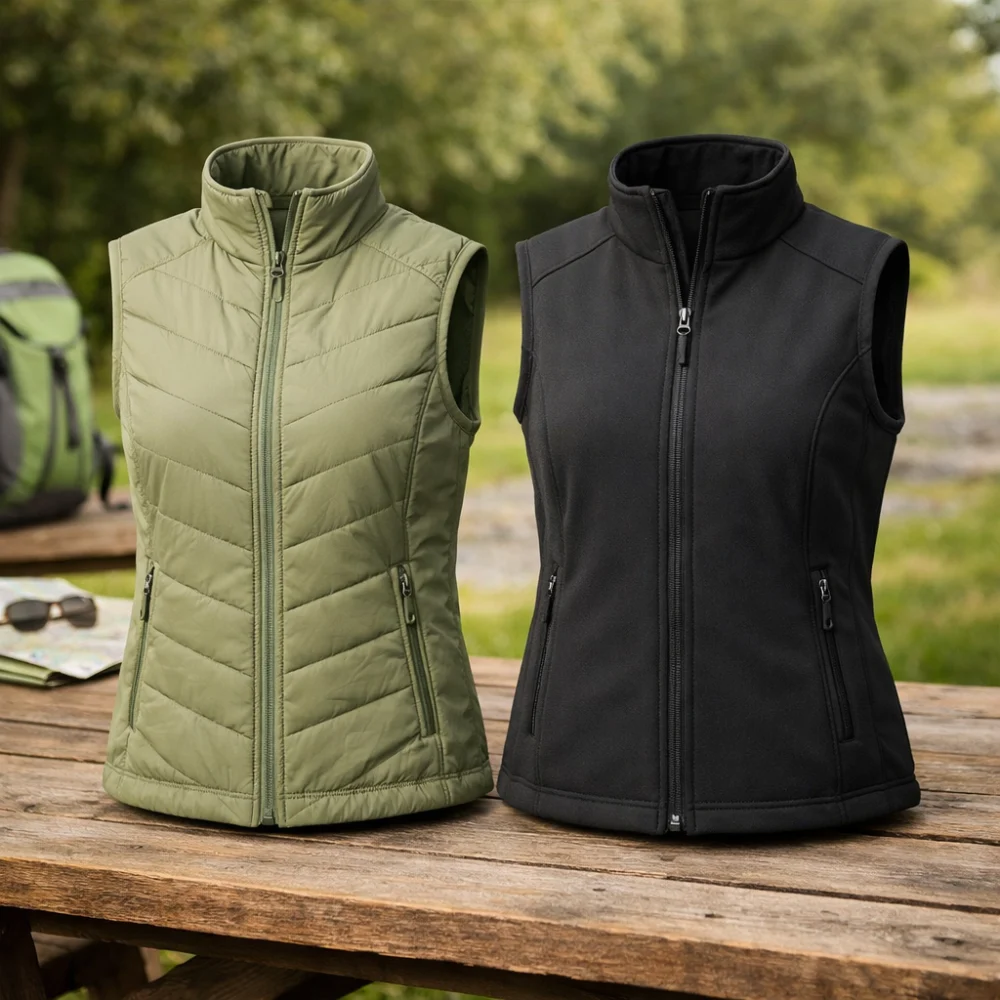
There are a few common ways softshell gilets differ, even within the same category. A lightweight version may suit mild weather and layering, while a more substantial one may feel better for outdoor use in cooler conditions. Hooded designs can add coverage, but some buyers prefer a simpler shape for easier layering under other outerwear.
Some styles are made to look more casual, while others are designed with activity in mind. If you are comparing several options, focus on the practical features first and style details second, unless appearance is the main reason for buying.
Which type suits different buyers?
| Buyer need | What usually matters most | Likely direction |
|---|---|---|
| Walking and general outdoor use | Wind protection, comfort and easy layering | Choose a balanced softshell with a comfortable cut |
| Active use | Breathability and freedom of movement | Look for a lighter design with less bulk |
| Everyday casual wear | Versatility and simple styling | Pick a neat fit with practical pockets |
| Cooler weather layering | Core warmth and room for mid-layers | Choose a slightly roomier style that layers well |
| Changeable conditions | Wind resistance and light moisture handling | Check the fabric claims carefully and avoid assuming full waterproofing |
Common mistakes to avoid
- Choosing a fit that is too tight for layering. A gilet should usually leave enough room for movement and a mid-layer underneath.
- Assuming all softshells handle rain the same way. Light moisture resistance is not the same as full waterproof protection.
- Overlooking breathability. If you plan to wear it while active, comfort in motion can matter as much as warmth.
- Focusing only on appearance. Pockets, collar shape and length often make more difference in day-to-day use.
Suitability and care considerations
Softshell gilets are generally chosen for versatility, but the right option depends on how you plan to use it. If you want something for frequent outdoor wear, pay close attention to the fabric description and the intended level of protection. If you mainly want a layering piece, comfort and fit may matter more than extra weather resistance.
For care and storage, check the individual product information because materials and finishes can differ. Keeping the gilet clean, dry and stored without unnecessary compression can help it stay in better condition over time.
How to compare options efficiently
- Start with the main use: casual wear, walking, active outings or layering.
- Decide how much weather resistance you want versus how much breathability you need.
- Compare fit, length and pocket layout before getting distracted by smaller style differences.
- Check whether the design is hooded, collar-focused or simpler and easier to layer.
- Read the individual product page carefully for any model-specific details.
Buyer checklist
- Will it fit comfortably over the layers you plan to wear?
- Does the level of wind or light rain resistance suit your usual conditions?
- Is breathability important for your activity level?
- Are the pockets, collar and hem details practical for your use?
- Does the overall cut suit how you want it to look and feel?
- Have you checked the product page for model-specific details?
Frequently asked questions
Are softshell gilets warmer than fleece gilets?
Not always. Softshell gilets are often chosen for better wind resistance and a more weather-ready feel, while fleece gilets are usually valued for softness and insulation. If warmth is your main priority, compare the individual product descriptions rather than assuming one fabric type is always warmer.
Can I wear a softshell gilet in the rain?
Some may cope with light showers, but that does not make them full rainwear. If you expect prolonged rain, check the product wording carefully and consider whether you need a more waterproof outer layer.
Are hooded softshell gilets better?
They can be useful if you want a bit more coverage in wind or light drizzle. The trade-off is that a hood may add bulk or change how the gilet layers under a jacket, so the better choice depends on how you plan to wear it.
What should I prioritise if I want one gilet for everyday use?
Look for a balanced fit, comfortable layering and practical pockets. Everyday wear usually benefits more from versatility than from highly specialised features.
Do I need a close fit?
Not necessarily. A closer fit can look neat, but a slightly roomier cut may be more useful if you plan to layer underneath. The right fit is the one that matches your intended use without restricting movement.
How do I compare softshell gilets quickly?
Start with fit, weather resistance, breathability and pocket layout. Those four points usually explain most of the difference between one option and another, especially for shoppers deciding between similar-looking styles.