


Children’s fleece gilets are a simple layering option for cooler days, offering extra warmth through the body while leaving the arms free. They are often chosen for school runs, outdoor play and general everyday wear when a full jacket feels unnecessary.
This guide is for buyers who want to compare comfort, fit and practical details rather than just pick the first colourful option. It focuses on the features that usually make the biggest difference to how useful a fleece gilet feels in real use.
Compare Children's Fleece Gilets


As an Amazon Associate we earn from qualifying purchases.
What should you look for in a children’s fleece gilet?
The best starting point is how the gilet will be worn: as a light extra layer, for active play, or for slightly colder days under a coat. A soft fleece can feel cosy and easy to wear, but the useful details are fit, fastening, thickness and whether the style suits the child’s routine. Specifications vary by model, so always check the individual product page before buying.
| Feature | What it means | Why it matters | What to check |
|---|---|---|---|
| Fleece weight | How light or substantial the fabric feels | Influences warmth, bulk and how easily it layers | Look for the description of the fleece type and the intended season of use |
| Fit | How close or roomy the gilet sits on the body | Affects comfort, freedom of movement and layering room | Check the age guidance, size chart and whether it is meant to be slim or relaxed |
| Fastening | How the gilet closes at the front | Changes ease of dressing and how much extra warmth is held in | See whether it uses a zip or another closure and whether it is easy for a child to manage |
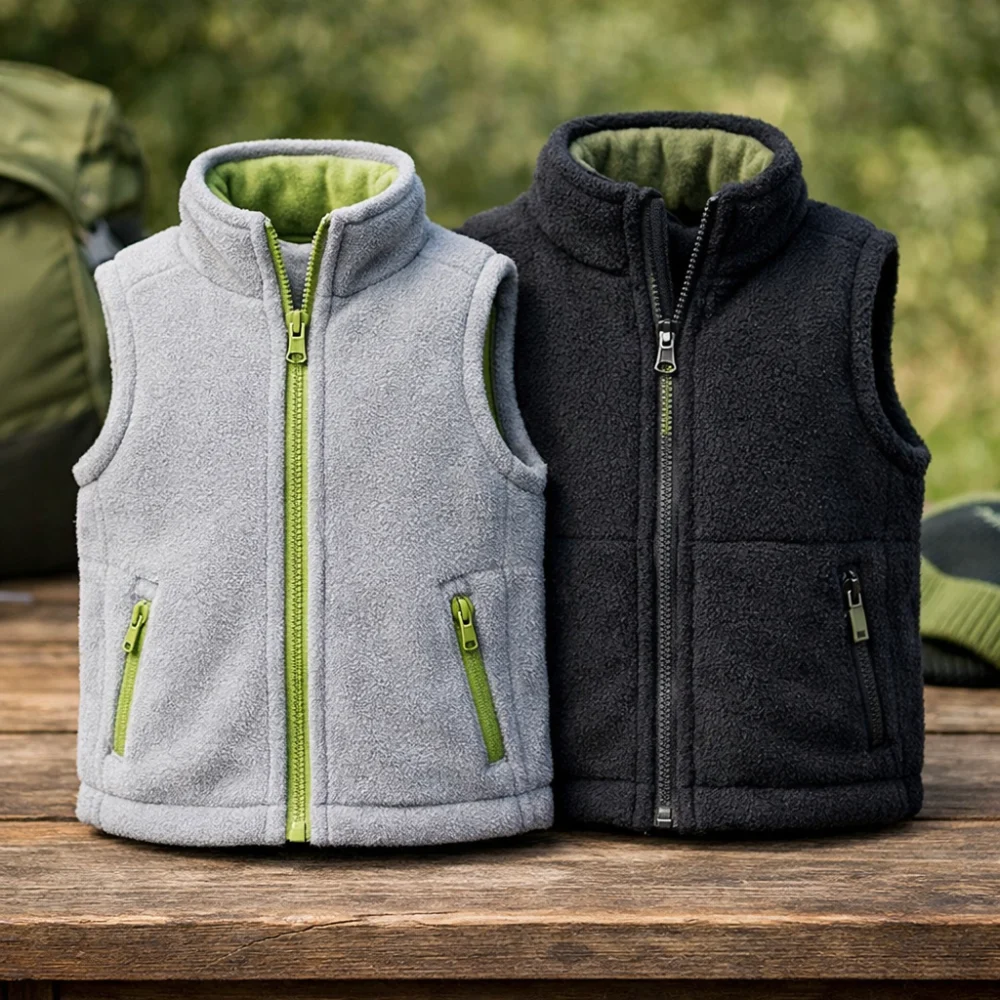
| Collar and neckline | The shape around the neck and chin area | Can affect comfort when worn over layers or under outerwear | Check photos and product details for a stand-up collar or softer neckline |
| Pockets and trim | Small practical details such as pockets or edging | May add convenience, but can also add bulk | Review the product page for pocket placement, cuffs and finished edges |
Key decision criteria explained
Warmth versus bulk
Fleece gilets are chosen because they add warmth without restricting the arms. Thicker fleece may feel cosier, but it can also be bulkier under a coat or school uniform. If the child needs an everyday layer rather than a very warm outer piece, a lighter fleece may be more versatile.
Fit and layering room
A gilet that is too snug can limit movement or feel awkward over a jumper, while one that is too loose may ride up. Think about what it will be worn with most often. A good fit should leave enough room for layering without looking oversized.
Ease of dressing
For younger children, the front fastening and overall simplicity of the design can matter as much as warmth. A straightforward zip is often easier for quick changes, especially if the gilet will be used frequently. If independence matters, look for a style that is simple to put on and take off.
Practical details
Pockets, edging and stitching can make a fleece gilet feel more useful, but they are not equally important for every buyer. A pocket may be handy for small items or cold hands, while neat edging can help a garment feel more finished. If a child is very active, keep the focus on comfort and movement first.
Types and style differences
Within this category, the main differences usually come down to how the fleece is cut and detailed rather than to radically different product types. Some styles are simple and plain, while others may include decorative designs, pockets or a more pronounced collar. For some buyers, that choice is mainly about appearance; for others, it is about how easy the garment is to use every day.
- Simple everyday gilets suit buyers who want a basic layering piece that is easy to pair with other clothing.
- Design-led gilets may appeal when the garment is being chosen as a gift or for a child who likes a particular look.
- More practical styles may be preferable if you want pockets, a fuller collar or a slightly more structured feel.
Which type suits which buyer?
| Buyer need | Features that may suit it | Why |
|---|---|---|
| Everyday layering | Light to midweight fleece, easy fastening, comfortable fit | Works across school runs, indoor-outdoor transitions and casual use |
| Active play | Freedom through the arms, not too bulky, simple design | Helps movement without feeling restrictive |
| Gift buying | Flexible sizing, neutral styling or a child-friendly design | Makes it easier to choose something that is likely to be worn |
| Extra under-layer for colder days | Closer fit and lower bulk | Sits more comfortably under a coat or outer shell |
| Quick grab-and-go wear | Easy fastening and straightforward shape | Reduces fuss when getting dressed in a hurry |
Common mistakes and misunderstandings
- Choosing only by appearance. A fun design is nice, but fit and layering comfort usually decide how often the gilet gets worn.
- Assuming thicker always means better. A bulkier fleece can be too warm or less practical if the child needs to wear it indoors or under another layer.
- Ignoring the intended layer underneath. A gilet that fits over a T-shirt may feel too tight over a jumper, so think about how it will really be used.
- Overlooking fastening simplicity. Younger children often benefit from a design that is easy to manage independently.
Safety and suitability checks
For a children’s clothing item, the main buying concern is suitability rather than technical performance. Check that the size, fit and fastening match the child’s age and usual clothing layers, and review the product page for any care or use notes. If the gilet will be worn for outdoor activity, think about whether it needs to work as part of a layered outfit rather than as the only warm layer.
Care, storage and everyday use
Fleece is usually chosen because it is straightforward to wear and maintain, but care needs can still vary by model. It is sensible to check washing guidance, drying expectations and whether the finish is likely to need any special handling. A gilet that keeps its shape well and stores easily is often more practical for children who wear it often.
How to compare options efficiently
- Decide when the gilet will be worn most often: indoors, outdoors, or as a layering piece.
- Compare fit and size guidance with the clothing it will be worn over.
- Check the fabric feel, thickness and fastening style.
- Look at practical details such as collar shape, pockets and finish.
- Choose the option that balances comfort, ease of use and everyday usefulness.
Summary buyer decision checklist
- Is the gilet for layering, everyday wear or a slightly warmer outer layer?
- Will the fit work over the child’s usual clothes?
- Is the fastening easy enough for the child to use?
- Does the collar and cut suit how it will be worn?
- Are the practical details useful without making the gilet bulky?
- Have you checked the individual product page for the exact size and care information?
Frequently asked questions
Are children’s fleece gilets good for layering?
Yes, that is one of their main strengths. They add warmth through the body while leaving the arms free, which makes them useful under a coat or over a long-sleeved top. The key is to choose a fit that allows comfortable layering without becoming tight.
What size should I choose?
The best choice is usually the one that matches the child’s current measurements and the layers they will wear underneath. Age labels can be a useful starting point, but size charts and product notes are more reliable. If the gilet is meant for regular layering, avoid a fit that is too close.
Is a thicker fleece always better?
Not necessarily. Thicker fleece can feel warmer, but it may also be bulkier and less flexible under other clothing. A lighter style can be more practical for everyday wear or for children who move between indoors and outdoors often.
Do pockets matter on a children’s fleece gilet?
They can be useful, but they are not essential for everyone. Pockets may help with small items or simply make the garment feel more practical, yet they can add a little bulk. If the child mainly needs a simple layer, pockets may be less important than fit and comfort.
Can a fleece gilet replace a coat?
Usually not. A fleece gilet is mainly a layering piece, so it is most useful when extra warmth is needed without full sleeves. For wetter, windier or colder conditions, it is more sensible as part of a layered outfit than as a complete outer layer.
What should I check before buying online?
Check the size guidance, fastening, thickness, fit notes and care instructions. It also helps to look at the photos and product description together so you can judge whether the style suits your child’s routine. If anything is unclear, compare the individual product page details before choosing.
Fleece or insulated: which type should you compare?
Fleece describes the fabric, while an insulated gilet may use a separate filling or construction to provide warmth. Product wording can overlap, so check the description and images to understand what the garment is made like rather than relying on a label alone.
For a soft layer over everyday clothes or under a coat, a fleece style may suit the intended use. If you need a more substantial layer, compare the garment’s stated construction and intended use with the clothing it will be worn over. Do not assume a fleece gilet will block wind or rain; check the individual product details if weather protection matters.
More Children's Fleece Gilets
See all 242 Children's Fleece Gilets →


As an Amazon Associate we earn from qualifying purchases.