

Men’s thermal and lined trousers are chosen mainly for warmth, comfort and season use. They sit somewhere between regular outdoor trousers and more insulated cold-weather options, so the main decision is how much warmth you need versus how much freedom of movement you want.
Some buyers want an everyday pair for chilly walks, commuting or light outdoor jobs. Others need a warmer option for longer time outdoors, but still want trousers that are easy to move in and simple to wear with layers. This guide helps you compare those priorities without drifting into other trouser types.
Because different products use different linings, fabrics and fits, the label alone does not tell you everything. Specifications vary by model, so always check the individual product page before buying.
What should you look for in men’s thermal and lined trousers?
The best starting point is how cold you expect to be, how active you will be and whether you need these trousers as a main outer layer or as a warmer everyday pair. More lining usually means more warmth, but it can also reduce breathability and make the trousers feel less flexible.
If you are likely to wear them for walking, travel or light work, look for a balance of warmth, comfort and ease of movement. If you expect long periods outdoors in colder conditions, the quality and extent of the lining become more important than a loose, casual fit.
| Feature | What it means | Why it matters | What to check |
|---|---|---|---|
| Lining type | The inner layer that adds warmth and comfort | It affects how warm, soft and breathable the trousers feel | Look for the type of lining described on the product page and whether it is full or partial |
| Fit | How closely the trousers sit on the body | Fit affects comfort, layering and freedom of movement | Check waist, leg shape and whether the style is relaxed, regular or slim |
| Outer fabric | The outside material that handles wear and everyday use | It influences durability, wind resistance and general practicality | Look for the fabric description and whether it suits walking, casual wear or work use |
| Warmth level | How much insulation the trousers provide | Too little warmth can leave you cold; too much can feel restrictive indoors or during active use | Consider your usual temperature range and how long you will be outside |
| Breathability | How well heat and moisture can escape | Important if you walk a lot or move between indoor and outdoor settings | Check whether the trousers are described as suitable for active use |
| Ease of care | How simple the trousers are to clean and maintain | Relevant for everyday wear, travel and work clothing | Review the care instructions on the individual product page |
Key decision criteria
Warmth versus flexibility
The main compromise in this category is warmth against mobility. A thicker or more noticeable lining can feel cosy in colder weather, but it may also make the trousers warmer than you need on milder days or during active use.
If you spend most of your time walking gently, standing around or travelling, a warmer pair may be useful. If you move a lot or layer clothing underneath, a lighter lining may feel more comfortable.
Fit and layering
Fit matters because lined trousers can feel different from unlined trousers in the same size. A pair that is comfortable in the waist may still feel tighter through the thighs or seat once the lining is taken into account.
If you plan to wear base layers underneath, leave room for that without choosing a fit so loose that the trousers feel awkward. A regular fit is often the easiest starting point when you are unsure.
Fabric and use case
The outer fabric helps determine whether the trousers feel more like casual wear, walking wear or workwear. Some buyers prefer a softer feel for everyday use, while others want a tougher finish for repeated outdoor wear.
Think about where you will wear them most often. A pair for dog walks, commuting and weekends may need different qualities from a pair for outdoor tasks or prolonged cold-weather use.
Comfort details
Small details can make a big difference to comfort, especially in a category that is often bought for regular winter use. Waist style, ankle shape and pocket layout can all affect how practical the trousers feel day to day.
Do not assume every thermal or lined trouser will feel the same just because it is warm. Check the product page for the fit details and any comfort features that matter to you.
Types and variants you may see
This category usually includes a few broad styles rather than one single standard design.
- Thermal-lined casual trousers for everyday wear, commuting and lighter outdoor use.
- Fleece-lined or brushed-lined styles for a softer feel and extra comfort in colder weather.
- Cargo-style lined trousers for people who want a practical look with extra pockets.
- Joggger-style lined trousers for a more relaxed fit and casual comfort.
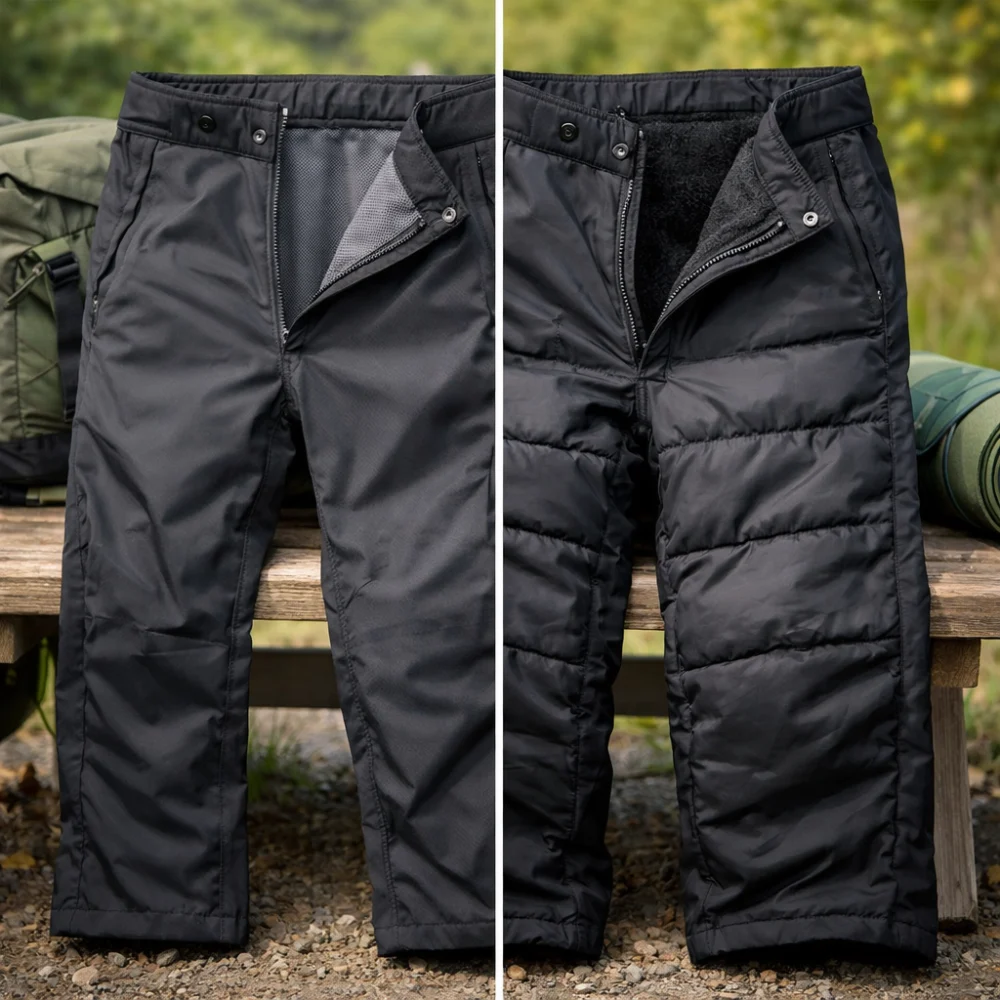
The right choice depends less on the name and more on how the trousers fit, how warm they feel and whether the style suits your usual activity. A casual style can be perfectly suitable for outdoor use if the fit and lining are right.
Which type suits which buyer?
| Buyer need | What tends to help | Why it suits that need |
|---|---|---|
| Everyday winter wear | Comfortable fit, moderate lining, easy care | Useful for regular use without feeling too heavy indoors |
| Longer time outdoors | Clear warmth, practical outer fabric, good room for layering | Helps when you are outside for longer stretches in colder weather |
| Casual comfort | Soft lining, relaxed fit, simple waistband | Feels less restrictive for day-to-day wear |
| Practical outdoor use | Durable fabric, useful pocket layout, dependable fit | Better suited to active days and repeated wear |
Common mistakes to avoid
- Choosing on warmth alone. Very warm trousers can feel unnecessary if you spend time indoors or move a lot.
- Ignoring fit over the lining. A lining can change how a familiar size feels, especially through the leg and seat.
- Assuming all lined trousers are the same. Casual, cargo and jogger styles can feel very different in use.
- Overlooking care instructions. Some options are easier to wash and rewear than others.
Safety and suitability checks
Check that the trousers suit the activity you have in mind and the temperatures you usually face. If you need them for outdoor work, walking or travel, make sure the fit and fabric will still be comfortable after a full day of wear.
For wet weather, lined trousers are not the same as waterproof trousers, so do not assume warmth also means rain protection. If you need both, compare that requirement separately.
Maintenance, storage and lifespan
Most buyers will want trousers that are easy to wash, dry and store between uses. Warm linings can take longer to feel fully dry than lighter everyday trousers, so it is sensible to check the care guidance before buying if you plan to wear them often.
If you expect frequent use, pay attention to the outer fabric and the areas that may see the most wear, such as the knees, seat and waist. A more durable construction can matter more than a very soft feel if the trousers are for regular outdoor use.
How to compare options efficiently
- Start with your main use: everyday wear, walking, light work or colder outdoor use.
- Decide how much warmth you really need, based on how active you will be.
- Compare fit, lining and outer fabric before looking at extra details.
- Check whether the style suits layering, movement and comfort.
- Read the individual product page for care instructions and any model-specific details.
Summary buyer decision checklist
- Does the warmth level match the weather and activity you expect?
- Will the fit still feel comfortable with or without layers underneath?
- Does the style suit your main use, such as casual wear or outdoor tasks?
- Is the fabric description appropriate for the amount of wear you expect?
- Have you checked the care instructions and any model-specific notes?
Frequently asked questions
Are thermal trousers the same as lined trousers?
They are closely related, but the wording is not always used in exactly the same way. Some products are described as thermal because they are designed to retain warmth, while others are described as lined because of the inner layer. The safest approach is to check the product description rather than relying on the title alone.
Are fleece-lined trousers always warmer?
Not always, but fleece lining often suggests a softer and warmer feel. The overall warmth still depends on the outer fabric, the thickness of the lining and how the trousers are cut. If warmth is your main concern, compare the full description rather than the lining name on its own.
Can I wear lined trousers indoors?
Yes, but that depends on how warm the trousers are and how active you are. Some lined trousers feel comfortable for everyday wear, while others may feel too warm inside for long periods. If you move between indoors and outdoors, a moderate lining is often easier to live with.
Are cargo-style lined trousers suitable for everyday wear?
They can be, especially if you like a more practical look or want extra pocket space. The main thing to check is whether the cut feels comfortable enough for your normal day. Style is less important than fit and warmth once you start using them regularly.
What size should I choose if I want to wear base layers?
Choose a size that allows comfortable movement without becoming loose and awkward. Base layers can add a little bulk, so it helps to check the waist and leg shape rather than assuming your usual size will work in every design. If the product page gives fit guidance, use that as your starting point.
Do lined trousers replace waterproof trousers?
No. Lined trousers are mainly about warmth and comfort, while waterproof trousers are designed to help deal with rain. If you need both, it is better to treat them as separate buying decisions.
How can I tell if a pair is more casual or more hard-wearing?
Look at the fabric description, the overall cut and whether the style is described as cargo, workwear-like or relaxed casual. A tougher outer fabric and a more practical pocket layout often point towards harder-wearing use, but the product page is the best place to confirm that.