

Men’s thermal leggings are a practical base layer choice for colder conditions, whether you want extra warmth under outdoor clothing, something comfortable for winter walks, or a layer that sits closer than bulkier bottoms.
The main decision is not just how warm they feel, but how well they balance insulation, fit, breathability and comfort for your intended use. Some options are better for active wear, while others are more about retaining warmth during slower-paced use.
Because product descriptions vary, it helps to compare the fabric, fit and intended activity rather than relying on the category name alone.
What should you look for in men’s thermal leggings?
The best starting point is to match the leggings to how you plan to wear them. If you want a base layer under trousers or outdoor gear, a closer fit and good comfort around seams usually matter more than extra bulk. If you expect higher activity, breathability and freedom of movement become more important. Specifications vary by model, so always check the individual product page before buying.
| Feature | What it means | Why it matters | What to check |
|---|---|---|---|
| Warmth level | How much insulation the leggings are designed to provide | Affects comfort in cold weather and how well the layer works on its own or under other clothing | Fabric description, lining detail and intended season or activity |
| Fit | How close the leggings sit to the body | A closer fit often works better as a base layer and helps reduce bunching | Waist fit, leg length and whether the cut is described as slim, regular or compression-like |
| Breathability | How well the fabric manages heat and moisture | Important if you will walk, cycle or move around a lot in them | Material description and any mention of moisture management or quick-drying properties |
| Fabric feel | How the material feels against the skin | Affects comfort for all-day wear, especially when layered | Whether the product highlights brushed, fleece-lined or merino-style comfort |
| Stretch | How much the fabric moves with you | Useful for active wear and for avoiding restriction under outer layers | Any mention of stretch, flexibility or ease of movement |
| Use case | The activity or setting the leggings are meant for | Helps separate general winter base layers from items aimed at sport or outdoor work | Product wording about walking, hiking, cycling, skiing or general cold-weather layering |
Which features matter most?
Fabric and warmth
Fabric choice usually shapes the biggest difference in how thermal leggings feel. Warmer, softer constructions can be useful for low-intensity cold-weather wear, while lighter or more technical fabrics may suit people who move more and want less overheating. The trade-off is simple: more insulation can mean less ventilation, so choose warmth with your real activity level in mind.
Fit and comfort
Thermal leggings should usually sit close enough to work as a layer without sliding around or bunching under outer clothing. If the fit is too loose, warmth can be less efficient and layering becomes awkward; if it is too tight, comfort can suffer during long wear. Look for practical details such as waistband style, leg length and whether the fabric is described as stretchy.
Breathability and moisture management
If you plan to wear the leggings for active use, breathability matters almost as much as warmth. A warmer fabric that traps too much heat can feel less comfortable once you start moving. For active buyers, it is often better to choose a balanced base layer than the thickest option available.
Intended activity
Some thermal leggings are aimed at everyday winter layering, while others are described for outdoor exercise or colder conditions with more movement. That difference affects how much stretch, insulation and airflow you are likely to want. Treat the intended activity as a clue, not a guarantee, and still check the detailed product information.
Common types and variants
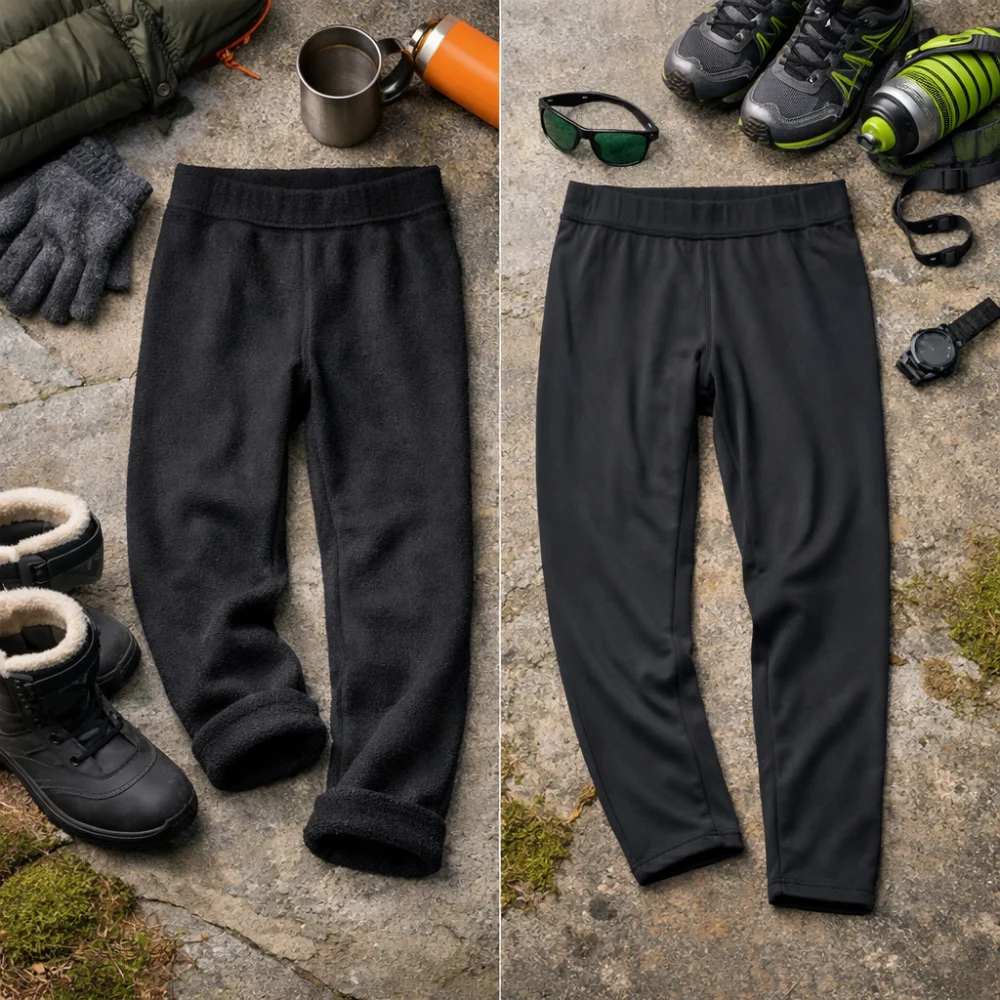
Within this category, the most useful difference is between warmer, softer base layers and lighter, more activity-focused thermal leggings. A warmer option may suit colder commutes, sitting still for longer periods or layering under outdoor clothing. A lighter, more flexible option may suit walking, running or other active use where overheating is a concern.
You may also see materials described in different ways, such as fleece-lined, thermal, merino or performance-focused fabric. Those labels can indicate different comfort and insulation balances, but they do not tell the whole story. It is worth checking the product details to understand how the fabric is intended to feel and perform.
Who tends to prefer which kind?
| Buyer need | What to prioritise | Why |
|---|---|---|
| General winter layering | Comfort, close fit and reliable warmth | Useful for everyday cold-weather wear under trousers or outdoor clothing |
| Walking and outdoor activity | Stretch, breathability and balanced insulation | Helps avoid overheating while keeping some warmth |
| Colder, slower-paced use | Higher insulation and soft feel | Comfort matters more when movement is limited |
| Layering under slimmer clothing | Smoother fabric and less bulk | Makes it easier to wear the leggings discreetly beneath other garments |
Common mistakes to avoid
- Choosing warmth without thinking about activity. A very warm pair can feel uncomfortable if you plan to move a lot. Match insulation to how hard you expect to work.
- Ignoring the fit. Thermal leggings that are too loose can wrinkle under outerwear, while very tight ones may feel restrictive. Check the cut and any size guidance carefully.
- Assuming all thermal fabrics feel the same. Some are softer and cosier, while others are designed more for performance. The fabric description gives useful clues.
- Buying for one use and expecting it to suit everything. A pair ideal for winter walks may not be the best choice for high-output exercise, and vice versa.
Safety and suitability notes
Thermal leggings are a comfort and layering item, so the main concern is suitability rather than complex technical safety. If you need them for sport, work or long periods outdoors, check that the product is intended for that use and that the fit will not restrict movement. If you have sensitive skin or specific comfort needs, fabric feel and seam construction are worth checking closely.
Care, storage and lifespan considerations
Thermal leggings usually last better when they are cared for according to the garment information on the individual page or label. Washing instructions, drying method and fabric type can all affect softness and stretch over time. If you plan to wear them often, it makes sense to consider how easy the material will be to wash, dry and rotate with other layers.
How to compare options efficiently
- Decide where and when you will wear them most often.
- Choose the level of warmth that matches that use.
- Check fit, stretch and comfort so the leggings work as a layer.
- Look at fabric details to judge breathability and softness.
- Compare the product information on each individual page before deciding.
Summary buyer decision checklist
- Will I wear these mainly for layering, general winter comfort or active outdoor use?
- Is the fit close enough to work comfortably under other clothing?
- Does the fabric seem warm enough without sounding too heavy for my activity?
- Will breathability matter for how I plan to move in them?
- Does the material description suggest the feel I want against the skin?
- Have I checked the individual product page for the specific details that matter?
Frequently asked questions
Are thermal leggings the same as base layers?
They often overlap, but the wording can be used in slightly different ways depending on the product. Some thermal leggings are clearly designed as base layers, while others are presented more as warm everyday bottoms. Check the description to see whether the item is meant for layering, activity or general cold-weather wear.
Can I wear thermal leggings on their own?
That depends on the style, the fabric and the setting. Some are suitable as standalone indoor or relaxed wear, while others are clearly intended to be worn under trousers or outer layers. If modesty, warmth or weather exposure matters, check the product details carefully.
What is better for active use: thicker or lighter thermal leggings?
For active use, a lighter or more breathable pair often feels more comfortable because it reduces overheating. Thicker options can be better if you are mostly standing, walking slowly or spending time in colder conditions. The right choice depends on how much you expect to move.
How important is stretch in thermal leggings?
Stretch is very useful because it helps the leggings move with you and sit smoothly under other clothing. It is especially helpful if you plan to walk, bend or wear them for long periods. If stretch matters to you, look for that feature in the product description rather than assuming every pair feels the same.
Should I choose the warmest option available?
Not always. The warmest option can be too much if you are active or if you only need a light base layer. It is usually better to match warmth to your real use than to maximise insulation by default.
How do I know whether a pair will suit layering?
Look for a close fit, smoother fabric and a design that suggests base-layer use. Very bulky or loose styles may be less comfortable under other clothing. If the description mentions layering or base-layer wear, that is often a helpful sign.