

Men’s base layer tops are the foundation layer worn closest to the skin for outdoor activity, colder conditions and everyday layering. The right choice depends on how warm you want to feel, how much moisture you expect to build up and whether you prefer a close or relaxed fit.
This guide focuses on the practical differences that matter before you compare individual products. It helps you narrow down fabric, sleeve length, fit and intended use without treating every base layer as the same.
If you are choosing for walking, commuting, training or cold-weather layering, it is worth thinking about comfort first and warmth second. A base layer that manages moisture well can feel more useful than one that simply feels thick.
What should you look for in a men’s base layer top?
The best starting point is your main use: active movement, light insulation or everyday layering. A close-fitting top usually works better when you want it to sit neatly under other clothing and move moisture away from the skin, while a looser fit may feel more relaxed but can be less effective under mid-layers. Fabric choice, sleeve length and neckline also affect how versatile the top will be.
Specifications vary by model, so always check the individual product page before buying.
| Feature | What it means | Why it matters | What to check |
|---|---|---|---|
| Fit | How closely the top sits on the body | Affects comfort, layering and moisture management | Look for a fit that matches your intended use and preferred feel |
| Fabric type | The material or blend used | Influences warmth, drying speed and softness | Check the listed fabric and any care guidance on the product page |
| Sleeve length | Short sleeve or long sleeve | Changes coverage and warmth | Choose the level of coverage that suits the season and activity |
| Breathability | How easily heat and moisture can move through the fabric | Important for active use and comfort during exertion | Read the description for terms such as moisture-wicking or breathable |
| Layering compatibility | How well it sits under other clothing | Helps avoid bulk and restriction | Check whether the top is intended as a base layer, compression layer or thermal undershirt |
Key decision criteria
Warmth versus breathability
Base layer tops are often chosen for warmth, but warmth alone is not the whole story. If you are active, a top that traps too much heat can feel uncomfortable once you start moving. If you are mostly standing still or wearing it under insulated clothing, a warmer-feeling option may make more sense.
Fit and layering
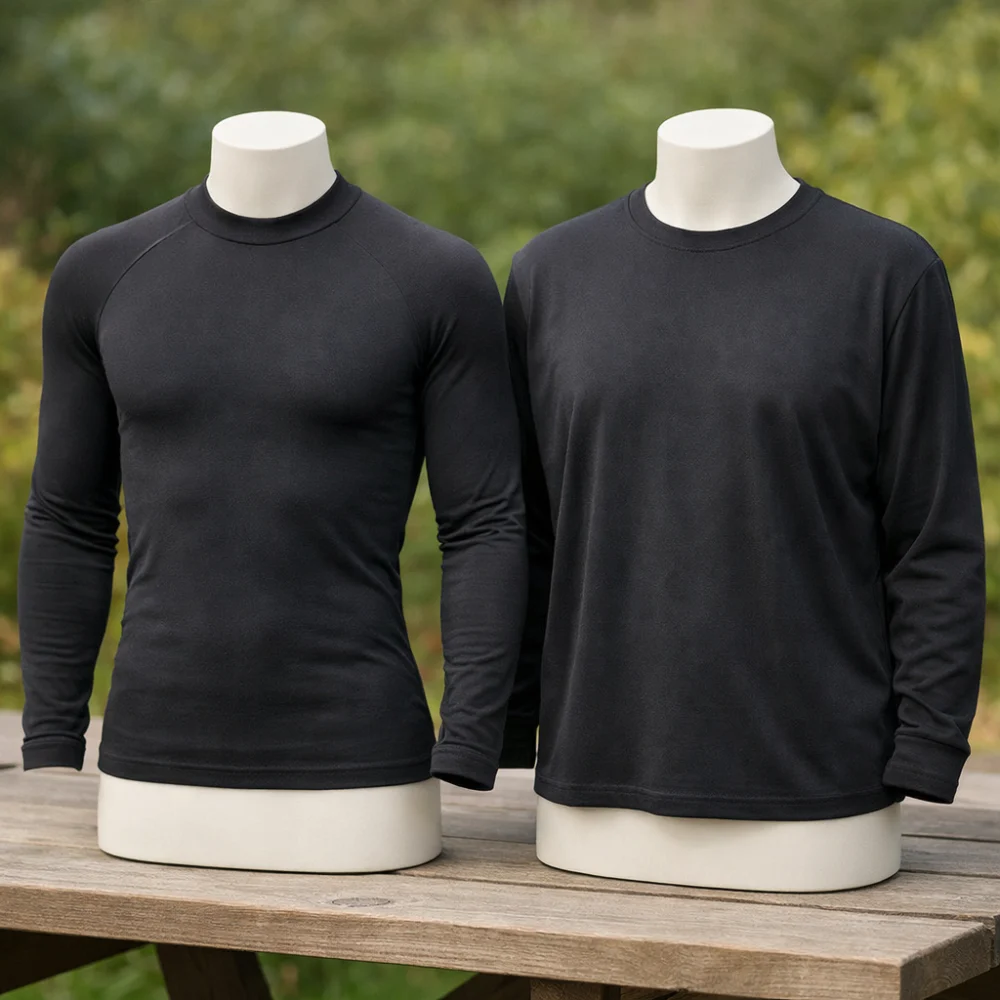
Base layers normally work best when they sit close to the body, because that helps them layer cleanly and perform as intended. Compression-style tops are usually more body-hugging, while other tops may offer a little more ease. Decide whether you want a second-skin feel or just a neat layer under a shirt, fleece or jacket.
Fabric and feel
Different fabrics can feel very different against the skin. Some buyers prioritise a soft, comfortable feel for everyday wear, while others want a fabric that dries quickly after exercise. If you are sensitive to texture, check product descriptions carefully and look for any notes about stretch, softness or thermal weight.
Seams, necklines and cuffs
Small design details can affect comfort more than buyers expect. Flat seams, a neckline that suits your outer layers and sleeves that sit well at the wrist can all improve how the top feels in use. These details matter most if you plan to wear the top regularly rather than occasionally.
Types and variants within this category
Men’s base layer tops are not all the same, even when they serve a similar purpose. The main differences are usually sleeve length, level of compression, thermal emphasis and whether the top is aimed at sport or general layering.
- Long sleeve base layer tops: Useful when you want more coverage and added warmth, especially in cooler weather.
- Short sleeve base layer tops: Better when you want a lighter layer or need something that works under a wider range of outfits.
- Compression-style tops: Designed to fit very closely, which some buyers like for active wear and a smooth layered feel.
- Thermal-style tops: Usually chosen when the main priority is retaining warmth in colder conditions.
The main limitation is that one style rarely does everything equally well. A warmer, closer-fitting top may be ideal in cold weather but feel too much for high-intensity activity or indoor wear.
Which type suits which buyer?
| Buyer need | Usually suits | Why | Watch out for |
|---|---|---|---|
| Cold-weather layering | Long sleeve or thermal-leaning tops | Provides more coverage and insulation | Too much warmth if you are very active |
| Running or training | Breathable, close-fitting tops | Helps manage sweat and avoid bulk | Overly warm fabrics can feel heavy in motion |
| Everyday wear under clothing | Simple, comfortable tops with a neat fit | Sits easily under shirts, jumpers or jackets | Thick seams or bulky fabric may show through |
| Outdoor walking and general use | Versatile long sleeve tops | Balances warmth, comfort and layering | Check whether the fit is too tight or too loose for you |
Common mistakes and misunderstandings
- Choosing warmth without considering activity: A very warm top may be ideal when you are static, but less comfortable when you are moving quickly.
- Ignoring fit: A base layer that is too loose may not layer as neatly, while one that is too tight may feel restrictive.
- Assuming all “thermal” tops are the same: Thermal styling can mean different things across products, so check the description rather than relying on the label alone.
- Overlooking care requirements: Some fabrics are easier to wash and dry than others, which can matter if you will wear the top often.
Safety and suitability checks
Base layer tops are a comfort and layering choice, so the main concern is suitability rather than risk. If you will use one for sport, outdoor work or long periods in changing conditions, make sure the top matches the activity and the weather you expect. Check the product page for fabric details, fit notes and care guidance before buying.
Maintenance, storage and lifespan considerations
Most buyers will want a top that is easy to wash, dries in reasonable time and keeps its shape after repeated use. If you plan to wear it often, think about how much care you are comfortable giving it and whether you want one top to rotate with others or a multi-pack approach. Storing base layers clean and dry helps them stay ready for the next use.
How to compare options efficiently
- Start with your main use: active training, walking, everyday layering or colder-weather wear.
- Choose the sleeve length and warmth level that match that use.
- Compare fit, fabric feel and layering comfort rather than focusing on a single feature.
- Check the product page for care instructions, neckline style and any notes about compression or thermal performance.
- Pick the option that balances comfort, coverage and practicality for how you will actually wear it.
Summary buyer decision checklist
- Does the top suit your main activity level?
- Is the fit close enough for layering without feeling restrictive?
- Does the fabric suit your preference for warmth, breathability and feel?
- Is the sleeve length right for the season and use?
- Will the top work comfortably under your other clothing?
- Have you checked the individual product page for care and construction details?
Frequently asked questions
Are base layer tops meant to be tight?
They are usually designed to sit fairly close to the body, because that helps them layer neatly and manage moisture better. That does not mean every top should feel compression-tight, though. The right fit depends on whether you want active performance or simple everyday warmth.
What is the difference between a base layer and a thermal top?
The terms often overlap, but a thermal top usually emphasises warmth more strongly. A base layer may be chosen more for layering, moisture management and comfort. Check the individual product description to see which emphasis a particular top appears to have.
Can I wear a base layer top on its own?
Yes, if the design and appearance suit you. Many are intended to be worn under other layers, but some buyers use them as standalone tops for sport or casual wear. Comfort and coverage will depend on the specific product.
Should I choose long sleeve or short sleeve?
Long sleeve tops give more coverage and are often better for colder conditions or fuller layering. Short sleeve tops can feel lighter and more flexible across seasons. Your choice should follow how much warmth and coverage you actually need.
What matters most for active use?
For active use, fit and breathability usually matter more than thickness alone. A top that handles moisture well and stays comfortable when you move is often more useful than one that simply feels warm at first touch. Check the product description for clues about intended activity.
Do compression tops suit everyone?
Not necessarily. Some buyers like the close feel and smooth layering, while others prefer a little more ease. Compression-style tops can be useful for active wear, but they are not the only good choice.
How do I know if a top will layer well?
Look for a neat fit, low bulk and a neckline that works with the layers you normally wear. If you plan to use it under shirts or fleece tops, comfort at the shoulders and seams is worth checking as well. The individual product page should help with any fit or construction notes.