


Children’s base layer bottoms are the layer worn close to the skin under trousers, ski wear or outdoor clothing. They are usually chosen to help with warmth, moisture management and comfort during cold-weather activities.
For shoppers, the main decision is not just how warm they look, but how well they suit the child’s activity level, fit and layering needs. A pair that feels right for one child on a winter walk may feel too warm or too restrictive for another on the move.
This guide focuses on the practical differences that matter when comparing options, without drifting into tops, full sets or general thermal underwear.
Compare Children's Base Layer Bottoms


As an Amazon Associate we earn from qualifying purchases.
What should you look for in children’s base layer bottoms?
Start with the child’s main use: everyday cold-weather wear, active outdoor play or sports layering. The best starting point is usually a comfortable fit in a material that matches the child’s activity level, because that affects both warmth and how likely they are to keep wearing it. Specifications vary by model, so always check the individual product page before buying.
The main trade-off is between warmth and breathability. Thicker or more insulating options may feel cosier in still, cold conditions, while lighter styles may be better when the child is running around and building heat.
| Feature | What it means | Why it matters | What to check |
|---|---|---|---|
| Material | The fabric used for the base layer | Affects warmth, comfort and how the garment feels against the skin | Look for the fabric description and any notes on softness, stretch or warmth |
| Fit | How closely the garment sits on the body | A close fit usually layers better and helps the fabric work as intended | Check the size guidance and whether the cut is close-fitting or relaxed |
| Thickness or warmth level | How insulating the bottoms are | Helps match the garment to the weather and the child’s activity | Compare product descriptions for light, mid or thermal use language |
| Stretch and movement | How easily the fabric moves with the child | Important for play, sports and comfort under trousers | Look for stretch in the product details and consider the intended activity |
| Waistband comfort | How the waistband feels and stays in place | Can affect whether a child accepts wearing the layer for longer periods | Check sizing notes and any mention of elasticated or soft waist styling |
| Care needs | How the item should be washed and dried | Useful for family routines and repeat wear | Review care instructions on the product page before choosing |
Key decision criteria explained
Material and warmth
Material has the biggest effect on comfort and feel. Some buyers want a soft, everyday layer for school trips or walking, while others need something more insulating for colder days outdoors. The right choice depends on whether the child is mostly sitting still, walking, or being highly active.
Fabric also affects how the garment feels over long periods. If a child is sensitive to scratchy or heavy clothing, comfort and texture may matter more than maximum warmth.
Fit and layering
Base layer bottoms normally work best when they fit close to the body without feeling tight. That helps them sit smoothly under trousers and reduces bunching. A size that is too loose may be less comfortable and may not layer as neatly.
Because children grow quickly, it can be tempting to buy large, but an oversized base layer may not feel as useful in practice. It is usually better to compare the size guide and think about the clothing that will be worn over it.
Activity level
A child who is running, climbing or skiing may prefer a lighter or more breathable option than a child who is standing around at the sideline or on a cold walk. The more active the wearer, the more important it becomes to balance warmth with the ability to release excess heat.
For mixed use, a mid-weight option is often the most versatile starting point, but the right balance still depends on the individual child and the season.
Comfort details
Comfort details can make a bigger difference than buyers expect. Waistband feel, stretch, seams and general softness all affect whether a child will happily wear the layer under other clothes. These features are easy to overlook if you focus only on thermal claims.
If a child dislikes “itchy” or restrictive clothing, look closely at the product wording and the fit description rather than assuming all thermal bottoms feel the same.
Product types and variants
Within this category, the main differences are usually about material, thickness and intended use rather than dramatic style changes. Some bottoms are geared towards general thermal wear, while others are more clearly aimed at sport or active layering.
- Lightweight options suit milder conditions or higher activity, where breathability matters more than maximum insulation.
- Mid-weight options offer a practical middle ground for everyday cold-weather use and mixed activity.
- Thermal or more insulating options are better for colder conditions or for children who are less active outdoors.
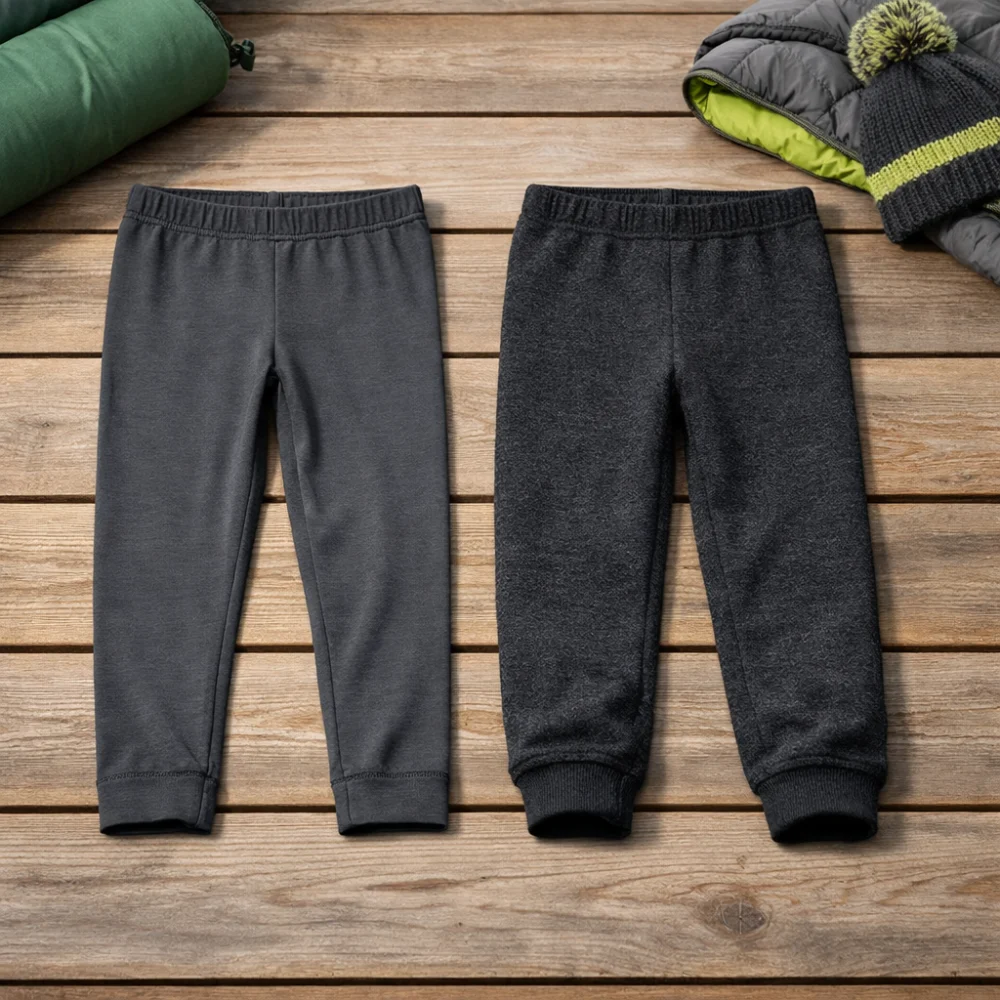
There may also be differences in cut, stretch and fabric blend. Since product names can be suggestive rather than exact, check the description carefully before assuming two items will feel or perform the same.
Which type suits which buyer?
| Buyer need | Useful characteristics | Reason |
|---|---|---|
| Everyday winter layering | Comfortable fit, moderate warmth, easy care | Works well for school runs, walks and general cold-weather wear |
| Active outdoor play | Stretch, close fit, lighter or mid-weight feel | Helps the child move freely without overheating as quickly |
| Colder, slower-paced use | More insulating fabric, comfortable waistband, close layering | Better when warmth matters more than maximum breathability |
| Gift buying | Broadly versatile style and straightforward care | Makes it easier to choose without knowing the child’s exact routine |
| Replacement for a worn layer | Similar fit and warmth to the item already used | Helps keep the layering system familiar and comfortable |
Common mistakes and misunderstandings
- Assuming all thermal bottoms are equally warm. Warmth can vary with fabric, thickness and fit, so compare the description rather than relying on the category alone.
- Buying too loose. A very roomy fit may be less effective as a base layer and can feel bulkier under other clothing.
- Ignoring activity level. A layer that feels perfect for standing around may be too warm for a child who is constantly moving.
- Focusing only on material name. The same fabric type can still vary a lot in thickness, softness and stretch from one product to another.
Safety and suitability caveats
These are clothing choices rather than specialist safety products, but suitability still matters. Check that the size, fit and warmth level suit the child’s age, build and intended use, and be cautious if the wearer has any skin sensitivities to particular fabrics or finishes.
It is also sensible to think about layering as a whole. Base layer bottoms work best as part of a complete outfit suited to the weather, rather than as a substitute for appropriate outer clothing.
Maintenance, storage and lifespan considerations
Care instructions can influence value as much as warmth does. If an item needs more careful washing or drying, make sure that fits your routine before buying. Families who need frequent wear may prefer bottoms that are straightforward to clean and easy to put back into use.
As with most children’s clothing, lifespan depends on how often the item is worn, washed and outgrown. A practical purchase balances comfort and usefulness now with the likelihood that it will stay in good shape for long enough to justify the choice.
How to compare options efficiently
- Decide when the child will wear the base layer most often.
- Choose the broad warmth level that matches that use.
- Check the fit so the bottoms can layer comfortably.
- Compare stretch, waistband comfort and care instructions.
- Read the individual product page for any model-specific details before deciding.
Summary buyer decision checklist
- Choose the warmth level that matches the child’s activity and the weather.
- Check that the fit is close enough to layer comfortably.
- Look for a fabric feel the child is likely to tolerate well.
- Compare stretch and waistband comfort for everyday wear.
- Review care instructions for easy washing and reuse.
- Use the product page to confirm any model-specific details.
Frequently asked questions
What is the difference between base layer bottoms and thermal underwear?
In practice, the terms overlap a lot. Base layer bottoms are the lower half of a close-fitting layer worn under clothing, while thermal underwear is a broader phrase that may cover both tops and bottoms. The best choice depends on the product description and how it will be worn.
Should children’s base layer bottoms be tight?
They should usually fit close to the body without feeling restrictive. A close fit helps them sit smoothly under other clothes and work as a layering piece. If they are too loose, they may feel bulky or less comfortable.
Are warmer base layer bottoms always better?
Not necessarily. Very warm bottoms can be excellent in cold, still conditions, but they may feel too hot for active play. The right choice depends on how much movement the child will do and how cold the conditions are.
Which material is best for children?
There is no single best material for every child. What matters most is comfort, warmth and how easy the fabric is to live with. If a child is sensitive to feel or temperature, that should weigh heavily in the decision.
Can these be worn on their own?
Some styles may be comfortable enough for indoor wear or as activewear, but they are usually bought to be worn as a layering piece. Check the product description and think about whether the item is designed more for insulation or for visible everyday wear.
How do I choose between lightweight and mid-weight?
Lightweight is often better for milder weather or high activity, while mid-weight gives a more versatile balance for mixed use. If you are unsure, think about whether warmth or breathability is likely to matter more on the days it will be worn.
Do I need to buy matching tops and bottoms?
No, not necessarily. Some children do best with just bottoms for extra warmth under trousers, while others benefit from a full base layer set. It depends on the child’s routine, the weather and how much layering is needed.
More Children's Base Layer Bottoms
See all 70 Children's Base Layer Bottoms →



As an Amazon Associate we earn from qualifying purchases.