

Webbing belts are a practical choice for everyday wear, outdoor use and simple workwear styling. They are usually chosen for adjustability, ease of fastening and a more casual feel than a traditional stitched leather belt.
If you are comparing webbing belts, the main job is to decide how you want the belt to feel in use and how much adjustment you need. The details that matter most are the buckle style, belt width, length adjustment and how the material suits your clothing.
Because webbing belts are often bought for comfort and convenience, small design choices can make a noticeable difference. A belt that seems similar in a product title may feel very different once you check the buckle, the fastening method and the usable length.
What should you look for in a webbing belt?
The best starting point is your intended use: casual wear, outdoor activities, travel or light work use. From there, choose the buckle and fastening style that feels easiest to live with, then check that the belt length and width suit your trousers or shorts. Specifications vary by model, so always check the individual product page before buying.
| Feature | What It Means | Why It Matters | What To Check |
|---|---|---|---|
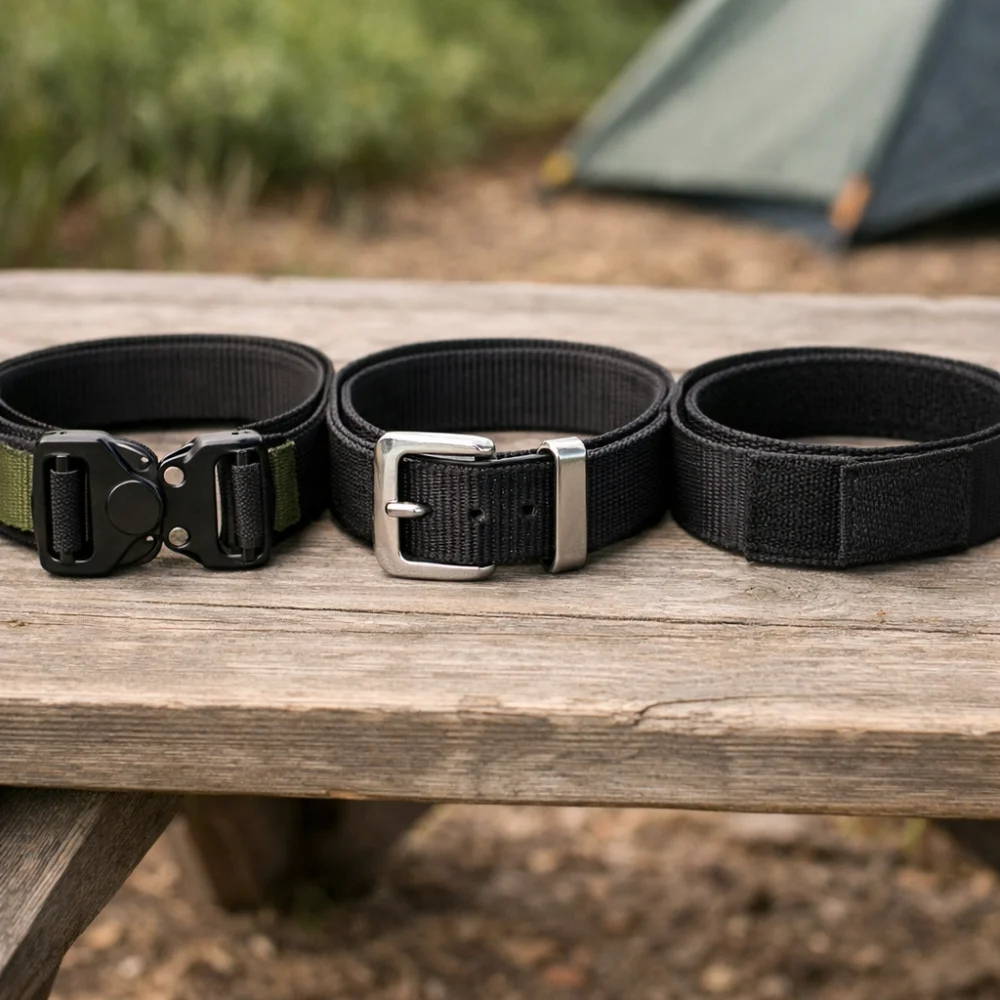
| Buckle style | The fastening method, such as a traditional buckle or a quick-release style | Affects ease of use, security and how quickly you can put the belt on or remove it | Look for the closure type and whether it suits your routine |
| Length adjustment | How the belt is sized and adjusted to fit the waist | Important for comfort and for getting a neat fit with different layers | Check the stated size range and how the adjustment works |
| Belt width | How wide the webbing strap is | Influences comfort, appearance and whether it suits your belt loops | Compare the width with the trousers or shorts you plan to wear it with |
| Material feel | The texture and stiffness of the webbing | Affects comfort, flexibility and how formal or casual the belt looks | Read the product description for material wording and finish |
| Everyday suitability | How well the belt fits your normal use | Some belts are better for simple casual wear, others for more practical outdoor use | Match the belt to the activity rather than to the title alone |
Key decision criteria explained
Fit and adjustment
Webbing belts are often chosen because they are easy to adjust, but not all adjust in the same way. Some buyers want a straightforward belt that holds once set, while others want quick, repeated adjustment for different outfits or layered clothing. The useful question is whether you need a belt that stays in one position most of the time or one that is easy to fine-tune during the day.
Buckle convenience
The buckle affects day-to-day convenience more than many buyers expect. A simple buckle may feel familiar and secure, while a quick-release style can be easier for repeated use. Think about whether you prioritise speed, simplicity or a more traditional look.
Width and loop compatibility
Width matters because it changes both comfort and appearance. A wider belt can feel more substantial, but it should still suit the belt loops on the clothing you plan to wear. If you are buying for mixed use, it is worth checking that the width works across the trousers or shorts you wear most often.
Material and finish
Webbing belts are usually valued for a practical, casual feel, but materials can still vary in firmness, texture and appearance. Some will feel softer and more flexible, while others may hold their shape more firmly. Choose according to how much structure you want and whether the belt needs to sit neatly under a jacket or simply support casual clothing.
Common webbing belt types and variants
There is usually more variation in fastening and styling than in the basic concept of the belt itself. That makes it important to separate the look from the function.
- Standard webbing belts: A simple option for everyday casual wear, usually chosen for straightforward adjustment and an unfussy look.
- Quick-release styles: Useful when ease of removal matters, but the closure feel may be different from a conventional buckle.
- Reversible or two-tone styles: A practical choice if you want more than one look from a single belt, though the appearance should still suit the clothes you wear most often.
- More workwear-leaning styles: Often picked for a sturdier, more practical feel, but style and fastening should still be checked carefully.
Which webbing belt suits which buyer?
| Buyer need | What usually matters most | Why |
|---|---|---|
| Everyday casual wear | Comfort, simple fastening and a clean look | You want a belt that is easy to wear often without feeling fussy |
| Outdoor or travel use | Secure adjustment and easy handling | Convenience matters when you are active, moving around or changing layers |
| Replacement for an old belt | Similar width, fit and buckle style | Matching the feel of the old belt helps avoid an uncomfortable surprise |
| Gift buying | Versatile styling and flexible sizing | A more adaptable belt is easier to choose when you are less certain about exact preferences |
| Value-focused purchase | Useful construction and practical finish | Look for the features you will actually use rather than decorative extras |
Common mistakes to avoid
- Choosing by appearance alone: A webbing belt can look similar across many listings, but buckle type and size range may change the experience a lot.
- Ignoring width: A belt that looks fine in a photo may not suit every pair of trousers or shorts.
- Overlooking adjustment range: A comfortable belt depends on usable adjustment, not just the headline size.
- Assuming one style fits every use: A belt that works well for casual wear may not be the most convenient option for travel or active use.
Safety and suitability checks
Webbing belts are generally a straightforward clothing purchase, but it still helps to check the intended use before buying. Make sure the belt style, buckle and width suit the clothing and activities you have in mind. If you want a belt for a specific purpose, compare the product page carefully rather than relying on a broad category label.
Care, storage and everyday lifespan considerations
Webbing belts are usually easy to live with, which is part of their appeal. General care depends on the material and buckle, so it is sensible to check whether the belt is likely to need simple wiping, careful drying or more attention to preserve its appearance. If you are comparing options, think about how often the belt will be used, how it will be stored and whether it needs to keep a neat shape over time.
How to compare webbing belts efficiently
- Decide where you will wear the belt most often.
- Choose the fastening style that suits your routine.
- Check the width and adjustment range against your clothing.
- Compare how the belt feels in terms of comfort and structure.
- Read the individual product page for the final details before deciding.
Summary buyer decision checklist
- Is the belt for casual wear, outdoor use or something else?
- Does the buckle style suit how you want to use it?
- Is the width appropriate for the trousers or shorts you plan to wear?
- Does the size range offer enough adjustment for a comfortable fit?
- Does the material feel and finish match your preference?
- Have you checked the product page for the exact model details?
Frequently asked questions
Are webbing belts suitable for everyday wear?
Yes, many buyers choose them for everyday use because they are simple, adjustable and usually comfortable. The main question is whether you prefer a casual look and a more flexible fit than a conventional belt. If so, a webbing belt can be a practical option.
What is the main difference between a webbing belt and a leather belt?
A webbing belt usually feels more casual and adjustable, while a leather belt often looks more traditional or formal. The right choice depends on the clothing you wear and the look you want. Neither is automatically better; they simply serve different purposes.
How do I know what size to buy?
Check the size range and any fitting notes on the product page, then compare them with your waist or trouser size. It also helps to think about how much adjustment you want for different outfits. Because sizing can vary, the product page is the most reliable source for the exact fit information.
Do all webbing belts have the same buckle?
No, buckle type is one of the main differences between belts in this category. Some use a traditional buckle, while others use a quicker fastening style. The buckle affects comfort, convenience and the overall feel of the belt.
Can one webbing belt work with every outfit?
Usually not. A belt that works well for casual clothing may not be the best match for smarter outfits, and width can also affect how versatile it feels. If you want broad use, choose a style with a simple, neutral look and check that it suits the clothes you wear most often.
What should I check if I am buying a webbing belt as a gift?
Focus on a versatile style, an adjustable fit and a colour or finish that is easy to wear. If you do not know the recipient’s exact preferences, it is safer to avoid overly specific styling choices. A practical, neutral design is often the easiest option.