


Children’s hunting, shooting and fishing jackets and smocks are chosen for outdoor days where comfort, weather protection and freedom of movement matter. The right choice depends less on a single “best” style and more on how the garment will be used, how much layering it needs to allow and how long the child is likely to wear it through the season.
This guide focuses on practical buying decisions. It helps you compare fit, coverage, durability and weather resistance without assuming every child needs the same level of protection or the same style of outer layer.
Because this category sits alongside other outdoor clothing such as gilets, fleeces, gloves and hats, it is useful to think about what the jacket or smock needs to do on its own and what it will need to work with as part of a full outfit.
Compare Children's Hunting, Shooting & Fishing Jackets & Smocks


As an Amazon Associate we earn from qualifying purchases.
What should you look for first?
The best starting point is the conditions the garment needs to handle and how the child will move in it. A smock can offer generous coverage and ease of layering, while a more jacket-like style may feel more familiar and easier to wear day to day. The main trade-off is usually between protection, bulk and flexibility, so it helps to decide which of those matters most for the intended use.
Fit is just as important as weather resistance. A child’s outdoor layer needs enough room for a fleece or base layer underneath, but not so much extra space that sleeves ride up or the garment becomes awkward to move in. Specifications vary by model, so always check the individual product page before buying.
| Feature | What it means | Why it matters | What to check |
|---|---|---|---|
| Coverage | How much of the body the garment protects | More coverage can help in wet or windy conditions | Length, cuff design and whether the cut is closer to a jacket or smock |
| Fit over layers | How comfortably it sits over other clothing | Children often need room for seasonal layering | Chest room, sleeve length and whether the shape looks roomy enough |
| Weather resistance | How well it helps against rain, drizzle and wind | Outdoor comfort depends heavily on the day’s conditions | Product description, fabric details and any stated protection features |
| Freedom of movement | How easy it is to bend, reach and walk in | Children need to move naturally while staying comfortable | Cut, sleeve shape and whether the garment looks too stiff or bulky |
| Practical details | Closures, pockets and adjustability | These affect everyday ease of use | Zip or pull-on style, pocket placement and any adjustable openings |
Key decision criteria
Weather protection
For many buyers, the first question is how much shelter the garment should provide. A more enclosed smock can suit colder, wetter or windier outings, while a lighter layer may be enough for changeable but not extreme conditions. Think about whether the garment is mainly for standing around, walking, or being worn through more active use.
Fit and layering
Children often wear an outdoor layer over a base layer and possibly a fleece, so the cut should allow for that without becoming restrictive. A garment that is too snug may limit movement, while one that is too loose can be cumbersome. Checking the size guide and the intended layering plan is usually more useful than focusing on the label alone.
Length and coverage
Some buyers prefer a longer, more protective shape, especially when the child may be outside for longer periods. Others want a shorter, easier-to-move-in layer that feels less bulky. The right answer depends on whether coverage or agility matters more for the intended use.
Ease of putting on and taking off
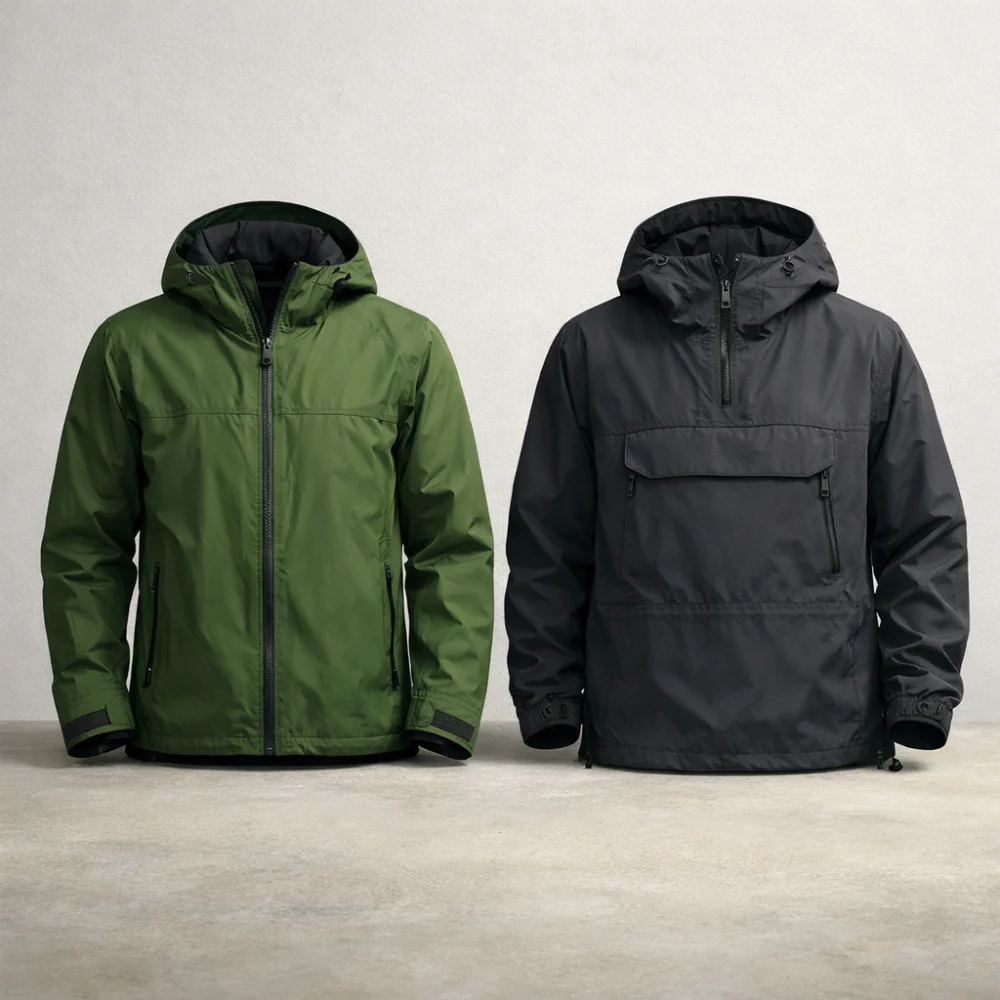
Pull-on smocks can be convenient for all-over coverage, but they may feel less simple than a zip-front jacket when changing quickly. A jacket-style design may be easier for everyday wear and more familiar for a child who dislikes over-the-head garments. Consider how often the layer will be removed and put back on during the day.
Durability and finish
Children’s outdoor clothing needs to cope with frequent use, movement and contact with kit or seats. Look for sensible construction and finishes that suit the expected level of wear, but avoid assuming that a heavier-looking garment is automatically better. The practical question is whether the item seems suited to the child’s routine and the conditions they will face.
Product types and variants
Within this category, the main choice is usually between a jacket-style outer layer and a smock-style outer layer. Jackets are often easier to take on and off, while smocks can be appreciated for their simpler, more covering shape. Neither type is universally better; the better option depends on how the garment will be used.
Some buyers will also be deciding how formal or technical they want the garment to feel. A straightforward outer layer may suit occasional use, while a more purpose-led design may better suit regular outdoor activity. The useful question is not which style sounds more advanced, but which one matches the child’s actual use pattern.
Which type suits which buyer?
| Buyer need | Likely priority | What to lean towards | Possible compromise |
|---|---|---|---|
| Occasional use | Simplicity and easy wear | A straightforward jacket-style layer | May offer less all-over coverage than a smock |
| Longer outdoor sessions | Coverage and comfort over time | A roomier smock-style design | Can feel more bulky or less familiar to put on |
| Layering in cold weather | Space for fleece and base layers | A cut that allows extra clothing underneath | More room can mean less streamlined movement |
| Frequent changing | Convenience | A front-opening jacket style | May not cover as much as a pull-on option |
Common mistakes to avoid
- Buying for the age label only: a child’s comfort depends on fit and layering space, not the number on the tag alone.
- Choosing the warmest-looking option by default: more coverage can be helpful, but excessive bulk can reduce comfort and movement.
- Ignoring the layering plan: a good outer layer should work with the clothes worn underneath, not against them.
- Overlooking ease of use: if a child struggles to put it on, it may get left unworn even if it looks suitable on paper.
Safety and suitability checks
This is a practical clothing purchase, so the main checks are about comfort, visibility, weather suitability and whether the garment is appropriate for the planned activity. If the child will be around dense vegetation, water, other people or changing weather, think about whether the chosen style supports that environment without becoming awkward or overly restrictive.
Do not assume that one garment suits every outing. The right choice for a dry walk, a cold day in the field or a day near water may be different, even within the same category.
Maintenance, storage and wear life
Outer layers usually last longer when they are stored clean and dry and when care instructions are followed. If a garment is likely to see regular use, it is worth considering how easy it will be to clean after muddy or wet days and whether it can be hung, folded or packed without becoming awkward.
General wear and tear is part of children’s outdoor clothing, so it helps to choose a garment that matches the amount of use it will realistically get. A more robust-feeling option may be sensible for frequent use, but only if it still remains comfortable enough for the child to want to wear it.
How to compare options efficiently
- Start with the main use: occasional outings, regular outdoor time or colder conditions.
- Choose between jacket-style and smock-style shapes based on ease of use and coverage.
- Check whether the fit allows for layers without feeling too loose.
- Compare the practical details that matter most, such as openings, cuffs and overall comfort.
- Read the individual product page carefully for the final fit and feature checks before deciding.
Summary buyer decision checklist
- Will the garment suit the weather and activity you have in mind?
- Does it allow comfortable layering underneath?
- Is the fit likely to let the child move naturally?
- Do you prefer a jacket-style or smock-style shape?
- Are the practical details simple enough for regular use?
- Will it be easy to care for and store after outings?
Frequently asked questions
Is a smock better than a jacket for children?
Not always. A smock can be useful if you want extra coverage and a roomier feel, while a jacket may be easier to put on and take off. The better choice depends on how the child will use it and how much layering space is needed.
What matters most when choosing the size?
Fit for movement and layering usually matters more than the number on the label. A child should be able to wear the garment over the clothes they are likely to use, without it feeling restrictive or overly bulky.
Should I choose a heavier-looking garment for colder weather?
Not necessarily. Bulk can help with coverage, but comfort and movement are just as important for children. It is better to match the garment to the actual conditions and the layers it will sit over.
Are pockets and extra details important?
They can be, especially if the garment will be used often. Practical details should support everyday use rather than add clutter, so it is worth checking whether they make sense for the child’s routine.
How do I judge if it will work for layering?
Look at the cut, the intended fit and the product description rather than assuming all outerwear is roomy enough. If the garment is meant to go over a fleece, it should still allow the child to move their arms easily once layered.
Do children need a specialist outdoor style, or will any jacket do?
That depends on the use case. A specialist-style garment may be more suitable where coverage, movement and outdoor practicality matter, while an everyday jacket may be enough for lighter use. The key is to match the garment to the activity rather than the category name alone.
Children's Hunting, Shooting & Fishing Jackets & Smocks
As an Amazon Associate we earn from qualifying purchases.