

Children’s hunting, shooting and fishing gilets are usually chosen as an extra layer rather than a main outer shell. They are useful when a young wearer needs warmth through the core, freedom to move, and a layer that works well over a shirt or fleece.
The right choice depends on how the gilet will be worn, how much warmth is needed and whether comfort or practicality matters more. Because children’s sizing and features vary, it is worth checking the product details carefully rather than assuming every gilet will suit the same use.
For family days outdoors, learning sessions or general countrywear, a gilet can be a flexible middle layer. In wet, windy or very cold conditions, it is usually one part of a broader clothing system rather than a complete solution.
What should you look for in a children’s hunting, shooting and fishing gilet?
The best starting point is to think about temperature, movement and layering. A lighter gilet can help add comfort without feeling bulky, while a more substantial one may be better for colder days. The main trade-off is usually between warmth and ease of movement.
Look closely at fit, fabric, fastening style and any practical pockets or reinforcement. Specifications vary by model, so always check the individual product page before buying.
| Feature | What it means | Why it matters | What to check |
|---|---|---|---|
| Fit | How the gilet sits over other layers | A good fit keeps the layer comfortable without restricting movement | Child’s size, room for layering and whether the cut looks slim or roomy |
| Warmth level | How much insulation or body coverage it provides | It affects comfort in cooler weather and how much extra layering is needed | Described insulation, lining and whether it is intended as a light or warmer layer |
| Fabric feel | The outer and inner materials used | These affect comfort, durability and how the gilet feels during activity | Material description, softness, breathability and ease of care |
| Fastening | How the gilet closes at the front | Useful for quick on-and-off wear and for adjusting comfort | Zip, poppers or other closure details and whether they seem easy for the wearer to manage |
| Pockets and storage | Practical space for small essentials | Can add convenience for outdoor days | Number, placement and size of pockets if listed |
| Cleaning and care | How easy the gilet is to look after | Children’s outdoor clothing often needs regular cleaning | Washing instructions and whether the material is likely to be easy to maintain |
Key decision criteria
Layering and fit
A children’s gilet is usually bought to work over a base layer or fleece. That means the chest and shoulder fit matter more than a tailored silhouette. If it is too snug, it can limit movement; if it is too loose, it may feel awkward under other outdoor clothing.
Warmth without bulk
One of the main reasons people choose a gilet is to keep the core warm while leaving the arms freer than a jacket would. This can be useful when walking, handling gear or moving between indoor and outdoor spaces. The trade-off is that a gilet leaves the arms uncovered, so it is not a substitute for a full outer layer in harsher conditions.
Practical features
Pockets, easy fastenings and simple construction often matter more than decorative detail. For a child, a practical gilet should be straightforward to put on, comfortable to wear and easy to combine with the rest of their outdoor clothing. Useful extras are nice to have, but they should not crowd out comfort or fit.
Durability and feel
Children’s outdoor clothing often gets used in mixed conditions, so the feel of the fabric and the likely resilience of the construction are worth checking. Reinforced areas, if listed, may help in high-wear spots. Even so, the most durable-looking option is not always the most comfortable, so it is worth balancing toughness against everyday wearability.
Types and variants within this category
There may be several practical styles of children’s gilet within this category, even when the differences are subtle. Some are designed more as light layering pieces, while others may feel warmer or more structured. The right choice depends on whether the main use is active outdoor wear, casual countrywear or extra insulation on cooler days.
If one gilet has a simpler build, it may suit a child who wants easy movement and low fuss. A more feature-led option may suit buyers who value pockets, a firmer feel or a slightly more protective layer. The key limitation of any gilet is that it only covers the torso, so it should be chosen as part of the full clothing plan for the day.
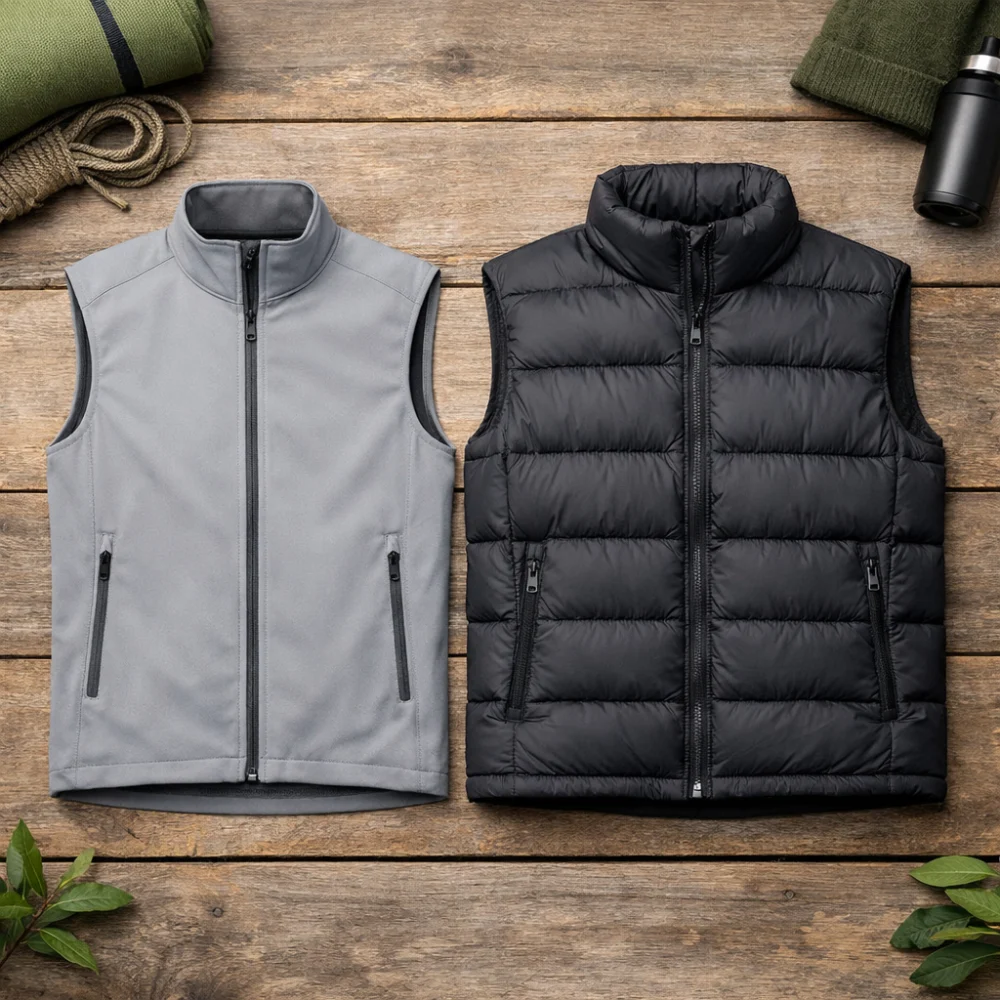
Which gilet suits which buyer?
| Buyer need | What to prioritise | Why |
|---|---|---|
| Everyday outdoor layer | Comfort, easy fit and simple fastening | These help the child wear it regularly without fuss |
| Colder-weather layering | More warmth and enough room for a fleece underneath | Layering matters more than a neat outer profile |
| Active movement | Freedom around the shoulders and arms | A gilet should not hold the wearer back during activity |
| Gift purchase | Flexible fit and easy-care materials | These reduce the risk of choosing something too specific |
| Practical outdoor use | Pockets and straightforward construction | Useful details often matter more than styling |
Common mistakes to avoid
- Choosing by appearance alone. A good-looking gilet is not necessarily the most comfortable or practical choice.
- Forgetting about layering. The child may need space for a fleece or shirt underneath.
- Overlooking the season. A gilet can be useful in cool weather, but it is not a complete solution for wet or windy days.
- Ignoring care instructions. Some fabrics will be easier to maintain than others.
- Assuming sizing is consistent. Children’s fits can vary, so check the individual product page carefully.
Suitability and care considerations
Check that the gilet matches the intended activity and the child’s comfort level. For outdoor use, it is sensible to think about weather conditions, how much walking or movement is expected, and whether the gilet is just one layer among several. If the guide is for a younger child, ease of use and comfort usually matter more than specialist styling.
Maintenance also affects value. A gilet that is easier to clean and store will usually be simpler to live with, especially if it is used regularly. It is also worth thinking about how often it will be worn and whether it needs to sit alongside other seasonal clothing rather than replace a jacket.
How to compare options efficiently
- Start with the main use: everyday wear, active outdoor use or colder-weather layering.
- Check the size and how much room there is for clothing underneath.
- Compare warmth, fabric feel and closure style before looking at extras.
- Decide whether pockets, lining or other practical details are important to you.
- Read the individual product information carefully and confirm the details that matter most.
Summary buyer checklist
- Does the gilet suit the intended activity and weather?
- Will it fit comfortably over the layers the child is likely to wear?
- Is the warmth level appropriate for the main use?
- Are the fastening and pockets practical enough for everyday use?
- Do the care instructions suit how often it will be worn?
- Have you checked the individual product page for the exact details?
Frequently asked questions
Is a gilet enough on its own for cold weather?
Usually not. A gilet is most useful as a layering piece that keeps the torso warm while leaving the arms freer to move. In colder or wetter conditions, it is generally better used alongside other outerwear.
What size should I choose for a child’s gilet?
Choose the size that leaves enough room for comfortable layering without becoming loose or awkward. Because children’s fits vary, it is sensible to check the individual product page for any size guidance provided.
Are pockets important on a children’s gilet?
They can be, especially if the gilet is likely to be used outdoors or for practical everyday wear. Pockets are not essential for every buyer, but they often add convenience.
What is the main difference between a light and a warmer gilet?
A lighter gilet is usually better when the main need is flexibility and easy layering. A warmer one may be better for cooler weather, but it can feel bulkier and may offer less freedom under other clothing.
How should I think about care and cleaning?
Think about how often the gilet will be worn and how much maintenance you are comfortable with. Easy-care materials are often helpful for children’s clothing, but the best approach is always to check the product care guidance.
Can a gilet replace a jacket?
Not usually. A gilet gives core warmth and is useful for movement, but it does not cover the arms and may not provide the same protection as a full jacket or smock.