

If you are setting up a practice area for airsoft or paintball target work, a backstop is one of the first accessories to think about. It helps create a more controlled space behind the target, which can make your setup tidier and easier to manage.
The right choice depends less on one universal specification and more on how you plan to use it. Consider the type of projectiles, the space available, how portable the setup needs to be and what sort of target arrangement you want to support.
Target backstops are not the same as the target itself. They sit behind the shooting area and are intended to complement your target setup, not replace sensible placement, distance and oversight.
What should I look for in a target backstop?
Start with the size and format that best suits your practice space, then check how the backstop is meant to be used with your target. A compact option may suit a small garden or temporary setup, while a larger or more structured design may be better if you want a more defined practice area. The main trade-off is usually between portability, coverage and the amount of space it occupies.
Specifications vary by model, so always check the individual product page before buying.
| Feature | What it means | Why it matters | What to check |
|---|---|---|---|
| Coverage area | The amount of space the backstop is designed to help protect behind the target | Better coverage can make a setup feel more contained | Measure your shooting area and compare it with the product dimensions |
| Portability | How easy it is to move, store or reposition | Important if you do not want a permanent setup | Look at folding design, pack size and how quickly it can be set up or taken down |
| Target compatibility | The kinds of target arrangements it is meant to support | Some backstops work better with freestanding targets than others | Check the intended target format and any setup notes on the product page |
| Stability | How well the backstop stays in place during use | A stable setup is easier to use and adjust | Look for base design, anchoring options or any support structure described by the seller |
| Durability | The general robustness of the materials and construction | Affects how well it stands up to repeated use | Review the material description and whether replacement parts or spare panels are mentioned |
Which details matter most?
Size and space
Think about where the backstop will sit and how much room you have around it. A product that looks suitable on paper may feel awkward if it dominates a small area or is hard to position safely and comfortably. If your space changes from one session to the next, a lighter or more adaptable style may be easier to live with.
Portability versus permanence
Some buyers want something they can put away after use, while others prefer a more settled arrangement. Portable designs are convenient, but they may involve a compromise on coverage or rigidity. More substantial designs can feel more secure, but they may be less convenient to move or store.
Compatibility with your target style
Backstops are most useful when they match the way you already shoot. If you use a stand-alone target, a backstop that sits neatly behind it may be enough. If your setup includes multiple targets or wider spacing, you may need more coverage. Do not assume one backstop will suit every arrangement.
Ease of setup
If you are likely to set it up frequently, a simple design can make the difference between using it often and leaving it packed away. Check whether assembly is straightforward and whether the product looks manageable for one person. A more involved setup may still be worthwhile if you want a sturdier or more adaptable result.
Common types and how they differ
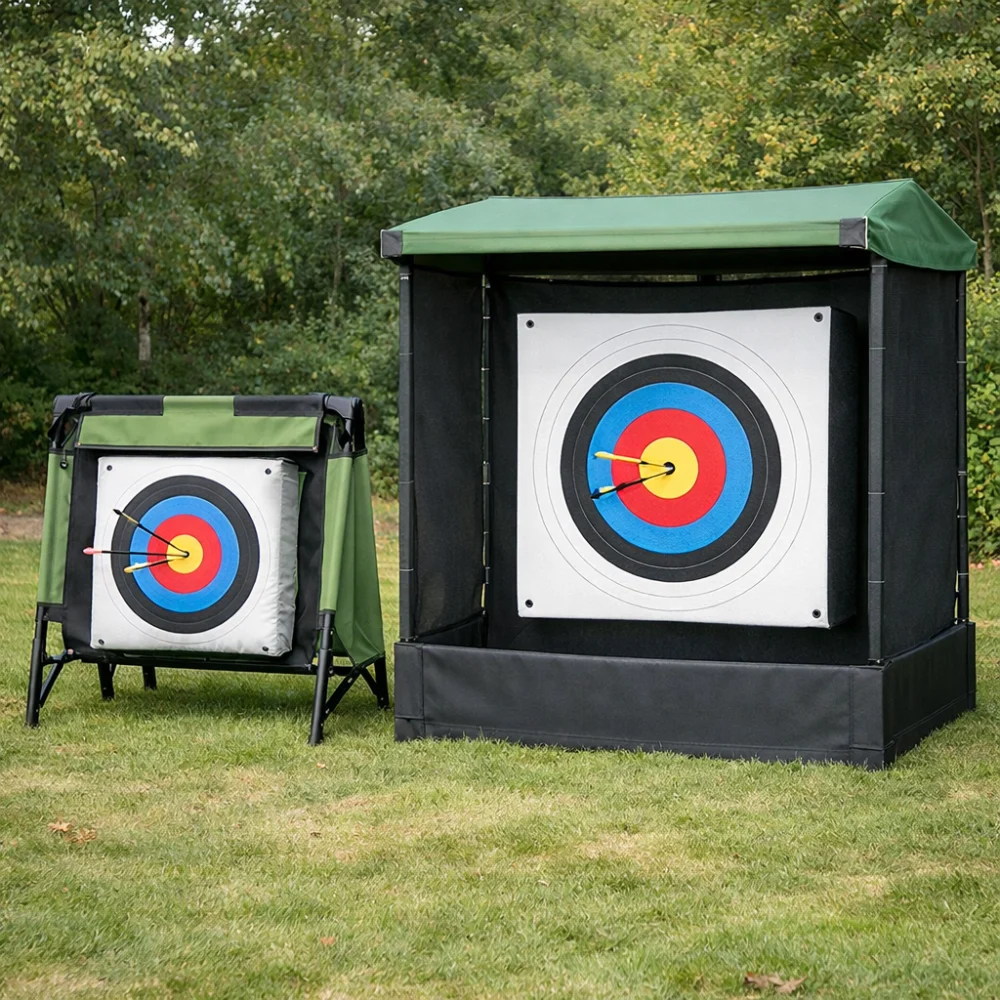
Product ranges in this category can vary, but buyers usually encounter backstops that are more compact and portable, or more structured and coverage-focused. Compact styles suit occasional use and limited storage space, while larger styles may suit a more established practice area. The right choice is usually about how you balance convenience against the amount of protection and coverage you want.
Because this category can include varied designs, focus on the practical outcome rather than the label alone. A named type is only useful if it fits your target layout, space and level of convenience.
Who is each type of backstop likely to suit?
| Buyer need | Helpful characteristics | Trade-off to accept |
|---|---|---|
| Occasional practice in a small space | Compact size, easy storage, simple setup | Usually less coverage than larger designs |
| Frequent setup and pack-away use | Lightweight format, quick assembly, easy repositioning | May feel less substantial than a more permanent option |
| More defined practice area | Broader coverage, stable support, clearer layout | Can take up more room and be less portable |
| Buyer comparing for a gift | Clear compatibility, straightforward setup, sensible size | Less certainty if the recipient already has a specific target system |
Common mistakes to avoid
- Choosing by appearance alone rather than checking whether the backstop suits the target area you actually have.
- Assuming a compact product will automatically work for a wider setup.
- Overlooking storage and transport, then finding the item awkward to keep or move.
- Not checking how the backstop is intended to support the target arrangement.
- Treating all backstops as interchangeable when size, stability and format can differ a lot.
Safety and suitability notes
Use a backstop as part of a considered target setup, not as a substitute for sensible target placement and supervision. Make sure the product suits the space, the activity and the type of target use you have in mind. If the setup is for shared or family use, choose a format that is easy to position and straightforward to understand.
For any product in this category, it is sensible to check the individual listing for the intended use and any limits described by the seller.
Care, storage and practical ownership
General care is usually straightforward, but the details depend on the product construction. If a backstop folds or packs away, think about where it will be stored between sessions and whether it is likely to be moved often. If it uses separate parts or support pieces, check that they can be kept together and handled easily.
Light cleaning after use and dry storage can help many outdoor accessories stay presentable for longer, especially if they are used regularly. Where a product includes replaceable parts or modular elements, that can also affect long-term convenience.
How to compare options efficiently
- Decide where the backstop will be used and how much space you can give it.
- Choose the broad style that fits your setup: compact and portable, or larger and more established.
- Compare the practical features that matter most, especially size, stability, storage and setup.
- Check the product page for intended use, dimensions and any setup notes.
- Balance convenience against coverage rather than looking for a single perfect answer.
Buyer checklist
- Does the backstop suit the space where you plan to use it?
- Is it compatible with the kind of target arrangement you have in mind?
- Will it be easy enough to move, store and set up as often as you need?
- Does the size give you the coverage you are expecting?
- Have you checked the individual product page for any model-specific details?
Frequently asked questions
What is a target backstop used for?
A target backstop is used behind a target to help create a more contained practice setup. It is mainly about improving the layout and reducing how exposed the surrounding area feels. The exact usefulness depends on the size and type of backstop, so it is worth matching it to your intended setup.
Do I need a large backstop for a small practice area?
Not always. In a smaller space, a compact backstop may be more practical because it is easier to position and store. The key is to choose something that fits the area without overwhelming it.
Are all target backstops suitable for every target?
No. Different designs may suit different target arrangements, so it is sensible to check how the backstop is meant to be used. A product that works well with one setup may be awkward with another.
What is the main trade-off between portable and more structured designs?
Portable designs are easier to move and store, which is useful if you only set up occasionally. More structured designs may offer a more settled feel, but they can be less convenient to transport or reposition.
Should I choose a backstop based on material alone?
Material matters, but it should not be the only factor. Size, format, stability and the way the product fits your target setup are often just as important. The best choice is the one that fits your actual use rather than just sounding robust.
What should I check before buying for shared use?
Look for a setup that is straightforward to understand and easy to position. Shared use usually benefits from simple handling and clear compatibility with the space available. It is also wise to check the individual product page for any model-specific notes.