


Arm guards are a simple but important part of archery protection and comfort. They help shield the forearm from the bowstring and from clothing that might interfere with a clean shot.
For buyers, the main challenge is choosing an arm guard that fits well enough to stay in place without getting in the way. The right choice depends on your draw style, arm shape, clothing layers and how much coverage you want.
This guide focuses on the practical differences that matter when comparing arm guards, so you can narrow the options without overthinking the small details.
Compare Arm Guards
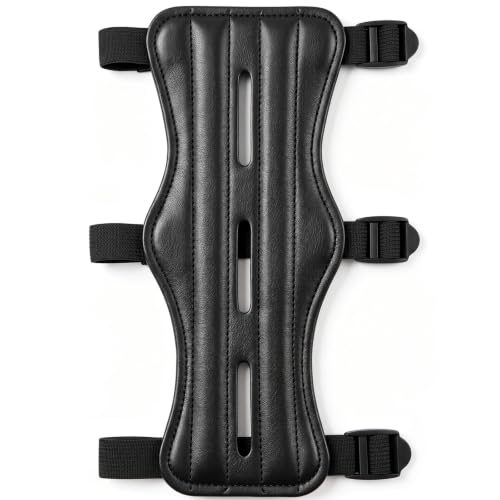


As an Amazon Associate we earn from qualifying purchases.
What should you look for in an arm guard?
The best starting point is fit and coverage, then fastening style and comfort. A guard that sits securely and covers the part of the forearm most likely to be brushed by the string is usually more useful than a larger design that shifts around. Specifications vary by model, so always check the individual product page before buying.
The trade-off is usually between more coverage and more freedom of movement. A compact guard can feel lighter and less noticeable, while a longer or broader one may suit archers who want extra reassurance.
| Feature | What it means | Why it matters | What to check |
|---|---|---|---|
| Fit | How well the guard sits on your forearm | A secure fit helps it stay in place during shooting | Adjustment method, size guidance and how it fastens |
| Coverage | The amount of forearm protected | More coverage can help if the string or clothing contact area is wider | Length, width and the part of the arm the guard is shaped to cover |
| Fastening | How the guard is held on the arm | A fastening that is easy to adjust can improve comfort and consistency | Straps, elastic, clips or other closures and whether they look easy to reposition |
| Material and build | The surface and structure of the guard | These affect comfort, rigidity and how noticeable it feels | Whether the design looks firm, flexible or padded |
| Profile | How bulky the guard feels when worn | A slimmer profile can be less intrusive, especially with repeated shooting | Thickness, shape and whether it is likely to sit close to the arm |
Which details matter most?
Fit and adjustability
An arm guard should sit snugly enough to stay put, but not so tightly that it distracts you. Adjustable designs are often easier to match to different arm sizes or to wear over light clothing. If you are buying for a beginner or as a gift, adjustability can reduce the risk of choosing something awkward to wear.
Coverage and shape
Some archers want only a compact guard over the forearm, while others prefer a longer shape that gives more coverage. The right balance depends on how you shoot and where your bowstring naturally travels. A longer guard is not automatically better if it reduces comfort or interferes with your draw.
Comfort and feel
Comfort matters because an arm guard that feels fussy often ends up unused. Look at whether the design is likely to sit flat, whether the edges seem smooth, and whether the fastening looks easy to adjust between shots. For regular practice, a less noticeable guard is often easier to live with.
Common arm guard types and variants
Arm guards are usually chosen more by construction and fastening than by dramatic product categories. In practice, buyers often compare compact guards, broader guards and adjustable strap-based designs.
- Compact guards: suited to archers who want light, minimal coverage and a low-profile feel.
- Broader guards: may suit those who want a larger protected area or a little more reassurance.
- Adjustable designs: useful when fit flexibility matters, especially if the guard may be worn by different people or over different clothing layers.
The key limitation is that no type is universally right. A design that feels secure for one archer may feel bulky for another, so the safest approach is to compare shape and fastening rather than relying on appearance alone.
How different buyers may compare options
| Buyer need | What to prioritise | What to avoid |
|---|---|---|
| Beginner | Simple fit, easy adjustment and comfortable wear | Overly complex fastening or a guard that looks hard to position |
| Regular practice | Secure hold, low bulk and predictable comfort | Designs that look likely to slip or feel heavy |
| Gift purchase | Flexible adjustment and a neutral, practical design | Very specific sizing assumptions without checking the product page |
| Archers wearing layers | Enough adjustability to sit over the clothing they actually use | Choosing a tight-fitting style without thinking about sleeve thickness |
Common mistakes to avoid
- Choosing on looks alone: a neat-looking guard is not always the easiest one to wear, so check the fastening and shape as well.
- Ignoring fit: too loose can let the guard move, while too tight can be distracting.
- Overestimating coverage: more coverage is not always better if it makes the guard bulky or awkward.
- Forgetting clothing layers: if you normally shoot in different sleeves or layers, make sure the fit still makes sense.
Safety and suitability notes
An arm guard is part of a wider archery setup, but it does not remove the need for sensible shooting habits and suitable equipment. It should be chosen as a comfort and protection aid, not as a guarantee that contact will never happen.
Check that the guard suits your forearm shape, your usual clothing and the kind of shooting you do. If you are unsure, choose a simple adjustable design and compare the product details carefully.
Care, storage and lifespan considerations
Most arm guards are straightforward to look after, but the details depend on the material and fastening. A design that is easy to wipe clean and store flat or neatly in a bag is often more convenient for regular use.
Fastenings are worth thinking about as well, because repeated use can make simple closures more important than they first appear. If a guard depends on straps or elastic, check how easy it looks to adjust and keep secure over time.
How to compare options efficiently
- Decide how much coverage you actually want for your style of shooting.
- Check whether the fit looks adjustable enough for your forearm and clothing.
- Compare the fastening method and think about how easy it will be to wear repeatedly.
- Look at the overall profile and decide whether you prefer minimal or more substantial protection.
- Read the individual product page carefully for the exact details before choosing.
Buyer checklist
- Does the guard look like it will stay securely in place?
- Is the amount of coverage suitable for your shooting style?
- Will the fastening be comfortable and simple to adjust?
- Does the profile seem practical for regular use?
- Will it work with the clothing you usually wear when shooting?
Frequently asked questions
Do I need an arm guard for archery?
Many archers choose one because it can help protect the forearm and reduce distraction from bowstring contact. Whether you need one depends on your setup, your technique and how comfortable you are without it. For most buyers, it is a sensible part of practical archery protection.
How should an arm guard fit?
It should sit securely without feeling restrictive. A good fit usually means it stays in place while still allowing natural movement. Adjustable options are often the easiest way to get that balance right.
Is more coverage always better?
Not necessarily. Extra coverage can be helpful, but a larger guard may also feel bulkier or less comfortable. The useful amount of coverage is the one that suits your arm and your shooting style.
What is the most important feature to compare?
Fit is usually the first thing to compare, followed by coverage and fastening style. If those are right, the guard is more likely to feel practical in day-to-day use. The material and profile matter too, but they are usually secondary.
Can one arm guard suit different people?
Sometimes, especially if the design is adjustable. That can be useful for families, clubs or gift buyers. Just make sure the fit range and fastening method look suitable for everyone who may use it.
What should I check on the product page?
Look for size guidance, fastening details, the amount of coverage and any notes about fit. Those are the most useful points for judging whether the guard matches your needs. Specifications vary by model, so always check the individual product page before buying.
More Arm Guards
See all 94 Arm Guards →


As an Amazon Associate we earn from qualifying purchases.