


Bow scales are a simple but useful archery tool for checking how much draw weight a bow is putting out. That makes them helpful for archers who are tuning equipment, comparing setups or keeping track of changes after adjustments.
If you are buying one, the main decision is not usually about complexity, but about how accurately and conveniently you want to measure. The best choice depends on the kind of bow you use, how often you expect to measure draw weight and whether you want a compact handheld tool or a more controlled setup.
This guide focuses on choosing a bow scale for practical use, not on bow setup procedures. It should help you compare the usual buying factors without assuming that every model works the same way.
Compare Bow Scales


As an Amazon Associate we earn from qualifying purchases.
What should you look for in a bow scale?
The most useful bow scale is one that suits your bow type, gives a readable measurement and feels comfortable to use in your normal setup routine. For many buyers, the main trade-off is between simplicity and convenience: a basic tool may do the job, while a more refined option may be easier to read or handle.
Specifications vary by model, so always check the individual product page before buying.
| Feature | What it means | Why it matters | What to check |
|---|---|---|---|
| Measurement method | How the scale measures draw weight | Different methods may suit different styles of use | Whether the design matches your bow type and how you plan to measure |
| Readability | How easy the reading is to see and interpret | A clear reading reduces guesswork | Dial, digital or other display style, if stated |
| Handling | How the tool feels in the hand and during use | Comfort matters if you will measure often | Grip, size and whether it seems easy to hold steadily |
| Repeatability | How consistently it helps you get comparable readings | Useful when comparing changes over time | Any product information about consistency or intended use |
| Portability | How easy it is to carry and store | Important if you travel to clubs or use a kit bag | Overall size and whether it fits your storage space |
Key decision criteria
Measurement style
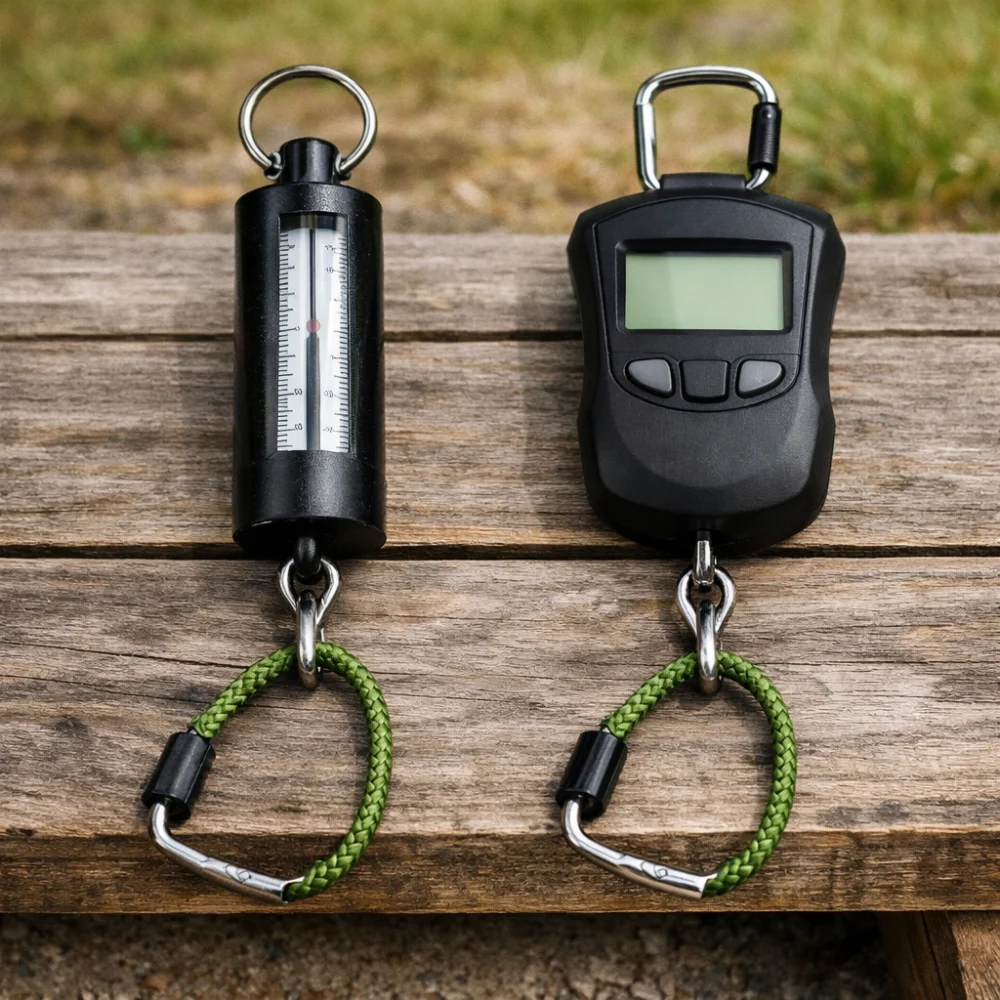
Bow scales are used to measure draw weight, but the way they do it can vary. A straightforward handheld design may suit a buyer who wants quick checks, while a more specialised style may appeal to someone doing regular setup work. The right choice depends on whether you value speed, control or ease of reading.
Ease of reading
Some buyers prefer a simple display that is easy to interpret at a glance. Others are happy to trade simplicity for a more detailed readout. If you are comparing options, check whether the reading is likely to be clear enough for the lighting and conditions where you normally work.
Comfort and control
If a scale feels awkward to hold, the reading may be harder to take consistently. Comfort is especially relevant if you plan to compare several bows or test changes repeatedly. Look for a design that seems easy to handle without forcing you into an awkward grip.
Use with your bow type
Different bows can place different demands on measuring tools, so the key question is whether the product page indicates the tool is suitable for your setup. A buyer should not assume that every bow scale is a universal fit. Check the intended use carefully and compare it with your own bow style.
Types of bow scales and how they differ
At category level, bow scales are usually compared by how they are read and how they are handled rather than by a long list of features. That makes the buying choice fairly focused, but it also means the product page details matter more than the category name alone.
- Basic handheld scales: Often the simplest option for occasional checks and general use.
- More readable or refined designs: May suit buyers who want clearer readings or easier handling.
- Compact scales: Useful where storage, portability or kit-bag space matters.
The main limitation is that a category label alone does not tell you enough about how a particular bow scale behaves in use, so the product page details are important.
Which bow scale suits which buyer?
| Buyer need | What to prioritise | Why that helps |
|---|---|---|
| Occasional home use | Simplicity and easy handling | Quick checks are usually more important than specialist detail |
| Frequent tuning or comparison work | Readable display and consistent feel | Repeated measurements are easier when the tool is comfortable and clear |
| Portable kit | Compact size and easy storage | Helpful if you want to carry it with other archery tools |
| Beginner buyer | Clear product information and straightforward operation | Reduces uncertainty when you are still learning what the readings mean |
Common mistakes to avoid
- Choosing only by appearance: A neat-looking tool is not necessarily the easiest one to read or use.
- Ignoring your bow type: Suitability matters more than a generic description.
- Overlooking handling: If the tool is awkward to hold, readings may be less convenient to take.
- Assuming all scales work the same way: Small design differences can change how easy the tool is to use in practice.
Safety and suitability notes
Bow scales are buying tools, not protective equipment, so the main concern is suitability rather than hazard. Still, it is sensible to check that the product is intended for your kind of bow and that you understand how the reading is presented before relying on it for setup decisions.
If you are uncertain, favour clearer product information over guesswork. That is especially important where the tool will be used as part of tuning or adjustment work.
Care, storage and ownership considerations
Bow scales usually benefit from simple care and sensible storage. Keeping the tool clean, dry and protected from knocks will help preserve readability and general condition. If a design has moving parts or a display, that may affect how carefully you store it between uses.
For buyers who only use the tool occasionally, compactness may matter as much as accuracy. For more frequent use, ease of handling and clear reading may matter more than anything else.
How to compare options efficiently
- Start with your bow type and the way you plan to use the scale.
- Compare the measurement style and see whether it looks easy to read.
- Check handling, size and whether it seems comfortable for repeated use.
- Look for any product information that supports consistency or intended use.
- Choose the option that best matches your level of experience and how often you will measure.
Summary buyer checklist
- Does the bow scale suit your bow type and intended use?
- Is the reading style clear enough for your needs?
- Will the tool be comfortable to hold and use repeatedly?
- Is portability or compact storage important to you?
- Have you checked the individual product page for the exact details?
Frequently asked questions
What is a bow scale used for?
A bow scale is used to measure draw weight, which can help you understand how a bow is set up and whether changes have altered the feel. It is mainly a practical setup and comparison tool rather than a general-purpose accessory.
Do I need a bow scale as a beginner?
Not every beginner will need one straight away, but it can be useful if you want to understand your equipment better. If you are not yet doing your own tuning, you may prefer to choose based on clarity and simplicity rather than advanced features.
Are all bow scales suitable for every bow?
No, not necessarily. Suitability can vary by design and intended use, so it is worth checking the product page rather than assuming universal compatibility. The safest approach is to match the tool to the bow type you actually use.
What matters more: readability or size?
That depends on how you will use it. Readability is often more important for regular measurement work, while compact size matters more if you want easy storage or portability.
How often would I use a bow scale?
Some buyers only need one for occasional checks, while others use it regularly during tuning or comparison work. If you expect frequent use, comfort and ease of reading become more important.
Should I choose the simplest option available?
Not always, but simplicity can be a sensible priority if you only need basic measurements. If you plan to use the tool often, a more comfortable or easier-to-read design may be worth considering.
Interpreting a bow-scale reading
A draw-weight reading depends on how far the bow is drawn, and that relationship varies between bow designs. When comparing a measurement with a bow’s stated rating or another reading, check that the draw length and measurement conditions are comparable. If considering a scale for a compound bow, check what point in the draw cycle its reading represents; peak draw weight and holding weight are different measurements.
More Bow Scales
See all 72 Bow Scales →


As an Amazon Associate we earn from qualifying purchases.