

Shade tarps are a simple way to create cooler, more usable outdoor space when you want shelter from strong sun rather than full enclosure. They can suit campers, day-trippers, garden users and anyone looking for a flexible overhead cover.
The main buying decision is usually not whether to get a tarp at all, but how much coverage, stability and portability you need. A good choice depends on where it will be used, how it will be supported, and how much fuss you are happy with when setting it up.
Because products in this category can vary a lot in shape, attachment points and intended use, it helps to compare the details rather than rely on the name alone.
What should you look for in a shade tarp?
The best starting point is the kind of space you want to cover. A smaller setup may be easier to carry and pitch, while a larger one can give better shade but may need more support and more careful planning. The right balance depends on whether you are using it for camping, a picnic area, a patio corner or a temporary outdoor base.
Specifications vary by model, so always check the individual product page before buying.
| Feature | What it means | Why it matters | What to check |
|---|---|---|---|
| Coverage area | The amount of space the tarp is designed to shade | Determines how many people or how much gear can sit under it | Compare the stated dimensions and picture the space you need to cover |
| Shape | The outline of the tarp, such as rectangular or shaped for a specific pitch | Affects how easy it is to create a useful shaded area | Think about the layout you want and where the edges will fall |
| Attachment points | Where guylines, poles or fixing points can be attached | Influences how securely and flexibly the tarp can be pitched | Look for enough fixing points for the way you plan to support it |
| Packability | How easy it is to carry and store when not in use | Important for camping, travel and occasional use | Check packed size and weight if portability matters to you |
| Weather suitability | The conditions the tarp is intended to handle | Shade use is different from shelter in windy or wet conditions | Read the product description carefully so expectations match the intended use |
Key decision criteria explained
Size and usable shade
A tarp that is too small can leave the most useful area exposed, while one that is larger than you need may be more awkward to position and support. Think about the actual footprint you want shaded, not just the headline dimensions. If you expect to sit, cook, or keep bags under it, allow extra room for movement and for the angle of the sun.
Pitching style and support
Some shade tarps are easier to adapt across different spaces, while others work best in a more specific layout. The important question is what you will use to hold it up: poles, guy lines, trees or another structure. A simple setup can be appealing for occasional use, but a more flexible one may suit changing locations better.
Portability and storage
If you will carry the tarp to campsites, beaches or events, weight and packed size become more important. For garden use, those factors may matter less than ease of covering a larger area. Decide whether you are choosing for mobile convenience or for staying in one place for longer periods.
Material and intended use
Buyers often focus on the fabric alone, but the more useful question is how the whole product is meant to be used. A shade tarp intended for occasional overhead cover may have different priorities from one aimed at more regular campsite use. Check the product details for the intended setup and any care guidance.
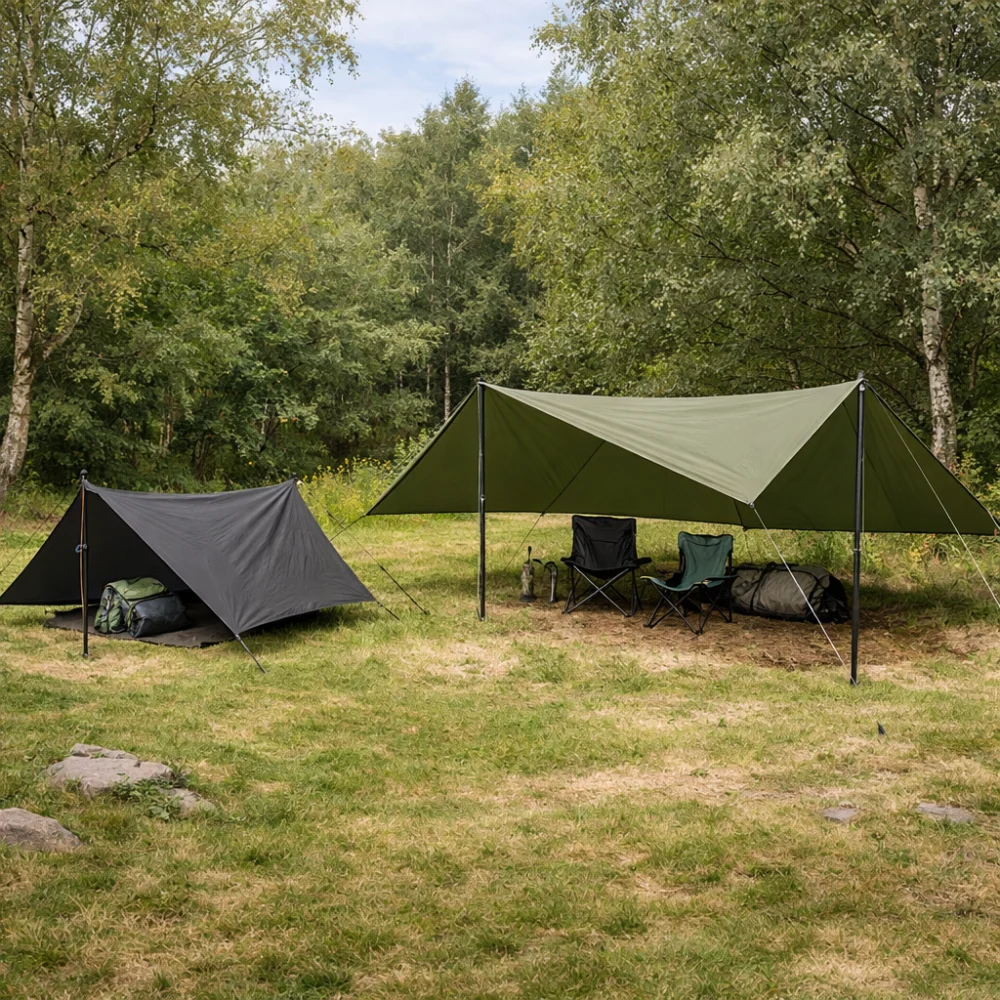
Common tarp styles and how they differ
In this category, the main variation is usually not between unrelated product families, but between different shapes, support options and levels of portability. A simpler tarp can be easier to understand and use, while a more specialised design may create a neater shelter if your site layout suits it.
- General-purpose tarps: Useful when you want flexibility and are happy to arrange the pitch yourself.
- More shaped shelter tarps: Suited to buyers who want a more defined canopy area and do not mind a less adaptable layout.
- Highly portable options: Better for travel and occasional use, where pack size matters.
The trade-off is usually flexibility versus convenience. A very adaptable tarp may take a little more planning, while a more structured one may be simpler to position in the right conditions.
Which type suits different buyers?
| Buyer need | Priority | What to favour |
|---|---|---|
| Camping trips | Practical shelter and easy setup | Reasonable coverage, sensible packed size and enough fixing points for your usual pitch |
| Garden shade | Usable covered space | Larger coverage and a layout that works with the space you have available |
| Day trips and events | Portability | Compact packing and a setup you can manage without much equipment |
| Occasional backup shelter | Versatility | A straightforward tarp that can be used in different places and for different purposes |
Common mistakes and misunderstandings
- Choosing by size alone: Coverage matters, but so does how the tarp can actually be supported in your space.
- Assuming all shade tarps are interchangeable: Intended use and setup style can make one option far more convenient than another.
- Ignoring packed size: A tarp may look compact in a product image but still be inconvenient to carry if portability matters.
- Not checking the pitch requirements: Some designs need more planning than others, especially if you do not have fixed anchor points nearby.
Safety and suitability caveats
Shade tarps are chosen for comfort and cover, not for guaranteed weather protection. If you need shelter in stronger wind or rain, read the product information carefully and make sure the intended use matches your plans. It is also worth checking whether the tarp needs poles, lines or other supporting equipment that is not included.
Maintenance, storage and lifespan considerations
For most buyers, the main care questions are cleaning, drying and storage. A tarp that is packed away damp can be less convenient to keep in good condition, so drying and folding it properly after use is sensible. If you plan to use it often, think about how easy it will be to wipe clean, re-pack and store between trips.
How to compare shade tarps efficiently
- Decide where you want to use it and how much shade you need.
- Choose the style that fits your usual setup, whether that means flexibility or a more defined pitch.
- Compare coverage, packed size and fixing points first.
- Check whether you have the support method the tarp expects.
- Read the individual product page to confirm the details that matter most to your use.
Summary buyer decision checklist
- Will the tarp give you enough shade for the space you actually use?
- Does the shape suit your pitch or location?
- Can you support it with the equipment or anchor points you have?
- Is the packed size practical for carrying or storing?
- Does the intended use match the conditions you expect?
- Have you checked the individual product page for the final details?
Frequently asked questions
Are shade tarps the same as rain tarps?
Not necessarily. A shade tarp is chosen primarily to create cooler covered space, while a rain tarp is more about wet-weather shelter. Some products may overlap in use, but you should check the product information rather than assuming one will do both jobs equally well.
Do I need poles to use a shade tarp?
Sometimes, but not always. Some setups use trees, existing structures or other anchor points, while others need separate poles. Check the product details so you know what support method the tarp expects.
What matters more: size or shape?
Both matter, but in different ways. Size affects how much area you can cover, while shape affects how easy the tarp is to pitch in your space. The right choice depends on the layout you want to create.
Is a larger tarp always better?
No. A larger tarp can create more shade, but it may also be harder to position and support. If you only need a small covered area, a more compact option may be easier to live with.
How do I know if a tarp is portable enough?
Look at the packed size and think about how often you will carry it. A tarp that is fine for the garden may feel inconvenient on a hike or day trip. Portability is about how easy it is to move, store and set up in real life.
Can a shade tarp be used as a general outdoor shelter?
Often yes, but only within the limits described by the product. Shade-focused designs are mainly about overhead cover and comfort, so they should be judged by how well they suit your intended conditions rather than by a single label.