

Chest harnesses are a specialist part of climbing and mountaineering setup, usually considered alongside other harness components rather than as a stand-alone solution. For many buyers, the main questions are not just about fit, but about intended use, compatibility with the rest of the system and how much support is actually needed.
This guide helps you understand where chest harnesses fit into a climbing harness system, what details matter most on the product page and which trade-offs are worth thinking about before you choose.
What should you look for in a chest harness?
The best starting point is to match the chest harness to the way you plan to use it and the rest of your harness setup. A chest harness should feel secure and comfortable, but it also needs to work properly with the compatible lower harness or attachment system it is designed to pair with. Specifications vary by model, so always check the individual product page before buying.
The most important choice is usually between simplicity and adjustability. More adjustment can help you fine-tune fit over clothing or different body shapes, while a simpler design may be quicker to put on and easier to inspect. Comfort, coverage and connection layout all matter, but they only make sense when considered with the intended use.
| Feature | What It Means | Why It Matters | What To Check |
|---|---|---|---|
| Fit and adjustability | How the harness is tightened and set to the wearer | Affects comfort, stability and how well the harness stays positioned | Adjustment range, strap layout and whether it suits the intended layers of clothing |
| Compatibility | How the chest harness connects with the rest of the system | A chest harness is usually part of a wider setup, so compatibility is essential | Pairing instructions, connection method and whether it is meant to be used with a specific lower harness |
| Padding and coverage | How much material sits against the body | Can influence comfort, pressure distribution and bulk | Where the contact points are and whether the design seems suitable for longer wear |
| Weight and bulk | How substantial the harness feels when worn or packed | Important for travel, layering and overall ease of use | Whether the design looks streamlined enough for your activity |
| Intended activity | The kind of climbing or mountaineering use the harness is aimed at | Different activities place different demands on support, mobility and system layout | Product description, intended pairing and any category notes on use |
Key decision criteria explained
Fit and body shape
Chest harnesses need to sit securely without pinching, twisting or riding up. Because body proportions vary, the same design can feel very different from one person to another. Look for clear adjustment points and think about whether you will wear it over light layers or bulkier clothing.
Support and stability
A chest harness is about keeping the upper body positioned as intended within a wider climbing system. Buyers often focus on how substantial it looks, but the more important question is whether it remains stable and comfortable during the activity it is designed for. A more structured design is not automatically better if it adds unnecessary bulk.
Connection and system layout
The way the chest harness connects to the rest of the setup is central to the buying decision. Some options are designed to work with specific lower harnesses or attachment methods, while others may be more general in arrangement. Check that the product page explains how it is meant to be used and whether it is sold as part of a system or as a separate component.
Comfort during movement
Climbing and mountaineering involve frequent movement, so comfort is not just about how the harness feels when standing still. Look at strap placement, contact areas and how much freedom of movement the design appears to allow. If a design seems overly bulky, it may be less convenient even if it feels secure.
Types and variants you may see
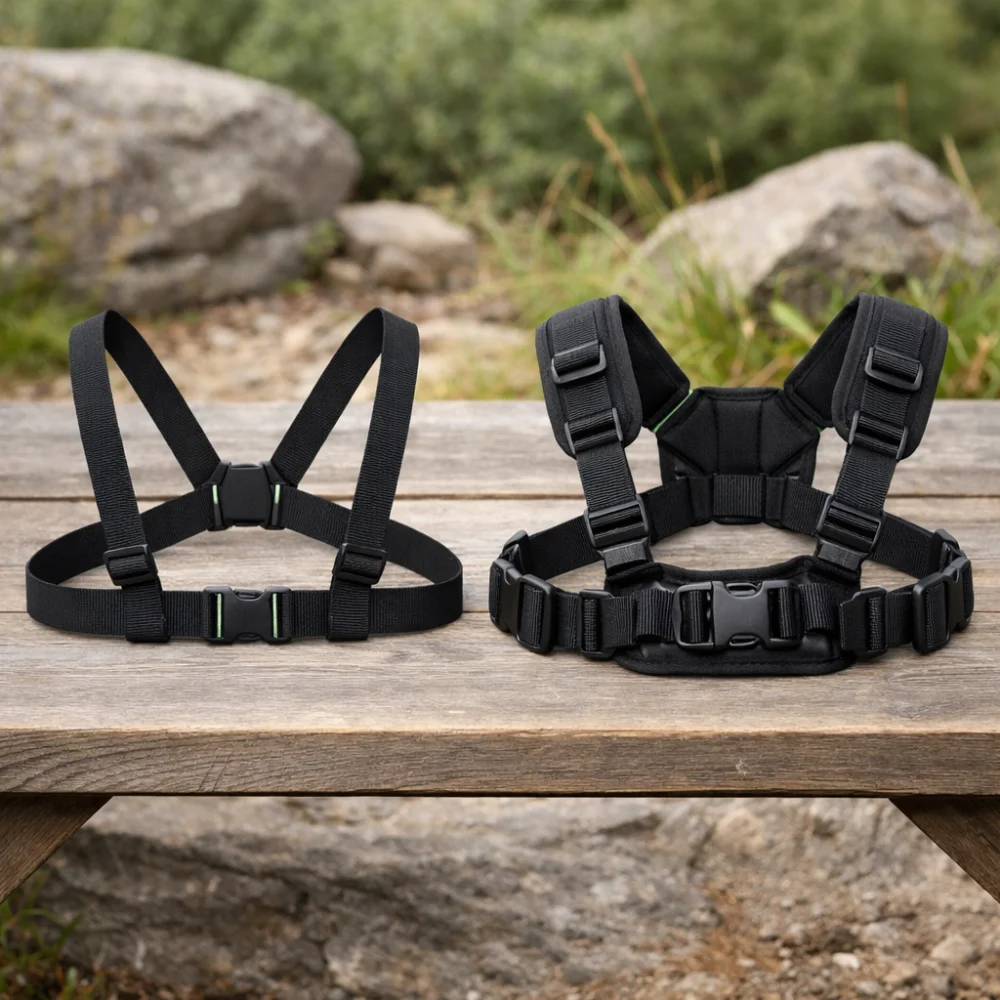
Chest harnesses do not usually vary as widely as some other harness categories, but buyers may still notice different designs based on adjustability, structure and how they are intended to connect to other equipment.
- Simple chest harnesses: Usually easier to understand and use, but may offer less fine adjustment.
- More adjustable designs: Useful when fit needs to be tuned carefully, though they may take longer to set up.
- System-specific options: Intended to work with a particular arrangement, which can improve compatibility but reduces flexibility.
When comparing these, focus less on labels and more on how the product is meant to function in the full harness system.
Which buyer needs point to which features?
| Buyer need | Helpful features | Main trade-off | What to verify |
|---|---|---|---|
| Needing a secure upper-body component for a wider setup | Clear connection method and stable fit | More secure designs may be less minimal | How it integrates with the rest of the harness system |
| Buying for regular use with variable layers | Broad adjustment range | More adjustment can mean more setup time | Whether the fit range suits the clothing you expect to wear |
| Wanting a simpler, lower-bulk option | Compact construction and straightforward layout | Less bulk may mean less flexibility | Whether simplicity still leaves enough room for a comfortable fit |
| Choosing for a more specific system | Matching attachment arrangement | Less general-purpose use | Compatibility details on the product page |
Common mistakes and misunderstandings
- Thinking all chest harnesses are interchangeable: They are not. The connection method and intended system matter more than the category name alone.
- Focusing only on padding: Comfort matters, but padding does not guarantee a better fit or better stability.
- Ignoring layering: A harness that feels fine over a thin layer may feel very different over thicker clothing.
- Assuming more structure is always better: Extra bulk can help in some situations, but it can also make movement less convenient.
Safety and suitability caveats
Chest harnesses are part of a safety-critical activity, so it is worth being cautious about intended use and compatibility. Choose only products that are clearly described for the activity you plan to do, and avoid assuming that a harness will work with another system unless that is stated on the product page.
It is also sensible to check whether the product is meant to be used on its own or only as part of a combined harness setup. If any detail is unclear, it is better to confirm the intended use before buying than to rely on assumptions.
Maintenance, storage and lifespan considerations
Chest harness care is usually about keeping the product clean, dry and stored away from unnecessary wear. Because these products are used in demanding outdoor conditions, buyers should think about how easy the design is to inspect and maintain after use.
If a harness will be used often, simple construction and clear adjustment points can make routine care easier. It is also sensible to consider how the harness will be packed and stored between trips, especially if you want to avoid unnecessary abrasion or tangling with other kit.
How to compare options efficiently
- Start with the intended use and make sure a chest harness is the right category for that setup.
- Check how it connects to the rest of the harness system and whether that arrangement is compatible with your plans.
- Compare fit, adjustment range, bulk and comfort rather than relying on appearance alone.
- Look for any notes about intended use, pairing or limitations on the individual product page.
- Choose the simplest design that still meets your needs without overcomplicating the system.
Summary buyer decision checklist
- Is a chest harness appropriate for your intended climbing or mountaineering setup?
- Does the connection method suit the rest of your harness system?
- Will the fit work over the layers you expect to wear?
- Is the design comfortable enough for the time you expect to spend in it?
- Are you clear on any system-specific limitations before buying?
- Have you checked the individual product page for the details that vary by model?
Frequently asked questions
Do I need a chest harness on its own?
Usually, a chest harness is part of a broader harness setup rather than a stand-alone answer. The key question is whether your intended activity calls for that upper-body component and how it is meant to work with the rest of the system.
How do I know if the fit is right?
Look for a secure feel without uncomfortable pressure, twisting or slipping out of position. Adjustment range and strap layout matter, especially if you expect to wear different layers underneath.
Are all chest harnesses suitable for the same activities?
No. The intended use and connection method can vary, so it is important to check the product description carefully. A harness that suits one setup may not be appropriate for another.
What matters more: padding or adjustability?
Both can matter, but they solve different problems. Padding may improve comfort, while adjustability helps the harness fit your body and clothing more accurately.
Can I judge compatibility from the category alone?
Not reliably. Compatibility depends on the specific design and how it is intended to be used with the rest of your equipment.
What if I am choosing between a simple and a more complex design?
Choose the simplest option that still gives you the fit and connection you need. Extra complexity can be useful, but it is not automatically an advantage if you do not need it.
Should I compare chest harnesses by price first?
Price is only useful after you have checked fit, compatibility and intended use. A cheaper option is not better if it does not suit the system you need.