


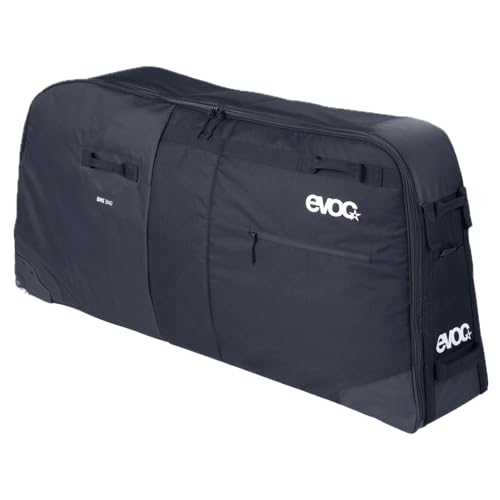
If you need to move a bike by car, train, plane or courier, a bicycle transport case can help keep it protected and easier to handle. The right choice depends on how much protection you need, how often you travel and how much size and weight you are willing to manage.
This guide focuses on the practical buying decisions: hard versus soft protection, internal space, ease of packing and how much dismantling your bike may need before it fits. It is for riders who want a sensible way to compare options without getting lost in model details.
Because bicycle transport cases are used in different ways, it helps to think about the journey first and the bike second. A case that suits occasional car travel may feel very different from one chosen for repeated long-distance transport.
Compare Bicycle Transport Cases



As an Amazon Associate we earn from qualifying purchases.
What should you look for in a bicycle transport case?
The best starting point is the kind of protection you need versus the amount of bulk you can live with. Hard cases usually focus on stronger external protection, while softer cases often aim for easier handling and lower storage hassle. The main trade-off is simple: more protection often means more weight, size or packing effort.
Look closely at internal layout, bike compatibility and how much the bike needs to be stripped down before packing. Specifications vary by model, so always check the individual product page before buying.
| Feature | What it means | Why it matters | What to check |
|---|---|---|---|
| Case type | Hard or soft construction | Sets the balance between protection, weight and storage convenience | How the case is built and whether that suits your journey |
| Internal space | How much room is available for the bike and removed parts | Affects whether your bike fits comfortably without forcing parts into awkward positions | Stated bike size limits and any restrictions on wheelbase or frame shape |
| Packing style | How much dismantling is needed before travel | More dismantling can improve fit but adds time and complexity | Whether wheels, pedals, bars or other parts need removing |
| Handling | How easy the case is to lift, carry or roll | Important if you need to move it through stations, airports or car parks | Weight, wheels, handles and overall size when packed |
| Protection details | Padding, shell strength and internal support | Helps reduce movement and contact between bike parts | Where the case protects the most and how the bike is secured inside |
| Storage when empty | How much room the case takes when not in use | Matters if you have limited home storage | Whether the case folds, nests or needs a dedicated space |
Key decision criteria explained
Protection level
Think about what the bike is likely to encounter in transit. If it will be loaded and unloaded often, handled by other people or stacked with luggage, a more protective case may be worth the extra bulk. If it is mainly for car travel or occasional use, a simpler case may be enough.
Bike fit and compatibility
Transport cases are not all equally forgiving. Frame shape, wheel size, handlebar width and the need to remove components can all affect whether a case is suitable. Check the product information carefully for the size and configuration your bike needs.
Packing convenience
Some cases are chosen because they make travel cleaner and more organised, while others are chosen because they are quicker to load. If you travel regularly, even a small difference in packing time can matter. A more compact fit may protect the bike better but ask for more preparation before departure.
Weight and portability
A case that is strong enough for travel can still be inconvenient to move around. Consider whether you will lift it into a car boot, roll it through a terminal or carry it up steps. The right balance depends on how often you will handle the case on its own, not just how well it protects the bike.
Types and variants to compare
Bicycle transport cases generally fall into a few practical groups, even when individual designs vary. The main question is how much structure you want around the bike.
- Hard cases can suit longer or more demanding journeys where stronger outer protection is a priority.
- Soft cases can suit riders who want something lighter or easier to store, especially where careful handling is expected.
- More structured hybrid-style cases may appeal if you want a middle ground between rigid protection and easier handling.
The main limitation is that no single design solves everything. A case that is easy to store may offer less outer protection, while a more rigid case may be more awkward to move and store at home.

Which type suits which buyer?
| Buyer need | Likely priority | What to compare |
|---|---|---|
| Occasional leisure travel | Simplicity and manageable storage | Ease of packing, storage size and basic protection |
| Frequent travel | Consistency and handling | Durability, internal support and ease of moving the case repeatedly |
| Protecting a valuable bike | Higher protection and stable support | Shell strength, padding and how securely the bike sits inside |
| Limited home storage | Compactness when not in use | Foldability, nesting and how much room the case occupies empty |
| Mixed transport methods | Versatility | Whether the case is practical for car, rail or longer-distance travel |
Common mistakes to avoid
- Choosing on protection alone: a very protective case can still be inconvenient if it is too heavy or awkward to store.
- Assuming all bikes fit the same way: fit depends on the bike and the case design, not just on the word “bicycle” in the title.
- Ignoring packing time: a case that needs more dismantling may be fine for occasional use but frustrating when you are in a hurry.
- Overlooking storage space at home: a case that is ideal for travel may still be difficult to keep when empty.
Safety and suitability checks
Use the case only for the kind of transport it is intended for, and check the product page for any bike-size or packing limits. If you are travelling by air or handing the case to third-party transport, it is especially important to understand how the bike must be prepared and secured. Do not assume that a case alone removes the need to pack the bike carefully.
Maintenance, storage and lifespan considerations
Look for a case you can clean, store and handle without much effort. Zips, straps, fasteners, wheels and padding can all affect long-term convenience, even when the case itself seems simple. A case that is easy to keep tidy and dry is usually easier to live with, especially if you use it only a few times a year.
How to compare options efficiently
- Decide how you will transport the bike most often.
- Choose the level of protection that matches that journey.
- Check bike fit, internal space and any packing requirements.
- Compare handling, weight and storage needs.
- Read the individual product page carefully before buying.
Summary buyer decision checklist
- Does the case suit your main travel method?
- Is the level of protection appropriate for your needs?
- Will your bike fit without awkward forcing or guesswork?
- Are the packing steps manageable for how often you will use it?
- Can you store and carry the case comfortably when it is empty?
- Have you checked the individual product page for model-specific details?
Frequently asked questions
Do I need a hard case or a soft case?
That depends on how the bike will be moved and how much protection you want. Hard cases are usually chosen when external protection matters more, while soft cases may suit lighter handling and easier storage. The best choice is the one that matches your journey rather than the most protective option on paper.
Will a bicycle transport case fit any bike?
No single case suits every bike. Fit depends on the bike’s size, shape and the case’s internal layout, so it is important to check the individual product information. If your bike has unusual geometry or larger components, careful checking matters even more.
How much dismantling should I expect?
That varies by case design and by bike. Some cases allow relatively straightforward packing, while others need more parts removed to make the bike fit securely. The amount of dismantling is one of the main trade-offs between convenience and a compact, stable fit.
Are bicycle transport cases only for flights?
No. They can also be useful for car travel, rail journeys and other situations where the bike needs better protection or easier handling. The right case depends on the kind of movement you need, not just on air travel.
What should I check before I buy?
Check fit, packing requirements, storage size, handling features and the level of protection the case is designed to provide. It is also sensible to confirm whether any parts need to be removed before travel. Specifications vary by model, so always check the individual product page before buying.
How do I judge whether a case is easy to live with?
Look beyond the outer shell and think about everyday use. A case that is simple to move, store and repack may be a better fit for regular travel than one that offers more protection but is harder to handle. The most convenient option is often the one that reduces friction at every stage, from packing to storage.
More Bicycle Transport Cases
See all 92 Bicycle Transport Cases →


As an Amazon Associate we earn from qualifying purchases.