


Bike cleaning kits are a simple way to keep routine bike care more organised, whether you clean your bike after wet rides, dusty commutes or occasional off-road use. The main challenge is choosing a kit that matches how often you clean, how much storage space you have and how much of the cleaning process you want bundled together.
This guide focuses on practical buying decisions rather than a single ideal kit. Some buyers want a basic set for occasional upkeep, while others prefer a more complete collection of brushes, cleaners and cloths for regular maintenance.
Because kits vary, it helps to compare what is actually included and whether the contents suit your bike and cleaning habits. Specifications vary by model, so always check the individual product page before buying.
Compare Bike Cleaning Kits


As an Amazon Associate we earn from qualifying purchases.
What should you look for in a bike cleaning kit?
The best starting point is to match the kit to the kind of dirt you usually deal with and how much effort you want the process to take. A compact kit can suit light maintenance, while a more complete kit may make regular cleaning easier if you prefer having the right tools together. The main trade-off is usually convenience against flexibility: a bundle can be easy to start with, but separate items may let you choose each part more precisely.
| Feature | What it means | Why it matters | What to check |
|---|---|---|---|
| Included tools | The brushes, cloths, cleaners and other items in the kit | Determines how complete the kit is for routine bike care | Check the exact contents rather than assuming every kit is equally comprehensive |
| Brush types | Different brush shapes or stiffness levels for different parts of the bike | Affects how easily you can clean awkward areas without overworking them | Look for brushes suited to frames, drivetrains and tight spaces if those areas matter to you |
| Cleaning method | Whether the kit is mainly for wipe-downs, detailed cleaning or more thorough maintenance | Helps you avoid buying more than you need, or too little for your routine | Match the kit to the level of cleaning you realistically do after rides |
| Storage format | How the items are packed or organised | Important if you keep the kit in a garage, shed, car or small flat | Check whether the kit is easy to store and keep together between uses |
| Consumables | Items that may need replacing over time, such as cloths or cleaning fluids | Shapes the long-term convenience and ongoing cost of ownership | Check whether replacement items are easy to source separately |
Key decision criteria
How often you clean the bike
If you only clean occasionally, a simple kit may be enough. Frequent riders often prefer a more complete set because it reduces the need to gather separate brushes or cloths each time. If you ride in bad weather or on dirty surfaces, the practical benefit of a better-organised kit is often quicker, more consistent cleaning rather than a dramatic change in results.
Which parts of the bike need attention
Different bikes and riding habits create different cleaning priorities. A kit that works well for general frame cleaning may be less useful if you also want to focus on tighter drivetrain areas or hard-to-reach parts. Look for a mix of tools that suit the areas you actually plan to clean, rather than assuming a larger bundle is automatically better.
Ease of storage and use
Some kits are aimed at quick grab-and-go cleaning, while others are more like a small home maintenance set. If space is limited, compact organisation may matter more than having many separate pieces. If you keep tools in a workshop or garage, a fuller kit may be easier to live with.
Replacement and upkeep
Even a well-chosen kit can lose value if key items are awkward to replace. It is sensible to think about whether brushes, cloths or cleaning liquids are disposable, reusable or easy to replenish. That matters if you want the kit to remain practical over time rather than becoming a one-off purchase.
Common types of bike cleaning kit
Bike cleaning kits often fall into a few broad styles. Basic kits usually suit light, occasional cleaning and keep the purchase simple. More complete kits can be better if you want a wider range of tools in one place, especially where different bike parts need different levels of attention.
Some kits are more focused on brushes and cloths, while others may centre on cleaning liquids or maintenance accessories. The right choice depends less on the label and more on whether the contents match your routine. A kit that looks comprehensive may still miss the one item you use most.
Which kit suits which buyer?
| Buyer need | What to prioritise | What may be less important |
|---|---|---|
| Occasional cleaner | Simplicity, compact storage, the essential tools only | Large bundles of specialist accessories |
| Regular rider | A more complete set that covers common cleaning tasks efficiently | Extra items you are unlikely to use |
| Limited storage space | Organisation and compact packaging | Oversized kits with many separate parts |
| Detail-focused owner | Different brush shapes and a kit that reaches awkward areas | Very basic all-purpose sets |
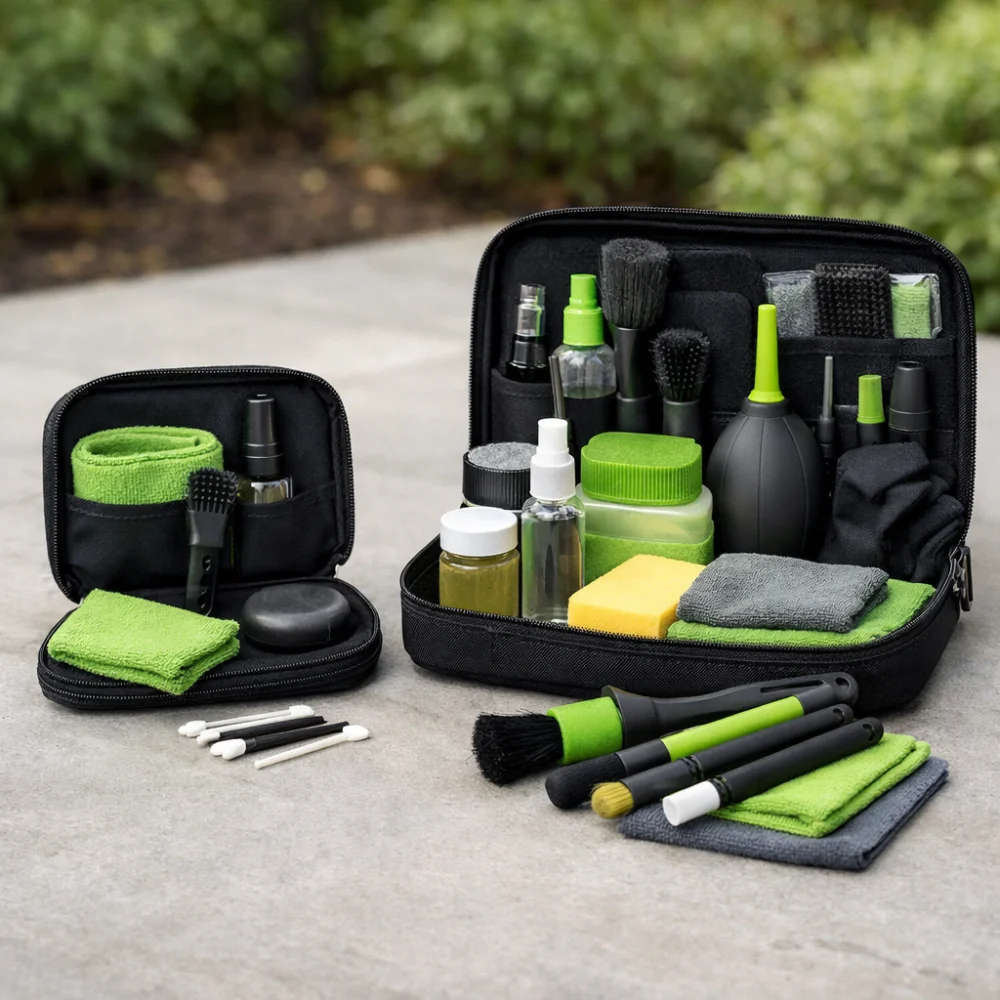
Common mistakes and misunderstandings
- Assuming every kit includes the same items. Check the contents carefully, because the label alone does not tell you whether the kit covers your cleaning routine.
- Buying for quantity rather than usefulness. More pieces are not always better if several of them duplicate the same job.
- Ignoring storage. A kit that is awkward to keep together often gets used less often.
- Forgetting replacement needs. If you will use the kit regularly, think about what can be replenished later.
Safety and suitability caveats
Choose a kit that suits the materials and finish of your bike, and check any care notes on the product page before use. If the kit includes liquids or chemical cleaners, pay attention to the intended surfaces and storage guidance. For special finishes or expensive components, it is worth being cautious and verifying suitability rather than assuming a general-purpose cleaner is appropriate.
Maintenance, storage and lifespan considerations
A bike cleaning kit usually lasts longer when it is stored dry, kept together and used for the job it was designed for. Cloths, brushes and cleaning fluids may all have different ownership needs, so it helps to think about the kit as a set of separate items rather than one uniform product. If you clean often, easy replacement of the most-used parts can matter as much as the original bundle.
How to compare options efficiently
- Decide how often you clean and how thorough that cleaning needs to be.
- Check whether you want a basic kit, a more complete kit or a compact set for occasional use.
- Compare the included tools and see whether they match the parts of the bike you actually clean.
- Look for storage and replacement convenience, not just the number of pieces.
- Read the individual product page carefully for the exact contents and any care notes.
Summary buyer decision checklist
- Does the kit match how often you clean your bike?
- Do the included items suit the parts you actually want to clean?
- Is the kit compact enough for your available storage space?
- Are replacement or refill items likely to be easy to manage?
- Have you checked the exact contents on the individual product page?
Frequently asked questions
Do I need a full bike cleaning kit, or are a few tools enough?
That depends on how much cleaning you do and how organised you want the process to be. A few separate tools may be enough for occasional upkeep, while a kit can be more convenient if you want everything together. The better choice is usually the one that fits your routine without adding clutter.
Are all bike cleaning kits suitable for every bike?
No, not automatically. Kits vary in what they include and some are more suitable for certain cleaning tasks than others. It is worth checking that the contents make sense for your bike type and the areas you plan to clean.
What matters more: the number of pieces or the type of pieces?
The type of pieces usually matters more. A smaller kit with the right brushes or cloths can be more useful than a larger bundle full of items you will not use. Focus on whether the kit covers your actual cleaning needs.
How do I know if a kit is good for regular use?
Look for practical organisation, sensible contents and the ability to replace any consumables later. Regular use is less about a dramatic feature list and more about whether the kit remains easy to use and keep together over time.
Should I choose a kit with cleaning liquids included?
Only if you want the convenience of an all-in-one purchase and the product page shows the liquids are suitable for your bike and intended surfaces. Some buyers prefer separate items so they can choose cleaners more carefully. The right answer depends on how specific your needs are.
What should I check before buying a kit as a gift?
Think about the recipient’s bike, how often they clean it and how much storage space they have. A simple, well-organised kit is often easier to choose than a very specialised one. Checking the exact contents helps avoid giving something impractical.
Brush-focused or drivetrain-focused kits?
Some kits concentrate on brushes and cloths for general cleaning, while others include tools intended to help reach the chain or other drivetrain areas. These serve different priorities: a general brush set can be more versatile for the frame and other accessible parts, whereas drivetrain-specific tools may be more useful if that is where your cleaning effort is focused. Check the listed purpose and exact contents rather than treating every multi-piece kit as an all-purpose solution.
If a kit is described for more than one kind of vehicle, do not assume every item is suitable for every bicycle or component. Check the product information for its intended use and any relevant care guidance, particularly for cleaning products or tools meant for a specific area.
More Bike Cleaning Kits
See all 112 Bike Cleaning Kits →


As an Amazon Associate we earn from qualifying purchases.