


Line spoolers are a simple but useful accessory for anglers who want to load line onto a reel more neatly and with less fuss. If you are replacing line often, setting up several reels or trying to avoid twists and slack during spooling, the right choice can make the job easier.
This guide focuses on how to compare line spoolers, what to look for before buying and where the main trade-offs usually appear. It stays within the category so you can make a practical decision without having to guess which features really matter.
Compare Line Spoolers


As an Amazon Associate we earn from qualifying purchases.
What should you look for in a line spooler?
The best starting point is to match the spooler to the way you actually spool line. Some buyers mainly want a simple, stable holder for occasional use, while others care more about smoother feed, easier adjustment or a setup that keeps the line under better control. The main trade-off is usually between simplicity and adjustability: the more control a spooler gives you, the more likely it is to need careful setup.
| Feature | What it means | Why it matters | What to check |
|---|---|---|---|
| Line control | How steadily the spool feeds line during loading | Helps reduce twists, loose wraps and uneven tension | Look for the type of feed support described on the product page |
| Adjustment | How easily the spooler can be set up for different spool sizes or reel positions | Affects convenience if you use more than one setup | Check whether the product is described as adjustable and how the adjustment works |
| Stability | How firmly the unit stays in place while you work | Useful for smoother, less frustrating spooling | Check the mounting or base style and whether extra support is needed |
| Ease of use | How straightforward it is to place the spool and begin loading | Matters if you change line often or want a quicker setup | Look for simple loading steps and clear product images |
| Portability | How easy it is to move, store or pack away | Handy if you spool in different places | Check the overall format and whether it is intended for bench use or transport |
Key decision criteria
How you will use it
Think first about whether you need a spooler for occasional line changes or regular reel maintenance. Occasional users often prefer a straightforward design that is quick to set up, while frequent users may value better control and easier repeat use. A more feature-rich design can be helpful, but only if the added adjustment genuinely suits your routine.
Line feeding and tension
A good line spooler should help line come off the spool in a controlled way. That does not mean every design works the same way for every line type or reel, so check how the product describes tension or feed handling. Specifications vary by model, so always check the individual product page before buying.
Stability and mounting
Stability matters because a wobbling setup can make the job more awkward than it needs to be. Some spoolers are made for a bench or fixed surface, while others may rely on a simpler holder arrangement. The practical question is whether the setup feels secure enough for the way you normally work.
Adjustability and compatibility
Many buyers want a spooler that can handle different spool sizes or reel positions, but adjustability should be assessed carefully rather than assumed. Check whether the product is meant for the sort of line spool you use most often and whether the adjustment range is clearly described. If a listing is vague, treat that as a sign to verify the details before buying.
Ease of storage
If you only spool line now and then, a compact or easy-to-store design may be more practical than a larger setup. This matters especially if your fishing kit is already full of boxes, tools and accessories. Simple storage can be a real advantage even when the product itself is not especially technical.
Types and variants within the category
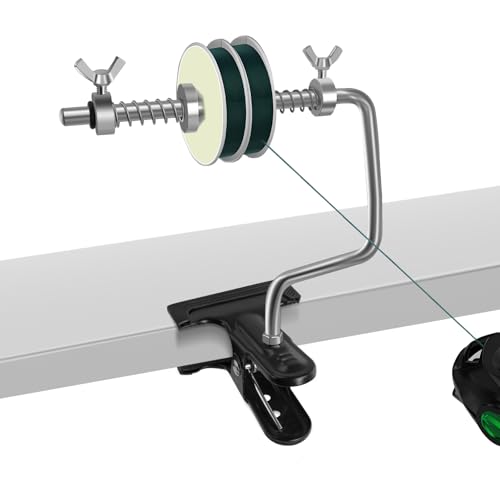
Within line spoolers, variation is usually about how the spool is held and how much control the design gives you. Some options are more basic and suit buyers who want a simple holder for occasional use. Others are more adjustable and may suit anglers who want more control over how line is fed onto the reel.
In practice, the question is less about finding a universally superior type and more about picking the one that matches your working style. If you favour speed and simplicity, a basic design may be enough. If you want more control and repeatability, a more adjustable design may be worth considering.
Which type suits which buyer?
| Buyer need | Likely priority | What to lean towards | What to avoid |
|---|---|---|---|
| Occasional reel maintenance | Simple setup | Easy-to-use design with clear loading steps | Overly complicated adjustment you will not use |
| Frequent line changes | Speed and repeatability | Stable design with straightforward adjustment | Loose-feeling or fiddly setups |
| Multiple reels or spool sizes | Flexibility | Adjustable features that are clearly explained | Fixed designs that may be too narrow for your needs |
| Compact storage | Space saving | Smaller or easier-to-pack format | Large setups if you have limited storage space |
Common mistakes to avoid
- Buying on appearance alone. A neat-looking design is not the same as one that actually supports the way you spool line.
- Assuming all spool sizes will fit. Check the description carefully because compatibility details are not always obvious from images.
- Overlooking stability. A spooler that shifts around can make line loading more awkward than necessary.
- Ignoring your own routine. If you only change line occasionally, a more complex setup may add little value.
- Assuming adjustability is always better. Extra adjustment is useful only when it matches the reels and spools you use.
Suitability and practical caveats
Line spoolers are mainly about convenience and control, so the most important buying checks are practical rather than technical. Make sure the product description gives enough information about fit, setup style and the sort of use it is intended for. If the listing is sparse, compare it carefully with your own reel and line setup before deciding.
Keep in mind that product descriptions can vary in detail, and not every spooler is presented the same way. That makes it especially important to rely on the individual product page rather than assumptions based on the category name alone.
Care, storage and long-term use
Most buyers will want a spooler that stores neatly and remains easy to set up each time. Simple care usually means keeping it clean, dry and free from grit after use, then storing it where it will not be bent or knocked around. If a design has moving parts or adjustment points, it is worth checking that they still feel easy to operate after repeated use.
For many anglers, the practical question is how much time the spooler saves and whether it stays convenient over several seasons of use. A tidy, uncomplicated design can be more useful than a more elaborate one if it is easier to keep ready for the next line change.
How to compare options efficiently
- Start with your own setup: how often you spool line and how many reels you need to handle.
- Choose the basic type: simple holder, more adjustable design or a compact format.
- Compare the practical features: line control, stability, ease of use and storage.
- Check the limits carefully: fit, adjustment range and whether the product suits your reel and spool style.
- Use the individual product page to confirm the details before you decide.
Summary buyer decision checklist
- Does it suit how often you change line?
- Will it work with the spool and reel setup you use?
- Is the design stable enough for comfortable spooling?
- Is the level of adjustment useful, or more than you need?
- Will it be easy to store and bring out when needed?
- Have you checked the individual product page for the details that matter most?
Frequently asked questions
What is a line spooler used for?
A line spooler helps you load fishing line onto a reel in a more controlled way. It is mainly about making the process neater and more convenient, rather than changing the line itself.
Do I need an adjustable spooler?
Not always. Adjustable designs are useful if you use different spool sizes or want more control, but a simpler design may be better if you only need basic line loading.
How do I know if it will fit my setup?
Check the product description for guidance on spool size, mounting style and any stated limits. If those details are not clear, it is sensible to compare the listing carefully with your own reel and line setup.
Are more complex spoolers always better?
No. More complexity can mean more flexibility, but it can also mean more setup time. Many buyers are better served by the simplest design that still handles their needs properly.
Is portability important?
It can be if you change line in different places or need to store your gear compactly. If you only use it in one spot, stability and ease of use may matter more than portability.
What should I check before buying?
Focus on fit, stability, adjustment and how easy the design is to use. Those four points usually tell you more about day-to-day usefulness than the name of the product alone.
Check the spooler’s intended task
“Line spooler” can describe tools for different jobs. Before comparing adjustment or portability, decide whether you want to load line onto a reel, remove line from a reel, or wind and organise shorter lengths such as leaders or rigs. These functions are not interchangeable.
- Loading line onto a reel: Look for a design intended to hold a supply spool and feed line towards a reel. Check that its stated setup suits your reel and the way the supply spool is held.
- Removing line: A line-removal tool is for taking line off a reel, not for loading fresh line. If this is your task, check the product description for its intended removal method and any stated power or attachment requirements.
- Winding or organising shorter lengths: Compact winding plates and organisers may help keep leaders or rigs together, but they are not necessarily substitutes for a reel-loading device. Check what they are designed to hold and how the finished lengths are secured.
Product names can use similar wording for these different jobs, so judge suitability by the stated purpose and product details rather than the category label alone.
More Line Spoolers
See all 119 Line Spoolers →


As an Amazon Associate we earn from qualifying purchases.