

Beach carts are designed to help you move picnic gear, towels, cool boxes and other seaside essentials with less effort than carrying them by hand. The right choice depends on where you will use it, how much you need to carry and how easy it is to steer over soft or uneven ground.
This guide keeps the focus on buying decisions rather than product hype. It is useful if you are comparing a first beach cart, replacing an older one or deciding whether a cart is better for your trips than a bag, wagon or carrier.
Because beach carts are used in very different conditions, small design differences can make a big practical difference. Things such as wheel type, folding style and carrying capacity often matter more than appearance.
What should you look for in a beach cart?
The best starting point is how and where you will use it. For soft sand, ease of movement matters more than a compact design alone, while for flatter promenades or mixed ground you may care more about stability and storage space. Think first about the load you want to move, then check whether the cart looks suited to the terrain and the way you travel.
Specifications vary by model, so always check the individual product page before buying.
| Feature | What It Means | Why It Matters | What To Check |
|---|---|---|---|
| Wheel design | The shape, size and style of the wheels | Affects how easily the cart moves across sand and uneven paths | Look for wording that suggests suitability for your ground type |
| Load space | How much gear the cart can hold | Determines whether it suits a short family trip or a larger carry | Check the stated carrying area and whether the shape fits your items |
| Folding or storage style | How the cart packs away when not in use | Matters if boot space, cupboard space or portability is limited | Compare folded size, weight and how easy it looks to stow |
| Handle setup | The way the cart is pulled or guided | Influences comfort and control over longer walks | See whether the handle looks adjustable or fixed and whether that suits your height |
| Frame and build | The main structure that supports the cart | Affects strength, stability and how solid it feels when loaded | Look for a design that appears balanced for the terrain and the load you expect |
Key decision criteria explained
Terrain first, then convenience
Beach carts are often chosen because ordinary trolleys or hand-carrying become awkward on sand. If your route includes soft beach sand, wheel behaviour is usually more important than compact storage. If you mainly use paved paths, a simpler design may be easier to live with.
Capacity is not just about size
A larger cart can be helpful, but it may also be harder to manoeuvre or store. Think about the kind of items you carry together, not just the total volume. A family picnic setup has different needs from a light day bag and towels.
Weight and portability matter on the way back
Even if a cart helps at the destination, you still need to lift, fold or store it at times. If you have limited boot space or expect to carry it some distance before use, a bulky cart may be less convenient than it looks. Consider the whole journey, not only the final few metres on the beach.
Stability versus manoeuvrability
Some designs prioritise a steadier load, while others are easier to pull and turn. That trade-off can affect confidence when the cart is fully loaded. A stable cart can feel reassuring, but only if it still works for the type of ground you actually face.
Product types and variants
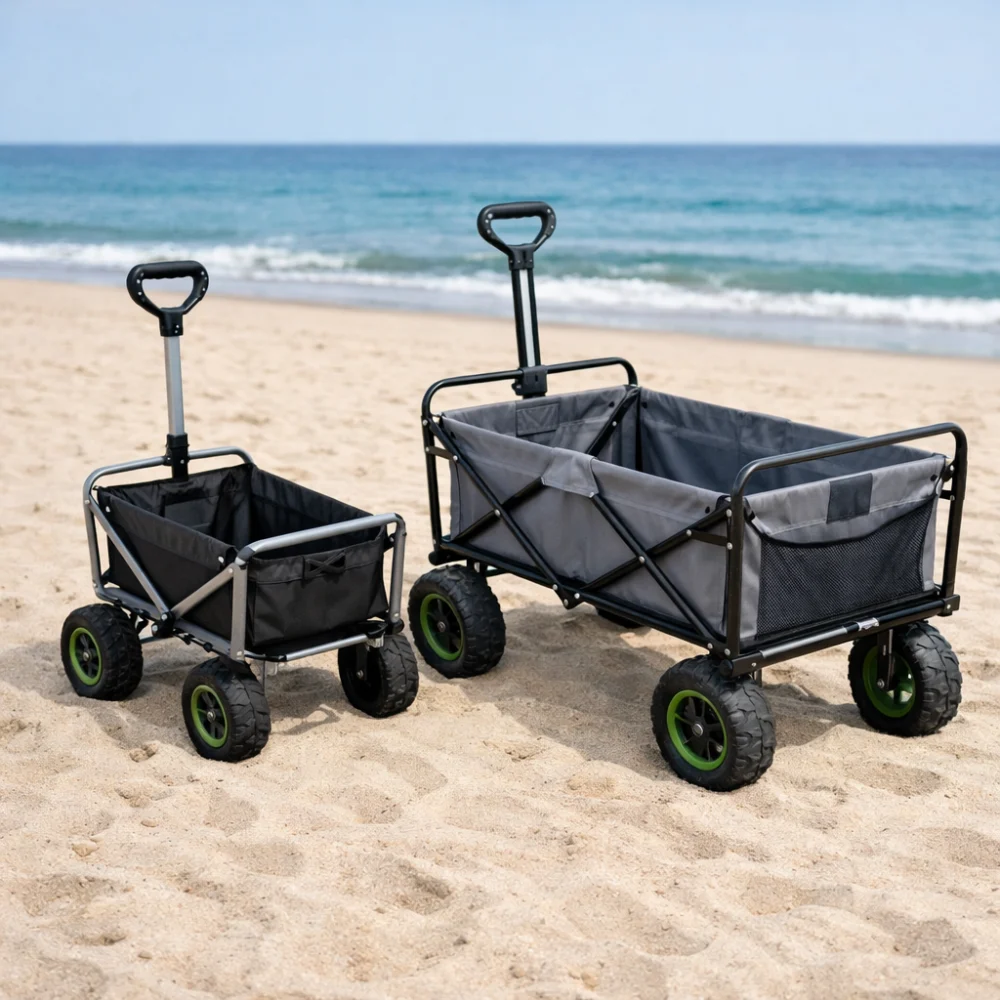
Within this category, the useful differences usually come from design rather than complex feature sets. Some beach carts are aimed at lighter loads and easier storage, while others are better suited to carrying more items over more difficult ground. The right choice depends on whether you want maximum convenience, better movement on sand or a compromise between the two.
There may also be differences in folding style, wheel arrangement and handle format. Those variations are worth comparing because they affect how easy the cart is to use day to day. A feature that looks minor on the page can become important once you are carrying food, toys or shade gear.
Which beach cart suits which buyer?
| Buyer need | What to prioritise | Why it helps |
|---|---|---|
| Family beach trips | Practical load space, stability and manageable folding | Makes it easier to carry several items together without constant reshuffling |
| Light day visits | Simple handling and compact storage | A smaller or easier-to-pack cart may be more convenient than a larger one |
| Mixed terrain use | Wheel design and control | Helps if your route includes sand, paths and uneven edges |
| Limited storage at home or in the car | Folded size and ease of stowing | Reduces the chance that the cart becomes awkward to keep or transport |
| Frequent beachgoers | Durability and comfortable handling | Better suited to repeated use and longer walks |
Common mistakes and misunderstandings
- Choosing by size alone: a large cart is not automatically better if it is difficult to move on your usual ground.
- Ignoring folded size: a cart that seems useful on the beach may still be inconvenient to store or transport.
- Assuming all wheels behave the same: the wheel setup can change how the cart feels far more than the photos suggest.
- Overloading the cart in mind before checking the page: the practical fit depends on the cart shape, not just a rough idea of capacity.
Safety and suitability caveats
Beach carts are general-purpose carrying aids, but they still need to suit the conditions you expect. Soft sand, slopes, steps and crowded walkways can all affect how easy or safe a cart is to use in practice. Check that the cart fits your route and the items you plan to carry, rather than assuming any beach-themed cart will suit every outing.
Maintenance, storage and lifespan considerations
Most buyers will want a cart that is easy to rinse or wipe down after use, especially after saltwater, sand or muddy paths. Storage matters too: if a cart is likely to live in a shed, garage or boot, folded size and ease of drying can be practical priorities. If you will use it regularly, it is sensible to look for a design that appears straightforward to clean and store between trips.
How to compare beach cart options efficiently
- Start with your main use: soft sand, mixed paths or mostly easy ground.
- Decide how much you need to carry on a normal trip.
- Compare wheel design, folding size and handle setup first.
- Check whether the cart looks easy to store, lift and transport when not in use.
- Review the individual product page for any model-specific details before deciding.
Beach cart buyer checklist
- Will it suit the ground you actually walk across?
- Is the size appropriate for your usual load?
- Will it fold or store conveniently where you need it to?
- Does the handle setup look comfortable for your height and pulling style?
- Does the design seem stable enough for the items you plan to carry?
- Have you checked the individual product page for model-specific details?
Frequently asked questions
Are beach carts the same as beach wagons?
Not always. The names are sometimes used loosely, but the design, wheel layout and intended use can differ from one product to another. It is better to compare the actual features than rely on the label alone.
What matters most for sand use?
Wheel behaviour and overall ease of pulling are usually the key points. A cart that works well on paths may still feel awkward on soft sand, so check the product description carefully for suitability clues.
Should I choose the biggest cart available?
Only if you genuinely need the extra carrying space. Bigger carts can be harder to store, lift and manoeuvre, so there is often a trade-off between capacity and convenience.
Is a folding beach cart worth considering?
It often is if storage or car space is limited. Folding can make the cart much easier to live with between trips, but the folded shape and weight still matter.
Can one beach cart suit every type of trip?
Sometimes, but not always. A cart that is versatile on mixed ground may still be a compromise, so think about your most common outing rather than the rarest one.
What should I check before buying?
Focus on terrain fit, carrying space, folded size and how the cart will be stored when not in use. Specifications vary by model, so always check the individual product page before buying.