

Beach sunshades are a simple way to make time on the beach more comfortable, especially when you want shade without carrying a larger shelter. The right choice depends on how much coverage you need, how windy your usual beach is and whether you want something quick to set up or more protective.
This guide focuses on the buying decisions that matter most: size, stability, portability and ease of use. It also helps you separate sunshades from nearby options such as beach umbrellas, beach tents and beach canopies, so you can choose the style that suits your day out.
What should you look for in a beach sunshade?
The best starting point is to decide how you will use it. A compact sunshade may be enough for short visits, while a larger one can suit families or longer stays, but it may take more effort to carry and secure. The main trade-off is usually coverage versus convenience.
Specifications vary by model, so always check the individual product page before buying.
| Feature | What it means | Why it matters | What to check |
|---|---|---|---|
| Shade coverage | How much shaded area the sunshade is designed to provide | Helps you judge whether one person, a couple or a family can sit comfortably under it | Overall footprint, usable shaded space and whether the layout suits your seating |
| Stability | How well the sunshade stays in place in coastal conditions | Important on breezy beaches where light structures can shift or need frequent adjustment | Anchoring method, support layout and any guidance on suitable ground |
| Portability | How easy it is to carry and pack away | Matters if you walk far from the car or travel with other beach kit | Packed size, carry method and whether the weight feels manageable for your routine |
| Setup effort | How straightforward it is to put up and take down | Helps you decide whether you want a quick shelter or do not mind a more involved pitch | Number of parts, assembly style and whether it looks practical for one person |
| Weather tolerance | How the design may cope with sun, breeze and changing conditions | Beach use can be more demanding than garden use because conditions change quickly | Intended use, ventilation and any model notes about wind or exposure |
Key decision criteria explained
Coverage and headroom
Think about what needs to sit in the shade, not just how large the product sounds. A sunshade that is fine for one beach chair may feel cramped for a family bag pile, cool box or child’s play area. If you want to spend longer under it, a little extra space can make a big difference to comfort.
Stability in wind
Beach conditions are often the deciding factor. A sunshade that is easy to carry but lightly anchored may suit calm days, while a more substantial design may be better when the breeze picks up. Check whether the product relies on sand anchoring, poles or another support method, and make sure that matches the beaches you usually visit.
Weight and packed size
Beach kit is often carried alongside chairs, coolers, toys and towels, so bulk matters as much as weight. If you have a short walk from the car, a slightly larger model may be acceptable. If you travel by train, bus or on foot, a compact packed size becomes much more important.
Ease of pitching
Some buyers want a simple, fast setup with minimal parts, while others are happy to spend more time for better coverage or stability. Consider whether one person can manage it alone, especially if you often arrive with children or other bags to handle at the same time.
Materials and finish
For beach use, practical materials and simple construction usually matter more than decorative details. Look for information about the frame, fabric and any anchoring elements on the product page. The question is less about fashion and more about whether the design seems suited to sun, sand and repeated packing away.
Common beach sunshade types
Compact personal sunshades
These are useful for one person or a couple who mainly want a light, portable shade. Their main advantage is convenience, but they may feel limited if you want room for extra kit or a child to sit with you.
Family-oriented sunshades
These prioritise more usable shade and a bit more space. They can be a better fit for longer beach days, but the extra coverage usually means more bulk and a little more effort to secure.
Open, airflow-friendly designs
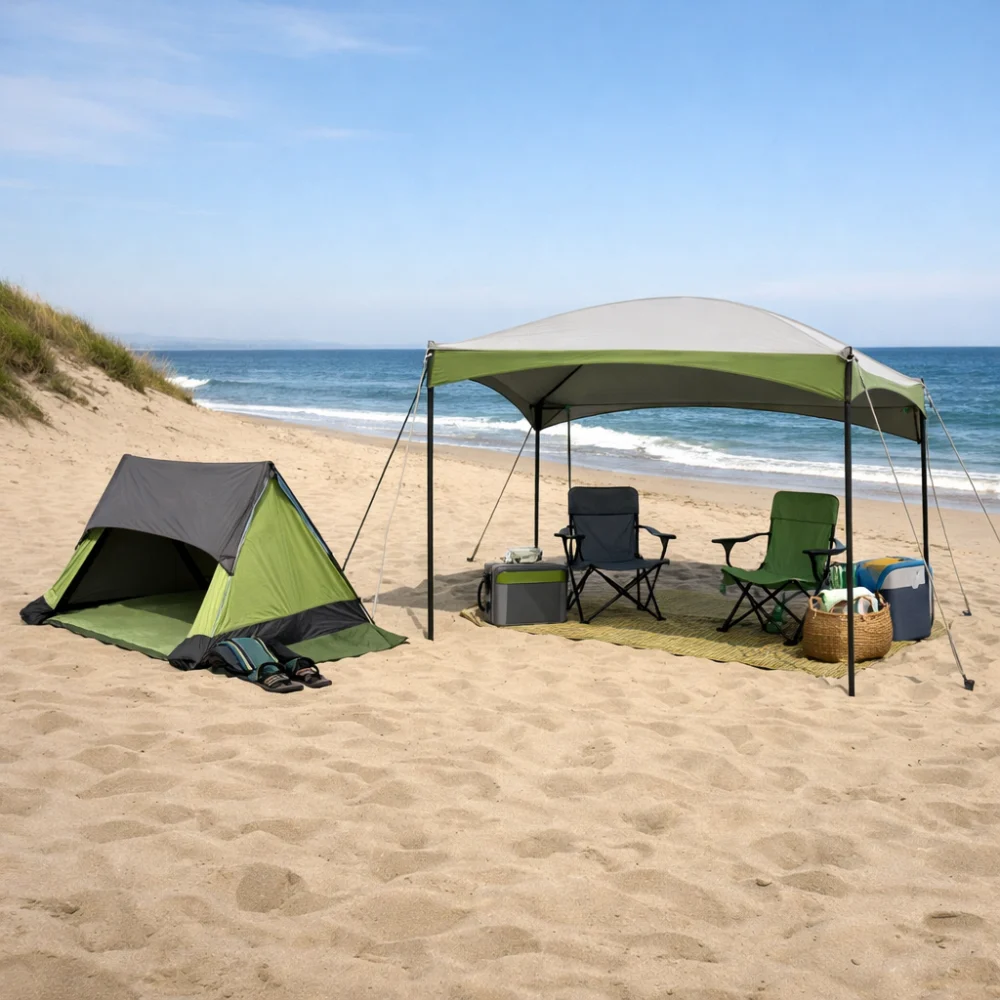
Some buyers prefer a more open shelter feel rather than a fully enclosed setup. These can be easier to live with on warm days because they tend to feel less stuffy, though they may offer less privacy and less protection from blown sand.
Which beach sunshade suits different buyers?
| Buyer need | Usually worth prioritising | Why |
|---|---|---|
| Short visits or light packing | Compact pack size and quick setup | Makes the sunshade easier to take on spontaneous trips |
| Family beach days | Wider shade and better stability | Helps if several people need shelter at the same time |
| Frequent windy beaches | Stronger anchoring and secure structure | Reduces the chance of constant repositioning |
| Travel on foot or public transport | Lower carry weight and smaller packed size | More realistic to bring along with other essentials |
| Relaxed all-day use | Comfort, shade area and ease of adjustment | Makes longer stays more pleasant and less fiddly |
Common mistakes and misunderstandings
- Choosing on shade size alone. A larger sunshade sounds appealing, but it may be harder to carry and keep stable. Always weigh coverage against portability.
- Ignoring the local beach conditions. A product that feels fine in calm weather may be less suitable on open, breezy stretches of coast. Think about the places you actually visit.
- Forgetting the rest of your gear. If you already carry chairs, toys and a cool bag, a bulky sunshade may become inconvenient. The full load matters, not just the sunshade itself.
- Assuming all setups are equally simple. Some designs are more straightforward than others, so check whether the arrangement looks manageable for your usual beach routine.
Safety and suitability caveats
Beach sunshades are mainly about comfort and shade, but they still need to suit the setting you plan to use them in. Check the product information for intended use, anchoring method and any guidance about conditions where the design is suitable. For exposed or windy beaches, a more secure setup is usually a better fit than the lightest possible option.
It is also worth checking whether the sunshade leaves enough room for everyone and everything you want to keep underneath it. A shelter that is too small can be inconvenient even if it seems portable on paper.
Maintenance, storage and lifespan considerations
Beach use often means sand, salt and repeated packing away, so easy cleaning and sensible storage can matter a lot. Look for a design that seems straightforward to shake out, dry and pack down after use. If a product includes separate poles, anchors or carry parts, think about whether you will keep them together between trips.
Because models vary, it is sensible to check whether the product page mentions care expectations or any storage advice. That can help you judge whether the sunshade fits occasional days out or more regular use.
How to compare options efficiently
- Decide who the sunshade is for and how much shade they really need.
- Check whether the packed size and carrying method suit your journey to the beach.
- Compare the stability features against the conditions where you usually go.
- Consider setup effort and whether one person can manage it comfortably.
- Read the individual product page carefully for any model-specific details before deciding.
Summary buyer decision checklist
- Does the shade area suit the number of people and the amount of kit you want underneath it?
- Will the packed size and weight fit the way you travel to the beach?
- Does the anchoring or support style match likely wind and ground conditions?
- Is the setup simple enough for your routine?
- Does the design feel practical for the length of trips you usually take?
Frequently asked questions
Are beach sunshades better than beach umbrellas?
It depends on the space and stability you want. A sunshade may offer a different balance of coverage and comfort, while an umbrella can be simpler for some short trips. The better choice is the one that fits your usual beach conditions and how much kit you carry.
What size beach sunshade do I need?
Start with the number of people and items you want to keep shaded. A solo beach trip can suit a smaller option, while family use usually benefits from more space. It is often wise to allow a little extra room rather than choosing something that feels just big enough.
How important is wind resistance?
Very important if you visit open or breezy beaches. Even a well-liked design can be less comfortable if it is hard to secure or needs constant adjustment. Look closely at the support method and whether it seems suited to your usual locations.
Is a lighter beach sunshade always the better choice?
Not necessarily. Lighter models are easier to carry, but they may involve trade-offs in stability, space or overall comfort. It helps to think about the full journey from car park to beach and back again, not just the product in isolation.
What should I check before buying online?
Review the shade area, packed size, support method and any notes about intended use. Also check whether the setup looks manageable for you. Specifications vary by model, so always check the individual product page before buying.