

Beach tents are a simple way to add shade, a little privacy and a more comfortable base for a day by the sea. They are not all built the same, so the right choice depends on how many people will use it, how easy you want it to be to carry and how much shelter you expect from wind and sun.
If you are choosing one for family trips, solo beach days or occasional holidays, it helps to think beyond size alone. Packed weight, pitching style, ventilation and anchoring method can matter just as much as the headline shape.
Specifications vary by model, so always check the individual product page before buying.
What should you look for in a beach tent?
The best starting point is how you plan to use it. A tent that is easy to carry and quick to set up may be more useful for short trips, while a roomier option can feel more comfortable if you want space for bags, towels or changing. The main trade-off is usually between portability and shelter: lighter designs are easier to take to the beach, while larger or more enclosed designs can feel steadier and more private.
| Feature | What it means | Why it matters | What to check |
|---|---|---|---|
| Size and layout | How much usable space the tent offers | Determines whether it suits one person, a couple or a family group | Look at the sleeping or floor space, door openings and how much headroom is described |
| Portability | How easy it is to carry and pack away | Important if you are walking a long way from the car or carrying other beach gear | Check packed size, weight and whether a carry bag is included |
| Shade and cover | How much sun protection and overhead cover the design provides | Helps you decide whether it is mainly for shade, changing or longer stays | Review canopy shape, coverage area and any stated UV-related details on the product page |
| Ventilation | How air can move through the shelter | Useful for comfort in warm weather and for reducing a stuffy feel | Look for mesh panels, open sides or other airflow features |
| Anchoring | How the tent is intended to stay in place on sand | Influences stability in breezier conditions | Check the pegging or anchoring method and whether any extra fixing aids are mentioned |
| Setup style | How the tent goes up and comes down | Affects how quickly you can get shelter in place | See whether it is pop-up, pole-based or another style, and consider how confident you feel assembling it |
Key decision criteria explained
Capacity and space
Beach tent capacity is not just about how many people can sit inside. You may also want room for bags, a cool box, toys or a place to change, which can make a tent feel smaller than the headline size suggests. If you prefer more elbow room, consider stepping up a size rather than choosing the minimum that appears to fit.
Weight and packed size
These are often overlooked until you have to carry the tent across sand. A compact package is easier to transport and store, while a heavier tent may be worth it if the extra material gives you better coverage or a sturdier feel. If you travel light, this is one of the most important comparisons to make.
Weather comfort
Beach tents are usually chosen for shade and comfort rather than heavy weather use. Some designs prioritise airflow and openness, while others offer more enclosure and privacy. If you expect changeable breezes, think about ventilation as well as cover, because a more closed design can feel less comfortable in warm conditions.
Setup and takedown
Some buyers want the simplest possible pitch, especially for day trips with children or lots of other gear. Others are happy with a slightly more involved setup if it gives better space or stability. Look at the tent type and the amount of assembly implied by the product details, then match that to how patient you are likely to be on the beach.
Types and variants
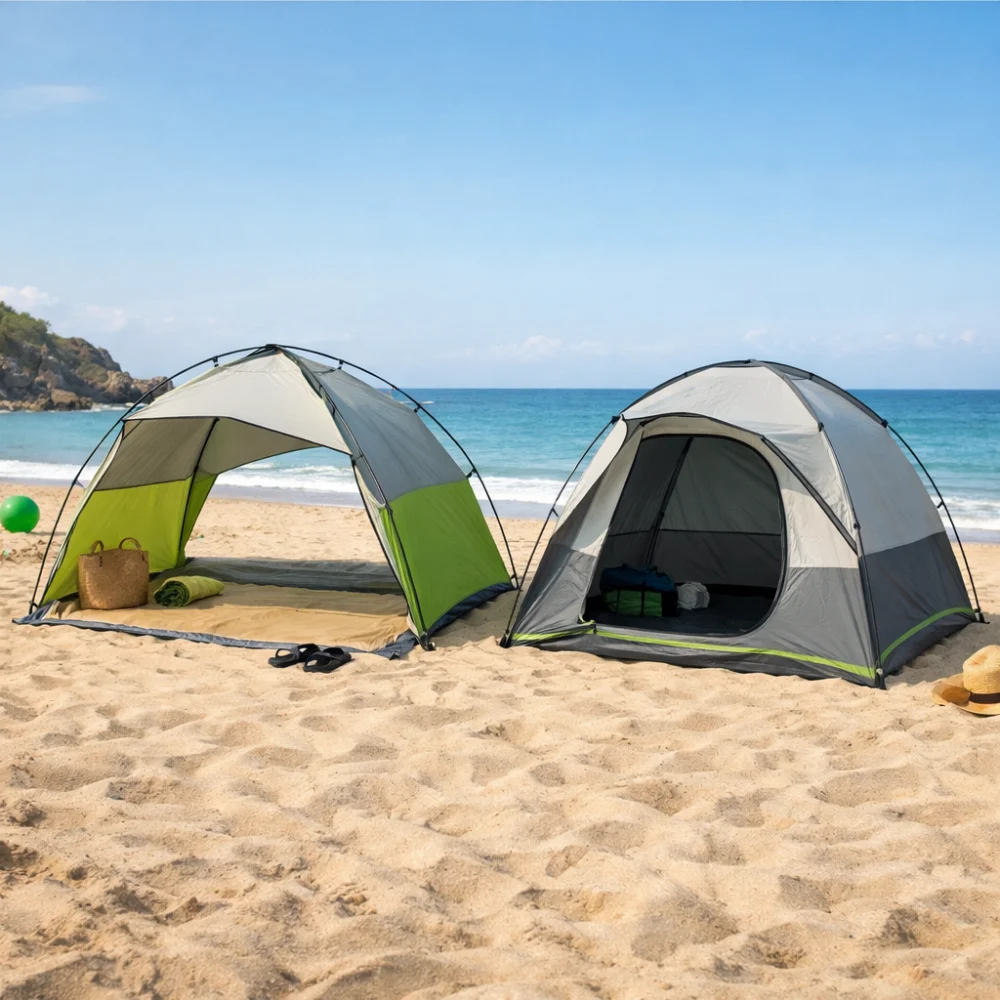
Within beach tents, the main differences are usually in shape, how they pitch and how enclosed they feel. Pop-up styles tend to suit buyers who want convenience and quick setup, while pole-supported designs may appeal if you want a more traditional shelter structure. More open designs can feel airy and easy to live with, while more enclosed ones may suit people who want a bit more privacy or wind protection.
There is no single right type for everyone. The best choice depends on whether you value speed, space, airflow or a more sheltered feel.
Which beach tent suits which buyer?
| Buyer need | What tends to matter most | Typical trade-off |
|---|---|---|
| Family beach trips | More usable space, easy access and enough room for belongings | A larger tent may be less convenient to carry |
| Day trips with light luggage | Low packed weight and a simple setup | Smaller shelters may offer less room to stretch out |
| Privacy for changing or naps | More enclosed sides and a comfortable internal layout | Extra enclosure can reduce airflow |
| Occasional holiday use | Balanced portability and enough shade for relaxed use | A compromise may not be ideal in either direction |
| Breezier beach conditions | Anchoring method and a shape that looks stable | More secure designs can take a little longer to pitch |
Common mistakes to avoid
- Choosing by capacity alone and forgetting that bags, towels and movement also take up space.
- Ignoring packed size when you know you will be carrying the tent a long way.
- Assuming every beach tent offers the same level of shade or privacy.
- Overlooking ventilation and then finding the shelter feels warm or enclosed.
- Not checking how the tent is anchored, especially if you expect breezy conditions.
Safety and suitability caveats
Beach tents are intended for leisure shelter, so it is sensible to match the design to the conditions you expect. Check the product page for the intended use, setup style and any stated care guidance, and avoid assuming that a shelter suitable for calm weather will behave the same in stronger wind. If sun protection matters to you, read the product information carefully rather than relying on the shape alone.
Care, storage and practical ownership points
Most beach tents benefit from being shaken out after use, dried before storage and kept in their bag or cover when not needed. Sand can work its way into seams and moving parts, so a little routine cleaning helps the tent stay easier to handle. If a design includes poles, pegs or flexible components, check that you are comfortable storing and carrying those parts together.
How to compare options efficiently
- Start with the way you will actually use the tent: solo, couple, family or changing shelter.
- Narrow the type by deciding whether quick setup, more space or more enclosure matters most.
- Compare packed size, weight, ventilation and anchoring method before looking at anything else.
- Check the product page for any details that affect comfort, such as coverage, layout and access points.
- Choose the option that best matches your usual beach trips, not the one with the most features.
Buyer checklist
- Does the size suit the number of people and the amount of gear?
- Is the packed size manageable for how you will carry it?
- Does the setup style suit your tolerance for assembly?
- Is there enough ventilation for comfortable use?
- Does the anchoring method seem suitable for sandy ground?
- Will the layout work for shade, changing or relaxing?
- Have you checked the individual product page for model-specific details?
Frequently asked questions
Are beach tents and sun shelters the same thing?
They are often related, but not always identical. A beach tent usually suggests a more enclosed shelter, while a sun shelter may be more open and focused on shade. The exact naming can vary by product, so the layout and features are more useful than the label alone.
What size beach tent do I need?
Think about how much room you want beyond simply sitting inside. If you need space for bags, changing or resting, it is often worth choosing a roomier tent than the minimum. A compact model can still be a good choice if you mainly want portable shade for one or two people.
Is a pop-up beach tent worth it?
It can be a good choice if you value speed and convenience. The main trade-off is that quick setup may come with less flexibility in shape or structure compared with other designs. Consider how often you will use it and how much effort you want to spend on pitching.
How important is ventilation?
Very important for comfort, especially on warmer days. A tent that traps too much air can feel stuffy, even if it offers plenty of shade. Look for features that support airflow if you expect to spend time inside the shelter rather than just using it briefly.
Can a beach tent help in windy conditions?
It can help with shelter, but no lightweight beach design should be treated as a guarantee against wind. Anchoring and overall shape matter, and suitability can vary a lot from one model to another. Check the individual product details and choose according to the conditions you are most likely to face.
What matters more: shade or privacy?
That depends on why you are buying it. If you mainly want somewhere comfortable to sit out of the sun, shade and airflow may matter most. If you want somewhere to change or create a more enclosed space, privacy and layout may be the bigger priorities.