

Bike body armour is a broad category, so the right choice depends on where you ride, how much coverage you want and how much freedom of movement matters to you. Some riders want light protection for occasional trail use, while others need more coverage for faster, rougher or more technical riding.
This guide helps you compare the main options without getting lost in product names or marketing terms. It focuses on fit, coverage, comfort and how each style of armour may suit a different kind of rider.
What should you look for first?
The best starting point is to decide how much protection you actually want to wear for a typical ride. Lighter armour is usually easier to move in and more comfortable for longer sessions, while more coverage can feel warmer and less flexible. The main trade-off is simple: more protection often means more bulk, more heat and a closer fit.
Specifications vary by model, so always check the individual product page before buying.
Quick comparison of the main buying factors
| Feature | What It Means | Why It Matters | What To Check |
|---|---|---|---|
| Coverage | How much of the torso, back, shoulders or other areas the armour is designed to protect | More coverage can suit rougher riding, but it may feel heavier or less flexible | Which areas are covered and whether that matches your riding style |
| Fit | How closely the armour sits on the body | A secure fit helps comfort and keeps the protection in place while moving | Size guidance, adjustment options and whether it is intended to be worn over or under other layers |
| Mobility | How easily you can bend, twist and pedal while wearing it | Mobility affects comfort and how likely you are to keep using it | Panel design, flexibility and whether the shape suits your normal riding position |
| Ventilation | How much air can move through or around the armour | Better ventilation can make a big difference on longer or warmer rides | Construction, material choices and whether the design looks suited to heat management |
| Layering | Whether the armour is intended to work with jerseys, jackets or other protection | Layering affects comfort and how practical the armour feels across seasons | Compatibility with your usual riding clothing and any notes on where it is meant to sit |
| Intended use | The type of riding the armour is designed around | Body armour for casual trail use may feel very different from kit aimed at aggressive riding | The product description and category wording for the intended discipline or use case |
Key decision criteria
Coverage versus comfort
Think first about how much of your body you want to protect and how often you are likely to wear the armour. More coverage can be reassuring, but if it feels cumbersome you may stop using it. A simpler piece of armour that you will actually wear is often more practical than a heavier option left at home.
Fit and movement
Bike body armour should stay in place without feeling restrictive. If it is too loose, it can shift as you ride; if it is too tight, it can limit breathing or movement. Look for clear sizing guidance and any notes about adjustability, because a good fit is one of the biggest factors in day-to-day comfort.
Heat and breathability
Armour that covers more of the body can trap warmth, especially on climbs or in mild weather. Riders who pedal hard or ride in warmer conditions often value better ventilation, even if that means choosing a lighter feel over maximum coverage. This is one of the most common trade-offs in the category.
Compatibility with your riding kit
Consider what you already wear on the bike. Some armour is easier to pair with layers, while other designs may sit better on their own. If you already use knee pads, elbow pads or a specific jacket, think about how the body armour will work alongside them rather than in isolation.
Types and variants you may see
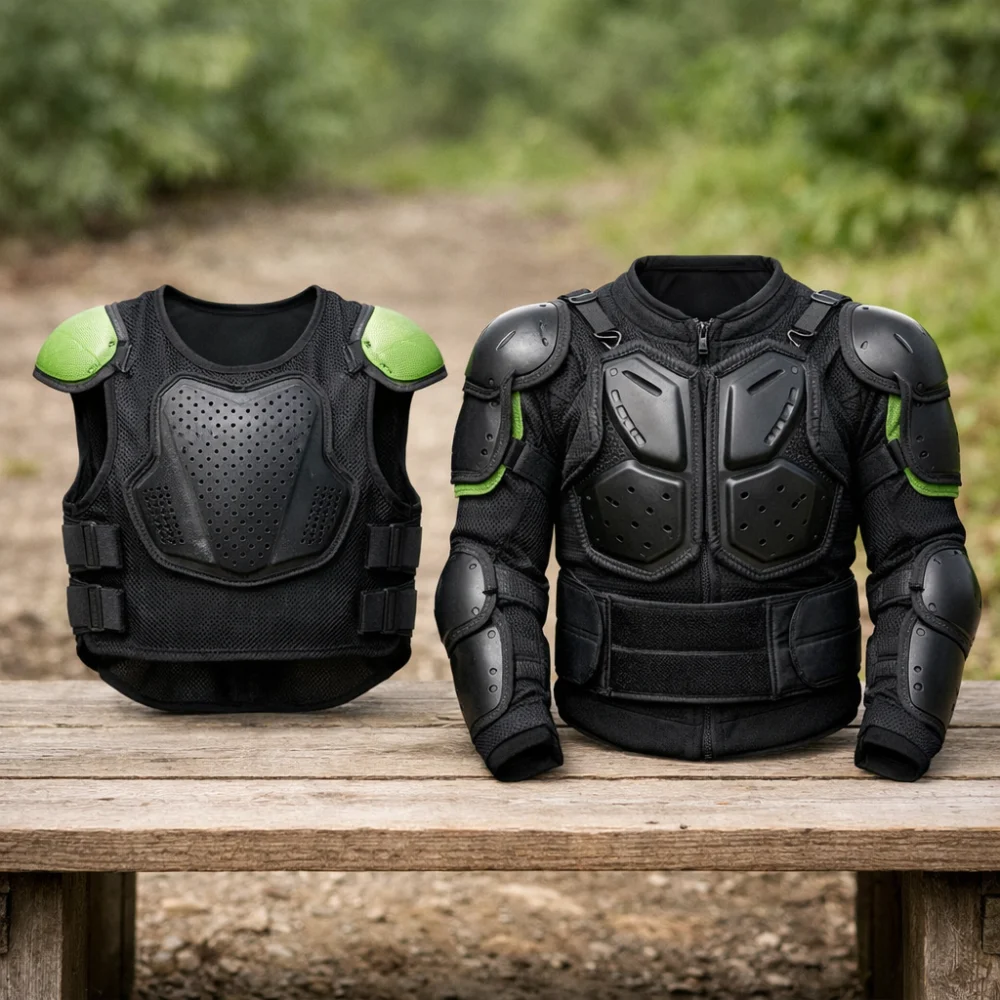
Bike body armour is usually described by the areas it protects and the amount of coverage it gives. Some options focus on the torso and back, while others offer more wraparound protection or a slimmer, more flexible feel. The right variant depends on whether you value freedom of movement, added coverage or a balance between the two.
For riders who only want an occasional extra layer of protection, simpler and lighter designs may feel easier to live with. For more committed off-road use, a more substantial design may make sense if you are willing to accept the extra bulk and warmth. The most suitable choice is often the one that fits your riding routine rather than the one with the most material.
Who each type may suit
| Rider need | What to prioritise | Why it helps |
|---|---|---|
| Occasional trail rider | Comfort, simple fit and enough coverage for confidence | Easy-to-wear armour is more likely to be used regularly |
| More technical off-road rider | More secure fit, broader coverage and stable positioning | Rougher terrain can make movement and hold more important |
| Longer ride or warmer weather rider | Breathability, lighter feel and manageable bulk | Comfort over time matters when heat build-up can become distracting |
| Rider building a layered protection setup | Compatibility with other protective items and clothing | Good layering avoids a kit setup that feels awkward or restrictive |
Common mistakes to avoid
- Buying for maximum protection without considering whether you will actually wear it regularly.
- Assuming all body armour fits the same way; shape and sizing can vary considerably.
- Overlooking heat and ventilation, especially if you ride in warmer conditions or climb for long periods.
- Ignoring how the armour will work with your usual jersey, jacket or other protective items.
- Choosing based only on coverage and forgetting that comfort and movement affect real-world use.
Safety and suitability caveats
Body armour is an extra layer of protection, not a guarantee of injury prevention. Choose the style that matches your riding and make sure the product information describes the intended use clearly. If you are unsure whether a design is suitable for your riding style, check the product page carefully before buying.
Maintenance, storage and everyday care
General care matters because armour that is uncomfortable, damaged or dirty is less likely to be used properly. Look for simple cleaning instructions on the individual product page and think about where you will store the armour between rides so it keeps its shape. If a product uses removable parts or layered construction, that may also affect how easy it is to clean and dry.
How to compare options efficiently
- Start with the kind of riding you do most often.
- Choose the level of coverage that feels realistic for that use.
- Compare fit, mobility and ventilation before focusing on anything else.
- Check how the armour is meant to work with your riding clothes and other protection.
- Read the individual product page to confirm the details that matter most to you.
Summary buyer decision checklist
- Does the coverage suit your riding style?
- Will the fit stay comfortable while you move and pedal?
- Is the balance of protection and mobility right for you?
- Will it feel manageable in the weather and conditions you usually ride in?
- Does it work with the rest of your riding kit?
- Have you checked the individual product page for the exact details?
Frequently asked questions
What is bike body armour for?
Bike body armour is designed to add protective coverage for riding where extra reassurance is useful. It is mainly a choice for riders who want more than a helmet alone, but the exact level and area of protection varies by product.
Is more coverage always better?
Not necessarily. More coverage can mean more warmth, more bulk and less freedom of movement, so the most practical option is the one you are happy to wear consistently.
How do I know if a piece will fit well?
Check the sizing guidance carefully and look for notes about how the armour is meant to be worn. A good fit should feel secure without restricting normal riding movement.
Should I choose lighter or more substantial armour?
That depends on where and how you ride. Lighter armour may suit riders who value comfort and ventilation, while a more substantial design may suit harder or rougher use if you are willing to accept extra bulk.
Can I wear body armour with other cycling kit?
Often yes, but compatibility matters. Think about how it will sit with jerseys, jackets, pads or hydration packs, and check the product page for any guidance on layering.
How important is breathability?
Very important if you ride for long periods, climb often or ride in warmer weather. If heat build-up would put you off wearing the armour, a more breathable design may be the better choice.