


Bow quivers are a practical accessory for archers who want to carry arrows on the bow itself rather than in a separate holder. That can be useful for field shooting, hunting-style setups or any situation where keeping arrows close to hand matters.
The main buying decision is not just whether a quiver fits the bow, but how it changes balance, access to arrows and overall handling. Different designs suit different bow types and shooting habits, so it is worth comparing the attachment method and the way the arrows sit once mounted.
If you are choosing a quiver for the first time, focus on fit, arrow retention and how much added bulk you are comfortable carrying. Specifications vary by model, so always check the individual product page before buying.
Compare Bow Quivers


As an Amazon Associate we earn from qualifying purchases.
What should you look for in a bow quiver?
A good starting point is how the quiver mounts and whether that mounting style matches your bow. Some archers prefer a close, compact fit that keeps the bow tidy, while others value easy removal or quick access to arrows.
| Feature | What it means | Why it matters | What to check |
|---|---|---|---|
| Attachment style | How the quiver connects to the bow | Affects fit, stability and ease of removal | Make sure the mounting method suits your bow and your preferred setup |
| Arrow capacity | How many arrows the quiver is intended to carry | Changes how much you can keep on the bow at once | Check the stated capacity on the product page |
| Arrow retention | How securely the arrows are held in place | Important for reducing movement during carry | Look for details on hold, spacing and how arrows are secured |
| Weight and bulk | How much the quiver adds to the bow | Can affect balance and feel while aiming or carrying | Consider whether you prefer a slim profile or a more substantial setup |
| Removability | How easily the quiver can be taken on or off | Useful if you switch between practice and other shooting styles | Check whether it is designed for quick removal or more permanent fitting |
| Arrow compatibility | The arrow sizes or types the quiver is meant to hold | Prevents loose fit or difficult insertion | Confirm the product information matches the arrows you use |
Key decision criteria
Fit with your bow
Fit is usually the first thing to narrow down because a quiver that suits one bow or mounting arrangement may not suit another. The bow style, mounting point and general layout all affect whether the quiver sits neatly and stays secure.
Check the product page for any compatibility notes, especially if you are comparing compact hunting-style bows with other setups. If the quiver is not a natural match for your bow, it can add nuisance bulk or alter handling in ways you may not want.
Balance and handling
Quivers add weight to the bow, and that can change the way it feels in the hand. Some shooters like the extra stability; others prefer the bow to stay as light and uncluttered as possible.
Think about whether you value convenience more than a minimal feel. A slightly heavier quiver may be fine for carrying arrows close to the bow, but it may feel less comfortable if you want a very agile setup.
Arrow security and access
A quiver should hold arrows securely enough for normal movement while still letting you remove them without fuss. That balance matters if you move between shooting positions or need fast, predictable access.
Look for descriptions that explain how the arrows are retained and whether the arrangement suits the arrow shaft size you use. If the hold is too loose, the arrows may move more than you want; if it is too tight, removal can feel awkward.
Profile and storage clearance
The shape of the quiver affects how much it protrudes from the bow. A slimmer profile may be easier to manage in transport and while moving through tighter spaces, while a larger quiver may offer a different feel or layout.
Consider where you will keep the bow when not in use. If you already use a case or stand, a quiver that adds a lot of width can change how the bow fits in storage.
Common bow quiver types
Bow quivers are usually compared by how they mount and how much they change the bow’s overall profile. The categories below are useful starting points rather than fixed rules, because specifications vary by model, so always check the individual product page before buying.
Bow-mounted quivers
These attach directly to the bow and keep arrows close to the shooting setup. They suit archers who want convenience and a tidy carry solution, but they may add noticeable weight to the bow itself.
Quick-removable quivers
These are designed for easier removal when you do not want the quiver attached all the time. They can suit mixed use, although the added convenience may come with extra parts or a slightly different feel when mounted.
Compact quivers
Compact designs focus on keeping bulk down. They may suit archers who want a lighter-looking bow, but they may offer fewer options for capacity or cushioning around the arrows.
Which bow quiver suits different buyers?
| Buyer need | What tends to matter most | Why it helps |
|---|---|---|
| First-time buyer | Simple fit information and clear mounting details | Makes it easier to avoid buying a quiver that does not suit the bow |
| Field or outdoor archer | Secure arrow hold and manageable profile | Helps keep arrows handy without making the bow awkward to carry |
| Minimalist setup | Low bulk and lighter overall feel | Keeps the bow more streamlined |
| Convenience-focused buyer | Easy removal and reliable attachment | Useful if the quiver will not stay on the bow all the time |
| Replacement buyer | Matching attachment and arrow fit | Helps avoid choosing a quiver that looks right but does not match the existing setup |
Common mistakes to avoid
- Choosing by appearance alone. A neat-looking quiver is not enough if the mounting style or arrow hold is wrong for your bow.
- Ignoring added weight. Even a well-made quiver changes the feel of the bow, so think about how much extra bulk you want to carry.
- Skipping compatibility checks. Arrow size, bow layout and mounting method all matter more than a general product label.
- Assuming every quiver is easy to remove. Some are intended for a more fixed setup, so check the product description if you want flexibility.
Safety and suitability notes
Choose a quiver that suits the bow and the arrows you actually use, rather than assuming a near match will be good enough. A poor fit can be inconvenient and may affect how confidently the bow handles.
If you shoot in different conditions or with different arrow types, make sure the quiver is suitable for that use before relying on it. The product page should be your main source for any model-specific fit notes.
Maintenance and long-term use
Bow quivers usually need only light care, but it is still worth checking fastenings, contact points and any arrow-holding parts from time to time. If a quiver is removed often, wear on the attachment area can become part of the buying decision.
Storage matters too. A quiver that adds width or protrusion may make the bow slightly less convenient to store, especially if you use a case or keep equipment in a tighter space.
How to compare options efficiently
- Start with the bow you will use and confirm the quiver is meant for that kind of setup.
- Decide whether you want a fixed, quick-removable or compact style.
- Compare arrow retention, weight and overall bulk.
- Check the product page for arrow compatibility and mounting details.
- Choose the option that matches how you actually carry, store and use the bow.
Summary buyer decision checklist
- Does the mounting style suit your bow?
- Will the quiver hold your arrows securely enough for your use?
- Are you comfortable with the extra weight and bulk?
- Do you need easy removal or a more fixed setup?
- Have you checked any arrow compatibility notes on the product page?
- Will the quiver fit your storage and transport routine?
Frequently asked questions
What is a bow quiver for?
A bow quiver holds arrows on the bow itself, keeping them close at hand. That can be useful when you want a streamlined way to carry arrows without a separate holder.
How do I know if a quiver will fit my bow?
Look for the mounting details and any compatibility notes on the product page. The right fit depends on the bow type and how the quiver is designed to attach.
Do bow quivers affect balance?
They can, because any added accessory changes how the bow feels in the hand. Some archers like the extra steadiness, while others prefer to keep the bow as light as possible.
Are all bow quivers the same size?
No, and size is one of the main things to compare. Some designs are compact and low-profile, while others are built to carry arrows in a different layout.
Can I use any arrows with any quiver?
Not always. Arrow size and shaft type may matter, so check the product information rather than assuming a universal fit.
Should I choose a removable quiver?
Only if you want that flexibility in normal use. If the quiver will stay on the bow most of the time, a simpler fixed arrangement may be more appropriate.
Bow-mounted or carried separately?
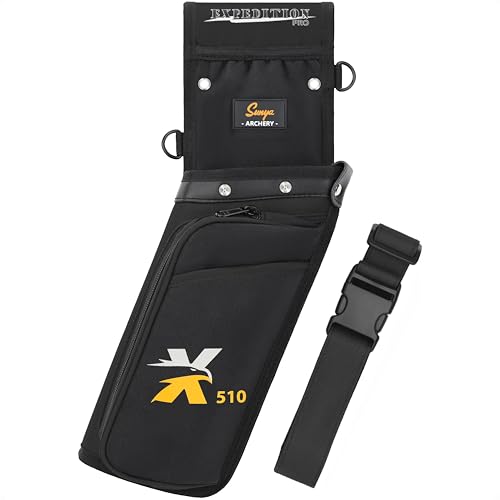
Not every quiver is attached to the bow. A bow-mounted design keeps arrows with the bow, but adds weight and bulk to that setup. A hip or waist quiver, or a back-carried style, keeps the arrows on the archer instead; this avoids adding that weight to the bow but introduces a separate belt or carrying arrangement to consider.
Choose by thinking about how you prefer to carry and reach your arrows, as well as how much equipment you want attached to the bow. For a body-carried style, check how it is supported and whether its position suits your clothing and movement. For a bow-mounted style, confirm that the attachment is compatible with your bow.
Do all bow quivers attach to the bow?
No. The term can cover bow-mounted designs as well as quivers carried on the hip, waist or back. Check the attachment and carrying details so you compare the type you actually want.
More Bow Quivers
See all 79 Bow Quivers →



As an Amazon Associate we earn from qualifying purchases.