


Fishing swivels are small terminal tackle components, but they can make a noticeable difference to how a rig behaves. They are used to help reduce line twist, connect sections of tackle and keep a setup tidy and manageable.
If you are comparing swivels for the first time, the main task is not finding the fanciest option. It is choosing a swivel that suits the fishery, the line type, the rig or lure you are using and the level of movement you want in the tackle.
Because swivels are often bought as small parts rather than a complete system, it helps to think in practical terms: how much rotation is needed, how secure the connection should feel and whether any extra features are useful or just unnecessary complication.
Compare Fishing Swivels


As an Amazon Associate we earn from qualifying purchases.
What should you look for in a fishing swivel?
The most useful starting point is the swivel’s intended job. A straightforward barrel swivel, a more compact variant or a swivel with an added clip all solve slightly different problems, so the right choice depends on how you fish. The main trade-off is usually between simplicity and added convenience.
Specifications vary by model, so always check the individual product page before buying.
| Feature | What it means | Why it matters | What to check |
|---|---|---|---|
| Swivel type | The basic style of swivel or connector | Different styles suit different rigs and presentation needs | Whether it is a plain swivel, a snap-style option or another variant suited to your setup |
| Size | How large the swivel is relative to the rest of the tackle | Size affects visibility, handling and how neatly the rig sits | Match the swivel size to the line, hooklength and the overall rig design |
| Strength | The amount of load the swivel is intended to cope with | It needs to suit the fish, the tackle and the style of fishing | Look for a stated strength where provided and avoid guessing based on appearance |
| Rotation | How freely the swivel turns under movement | Better rotation can help reduce line twist in some situations | Consider whether the swivel is intended for lure work, rig movement or simple connection |
| Finish | The surface and appearance of the metal | A subdued finish may be preferred when keeping tackle discreet | Check whether the finish suits your preference for low visibility or easy handling |
| Connection style | How the swivel attaches to line or terminal tackle | This affects speed, convenience and how securely the tackle is set up | Check eye shape, clip style and whether it suits your knots or links |
Key decision criteria
Swivel type
The basic style matters because it determines how the swivel behaves in the rig. A simple swivel is usually the most straightforward option, while a clip or snap feature can make changes quicker. The trade-off is that extra convenience may add bulk or complexity.
Size and profile
Smaller swivels can help keep tackle neat, but they still need to be appropriate for the setup. A swivel that is too small for the job may feel awkward to use or may not suit heavier tackle components. A larger swivel may be easier to handle but more noticeable in the water.
Strength and suitability
Strength is important, but it should be viewed alongside the rest of the setup rather than in isolation. A stronger swivel is not automatically the right choice if the rest of the tackle is lighter or if a compact presentation is more important. Check the stated details for the individual item instead of relying on appearance alone.
Rotation and movement
Some fishing situations put more emphasis on rotation than others. If your main concern is line twist, the swivel’s ability to turn freely becomes more important. If the swivel is mainly acting as a tidy connection point, basic function may matter more than elaborate movement.
Finish and visibility
Finish is often overlooked, but it can affect how noticeable the swivel looks in the rig. Many anglers prefer a restrained finish for a cleaner presentation, though the practical importance depends on the fishing situation. This is usually a preference and rig-design question rather than a dramatic performance issue.
Types and variants you may see
Fishing swivels are usually chosen by function rather than by a long list of product families. The most common distinction is between a plain swivel and one with added connection convenience.
- Plain swivels: Useful when you want a simple, direct connection and minimal complication.
- Swivels with a clip or snap: Helpful when quicker changes are important, though the extra feature may add bulk.
- Compact or low-profile styles: Suited to anglers who want a neater setup and less visible hardware.
The right variant depends on how much movement, speed and simplicity you want from the terminal tackle. If you are unsure, start with the least complicated style that still matches the rig.
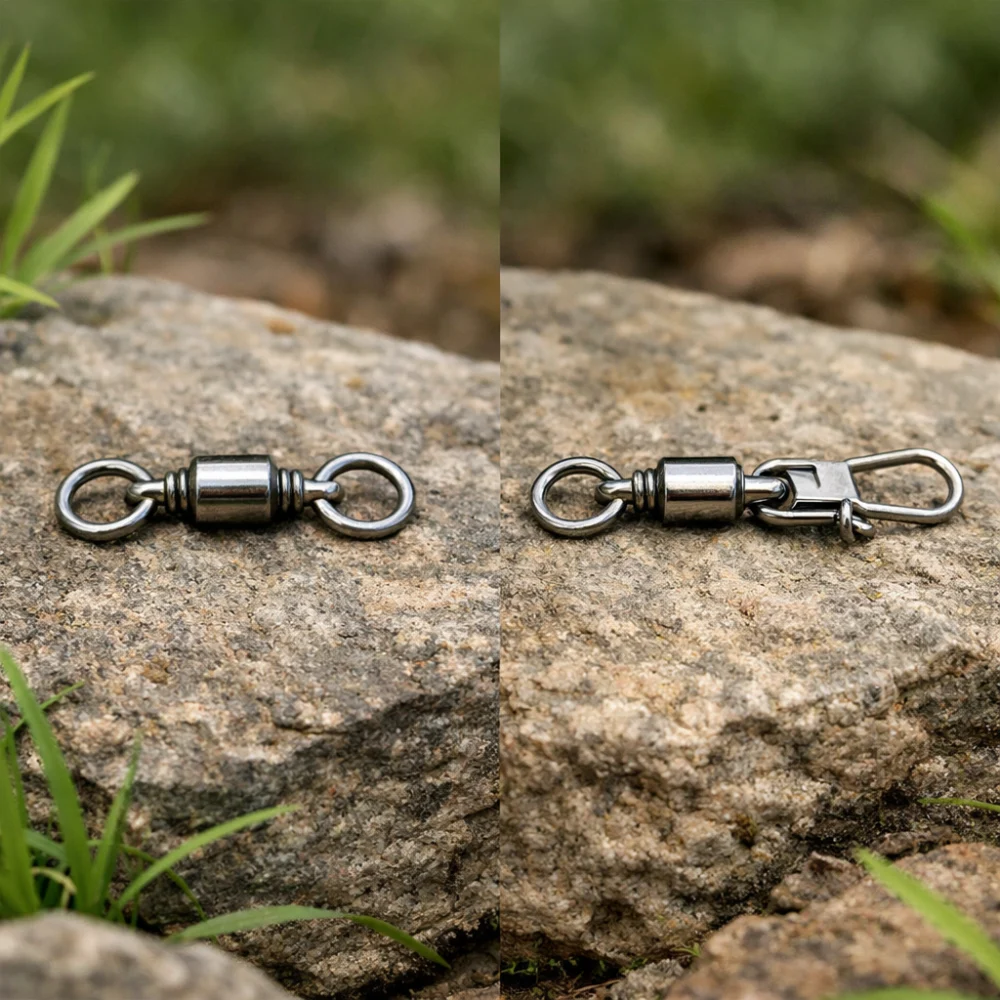
Which swivel suits which kind of buyer?
| Buyer need | More suitable swivel characteristic | Why |
|---|---|---|
| Beginner assembling simple tackle | Plain, easy-to-understand swivel | It is easier to match to a basic rig and simpler to thread into a setup |
| Angler changing rigs often | Connection style that makes changes quicker | It reduces fiddly adjustments when swapping components |
| Setup focused on neat presentation | Compact or low-profile design | It helps keep terminal tackle tidy and less bulky |
| Fishing where line twist is a concern | Swivel designed to rotate freely | Better rotation may help the tackle behave more predictably |
| Buyer matching existing terminal tackle | Swivel size and connection style that fits the current system | Compatibility with the rest of the rig matters more than any single feature |
Common mistakes and misunderstandings
- Choosing by size alone: A visually small swivel is not automatically suitable. It still has to fit the rig, the line and the way you fish.
- Assuming all swivels do the same job: Different styles are designed for different levels of convenience and movement.
- Overlooking connection details: Eye shape, clip style and how the swivel sits in the rig can be just as important as the general type.
- Adding features you do not need: Extra complexity can be useful, but only if it solves a real problem in your setup.
Safety and suitability caveats
Fishing swivels are simple items, but suitability still matters. Check that the swivel matches the rest of the tackle rather than assuming any swivel will do. If you are using it in a heavier or more demanding setup, make sure the individual product information supports that use.
For unfamiliar tackle combinations, it is better to confirm the fit before buying than to rely on a general assumption. Specifications vary by model, so always check the individual product page before buying.
Maintenance, storage and lifespan
Swivels usually need little maintenance, but it is still worth keeping them clean and dry after use. Storing terminal tackle neatly can help prevent tangles, corrosion and general wear from rattling around in a bag or box.
If a swivel feels rough, stiff or visually worn, it may be less suitable for continued use. Even small components benefit from occasional checking, especially if they are used repeatedly in damp conditions.
How to compare options efficiently
- Start with the job you want the swivel to do: simple connection, line-twist reduction or quicker rig changes.
- Choose the swivel type that best matches that job.
- Check size, strength and connection style against the rest of your tackle.
- Decide whether compactness, convenience or freer movement matters most.
- Read the individual product page carefully before deciding.
Summary buyer decision checklist
- Does the swivel suit the rig or fishing style you have in mind?
- Is the size appropriate for the rest of the tackle?
- Does the connection style suit how you want to build or change the rig?
- Is the swivel likely to provide the level of movement you need?
- Have you checked the individual product page for the exact details?
Frequently asked questions
What does a fishing swivel actually do?
A fishing swivel helps two parts of a setup move relative to each other while staying connected. That can reduce twisting in the line and keep a rig tidier. It is a small part, but it can make the whole setup easier to manage.
Are all fishing swivels the same?
No, they vary in style, size and connection method. Some are very simple, while others include a clip or other feature that makes rig changes easier. The best choice depends on how you fish and what the swivel needs to do.
How do I choose the right size?
The right size depends on the rest of the tackle and the style of fishing. A swivel that is too large may be bulky, while one that is too small may not suit the setup well. Check the product details and compare them with your line and terminal tackle.
Do I need a swivel for every rig?
Not necessarily. Some rigs or presentations benefit more from a swivel than others. It is better to use one when it solves a real problem in the setup rather than adding it automatically.
What is the difference between a plain swivel and one with a clip?
A plain swivel is mainly for connection and movement, while a clip-style option can make changes quicker. The trade-off is that added convenience may come with extra bulk or complexity. Choose based on whether speed or simplicity matters more to you.
How important is the finish?
Finish is usually less important than the swivel type, size and suitability, but it can still matter. Some anglers prefer a low-key appearance for a neater rig. Treat it as a useful detail rather than the main buying factor.
More Fishing Swivels
See all 47 Fishing Swivels →


As an Amazon Associate we earn from qualifying purchases.