


Foam block targets are a common choice for archers who want a straightforward target for regular practice. They are designed to stop arrows by compressing the target material rather than relying on loose fill, which makes them useful for home ranges, club practice and general target shooting.
If you are comparing target types, the main decision is not just size or shape. It is about how much arrow stopping you need, how easy the target is to carry or move, and how well the target matches the arrows and draw weight you use.
This guide helps you compare foam block targets in practical terms so you can narrow the choice before checking the individual product page.
Compare Foam Block Targets



As an Amazon Associate we earn from qualifying purchases.
What should you look for in a foam block target?
The best starting point is whether the target suits the arrows you plan to shoot and the space where you will use it. A lighter, more portable block can be easier to move, while a denser or larger target may be more forgiving for repeated practice. Specifications vary by model, so always check the individual product page before buying.
| Feature | What It Means | Why It Matters | What To Check |
|---|---|---|---|
| Target size | The overall face area and volume of the block | Helps with shot forgiveness and easier aiming practice | Whether it gives you enough space for your usual practice distance and arrow grouping |
| Foam density | How firm the target material feels | Affects stopping power and how easily arrows can be removed | Whether the target is suitable for your setup and intended use |
| Portability | How easy it is to move or reposition | Important if you store the target away after use or set up in different places | Weight, handle features and whether one person can move it comfortably |
| Arrow type suitability | The kinds of arrows the target is intended to handle | Helps avoid unnecessary wear or poor stopping performance | Any guidance on compatible arrow types or intended use |
| Longevity | How well the target may cope with repeated shooting | Influences long-term value and how often you may need to replace it | Construction detail, target face design and any care guidance |
Key decision criteria explained
Stopping power
Stopping power matters because a target that is too light for your setup may let arrows pass through too easily or wear out quickly. A firmer or denser block can be a better fit for more frequent practice, but it may also make arrow removal a little harder. The key is to match the target to the kind of practice you actually do, rather than choosing the most substantial-looking option.
Arrow removal and ease of use
Many buyers focus on how well a target stops arrows, but easy arrow removal is also important. If the target is very tight, it may be more tiring to use over a long session. If it is too soft, the target may not feel reassuring enough for regular practice. Look for product information that gives a sense of intended use rather than assuming every foam block behaves the same way.
Portability and storage
If your target will be moved often, the practical question is whether it is easy to carry, lift and store. A compact block may suit a small garden or shared space better than a larger one. If you plan to leave it outside, think about how you will store it between sessions and whether moving it indoors is realistic.
Surface and aiming style
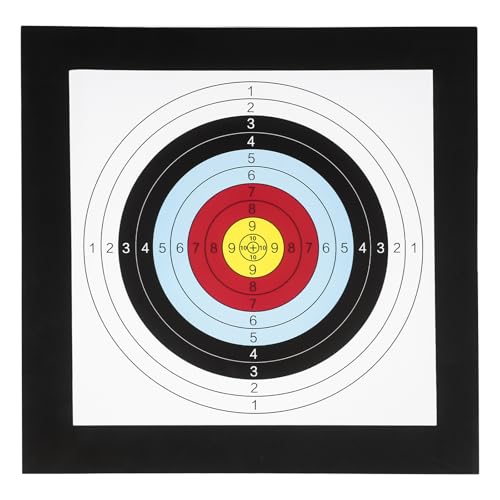
Foam block targets are often chosen for general practice because they provide a simple, repeatable aiming point. Some buyers want a plain face for basic shooting, while others prefer a more defined target area for visual feedback. What matters most is whether the layout helps you practise consistently without making the target harder to read than necessary.
Types and variants within this category
Foam block targets are usually compared by practical use rather than by dramatic product differences. Some are more compact and portable, while others are intended to offer a larger or more robust practice surface.
- Compact blocks may suit smaller spaces and easier storage, but they can be less forgiving if your groups spread out.
- Larger blocks can give you a bit more aiming room, but they may be bulkier to move or store.
- Denser blocks may feel more substantial for repeated practice, while softer options can be easier on arrow removal depending on the setup.
The most useful comparison is not the label on the product but how the target fits your shooting habits and space.
Which target suits which buyer?
| Buyer need | What usually matters most | Likely trade-off |
|---|---|---|
| Beginner practice | Simple aiming area and forgiving use | A smaller target may be easier to handle but less forgiving |
| Regular home practice | Repeatable performance and easy setup | A sturdier block may be less portable |
| Shared or limited space | Compact storage and easy movement | More compact targets may offer less aiming room |
| Frequent sessions | Durability and consistent stopping performance | More durable options may be heavier or firmer |
Common mistakes and misunderstandings
- Choosing only by size. A bigger target can be helpful, but size alone does not tell you whether it suits your arrows or practice style.
- Ignoring portability. If the target is awkward to move, it may become less convenient to use regularly.
- Assuming all foam blocks feel the same. Density and construction can change how the target performs and how easily arrows come out.
- Overlooking the practice setting. A target that works well in a spacious garden may be inconvenient in a smaller area.
Safety and suitability caveats
Choose a target that matches your equipment and intended practice environment. Do not rely on a target to make unsuitable shooting conditions acceptable, and check that the surrounding space is clear before use. If you are uncertain about compatibility or intended use, the individual product page should be your first reference.
Maintenance, storage and lifespan considerations
Foam targets usually need only basic care, but their condition can still affect how useful they remain. Keeping the target dry, storing it out of prolonged weather exposure where possible, and rotating use across the face can all help spread wear more evenly. If a target is intended for repeated practice, check whether the construction and care guidance suggest a longer-term setup or a more occasional-use approach.
How to compare options efficiently
- Decide how you will use the target most often, including where it will be placed.
- Check whether the target size and firmness suit your normal practice style.
- Compare portability, storage and ease of handling.
- Look for any guidance on intended arrow types or use conditions.
- Read the individual product page carefully before deciding.
Summary buyer decision checklist
- Does the target suit your usual practice distance and setup?
- Is the size practical for your space and shot pattern?
- Will the target be easy enough to move or store?
- Does the firmness sound appropriate for your level of use?
- Have you checked the product page for any model-specific guidance?
Frequently asked questions
Are foam block targets suitable for beginners?
They can be a sensible starting point because they are generally straightforward to use and understand. The main thing is choosing a target that is easy to place and appropriate for your equipment rather than focusing on the most robust-looking option.
How do foam block targets differ from bag targets?
Foam block targets are rigid enough to hold their shape, while bag targets are softer and shaped by the fill inside the bag. That difference affects portability, arrow removal and how the target feels during repeated use.
Do I need a larger target for better practice?
Not always. A larger target can be more forgiving, but it may also take up more room and be harder to move. The better choice is the one that suits your space and the kind of grouping you are trying to practise.
How important is target firmness?
It matters because firmness influences stopping performance and ease of arrow removal. Too soft or too firm can both be inconvenient, so it is worth checking the product information for the intended use rather than assuming all foam blocks behave the same way.
Can I leave a foam block target outdoors?
That depends on the specific product and the conditions where it will be used. Weather exposure can affect many materials over time, so it is sensible to check the product guidance and plan how you will store it when not in use.
What should I check before buying one?
Focus on size, portability, intended use and any guidance about the arrows or setup it is meant to handle. Those practical checks usually tell you more than a generic description does.
More Foam Block Targets
See all 103 Foam Block Targets →


As an Amazon Associate we earn from qualifying purchases.