

A running jacket is usually chosen for comfort in changing weather rather than for heavy everyday outerwear. The right option depends on how much protection you want, how hard you run and whether you need something for cool, windy or wet conditions.
This guide focuses on practical buying decisions within men’s running jackets. It helps you compare the features that affect comfort and usefulness without assuming every jacket is built for the same conditions.
If you mainly want a layer that takes the edge off wind or light drizzle, a lighter jacket may be enough. If you run in colder or wetter weather, it is worth looking more closely at fit, breathability and how much coverage the jacket gives you.
What should you look for in a men’s running jacket?
The best starting point is to match the jacket to the weather and effort level of your runs. A lighter jacket often feels easier to wear when you are working hard, while a more protective one may be more comfortable when conditions are changeable or the pace is slower. The main trade-off is usually protection versus breathability: more coverage can keep out more wind or rain, but it can also feel warmer once you build effort.
| Feature | What it means | Why it matters | What to check |
|---|---|---|---|
| Weather protection | How much the jacket helps against wind, chill or rain | It affects comfort on exposed routes and in unsettled weather | Look for the type of protection described on the product page and match it to how wet or windy your runs are |
| Breathability | How well heat and moisture can escape during exercise | It helps reduce that clammy, overheated feeling on harder runs | Check whether the jacket is described as breathable, ventilated or designed for active use |
| Fit and layering room | How close the jacket sits to the body and what you can wear underneath | A running jacket should move well without feeling restrictive | Consider whether you want a close fit for pace running or more room for a layer underneath |
| Weight and packability | How easy the jacket is to carry or stow when you warm up | Useful if your weather changes mid-run or you like to start out with an extra layer | Check whether the jacket is described as lightweight or easy to pack |
| Visibility details | Reflective or high-visibility features that help you be seen | They can be useful for early starts, late finishes and low-light routes | Look for the visibility details listed on the product page rather than assuming every jacket includes them |
| Fastening and pockets | Zip style, pocket layout and how secure items feel | These features affect convenience, but they should not add unnecessary bulk | Check whether you want simple storage, a secure zip pocket or a very stripped-back design |
Which details matter most?
Weather protection versus airflow
This is the central choice in the category. A jacket that blocks more wind or helps more in damp conditions can be useful for steady runs, but it may feel too warm on faster efforts. If you run in mixed conditions, think about whether you need a little protection most of the time or a stronger barrier for specific weather.
Fit and movement
Running jackets should let your arms swing naturally and should not bunch uncomfortably at the shoulders, cuffs or hem. A closer fit can feel neater and may flap less, while a more relaxed fit can suit layering. The best choice depends on whether you want a performance feel or a bit more flexibility.
Visibility and low-light use
If you run in the dark or in poor light, visibility details can be a practical part of the decision. Some jackets place emphasis on reflective elements or brighter colour choices, while others keep the look more subdued. Check the individual product page if this matters to you, because these details vary widely.
Storage and convenience
Pockets, zips and cuffs are not the main reason to buy a running jacket, but they affect everyday use. A secure pocket can help if you carry small items, while simple construction can keep the jacket lighter and less distracting. Choose the level of detail that suits how you run.
Specifications vary by model, so always check the individual product page before buying.
Common jacket types within the category
Men’s running jackets are not all the same, even when they share a similar look. The main differences usually come from how much protection they provide and how stripped back the design is.
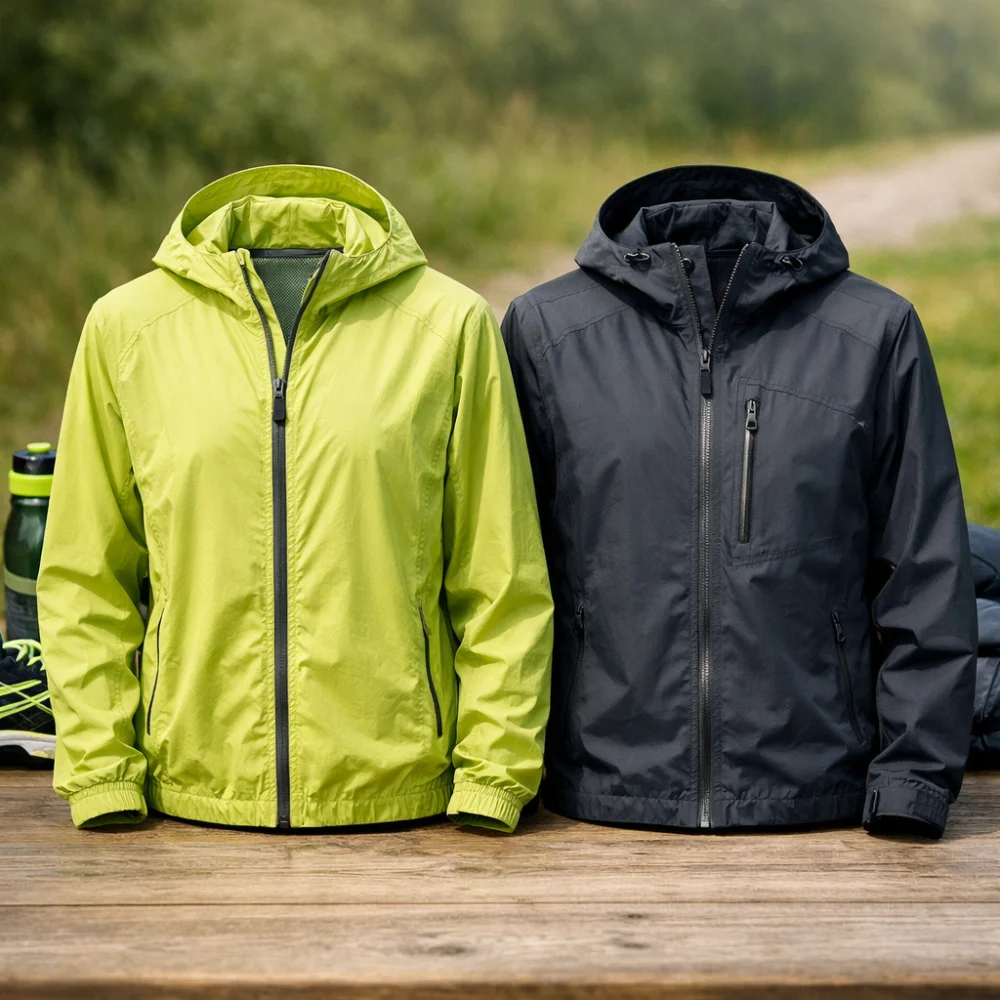
Lightweight running jackets
These suit runners who want a small amount of wind protection and an easy-feeling layer. They are often a good match for milder conditions or higher-effort runs. Their main limitation is that they may not be the right choice if you want more weather resistance.
Weather-resistant jackets
These are for buyers who expect more changeable conditions and want more help against wind or light rain. They can be more reassuring in poor weather, but the added protection may reduce the airy feel some runners prefer.
Reflective or visibility-focused jackets
These suit runners who often train in low light and want visibility to be part of the jacket choice. They may be especially useful for commuting or winter running. The trade-off is that visibility features do not necessarily tell you how breathable or weather-resistant the jacket is.
Insulated or warmer running layers
Some jackets are intended for colder runs and may feel more substantial. They can be helpful when warmth matters more than packability. The limitation is that they are less likely to suit hard efforts on milder days.
How different buyers can compare options
| Buyer need | What to prioritise | What to avoid overlooking |
|---|---|---|
| Short runs in mild weather | Lightweight feel and easy movement | Whether the jacket will be too warm once you pick up pace |
| Commuting or route running in variable weather | Wind protection, useful pockets and dependable coverage | How breathable the jacket is when worn for longer periods |
| Early morning or evening running | Visibility details and a comfortable fit | Whether reflective features are actually listed on the product page |
| Colder-season running | More warmth and enough room for layering | Whether the extra coverage adds too much bulk for your running style |
| Faster training sessions | Breathability and a less restrictive feel | How much wind or rain protection you are giving up for comfort |
Common mistakes when choosing a running jacket
- Choosing only by appearance. A jacket can look suitable but still feel too warm, too bulky or too minimal for your runs.
- Ignoring breathability. More protection is not always better if you tend to overheat quickly.
- Assuming all running jackets fit the same way. Fit can vary enough to change comfort, layering and freedom of movement.
- Overlooking the weather you actually face. A jacket for wet winter training is not the same as a lightweight layer for cool evenings.
- Forgetting the low-light factor. If you run after dark, visibility can be as important as warmth.
Suitability and care considerations
Think about how often you will wear the jacket and how much performance you expect from it. A very light layer may be easy to carry and comfortable, but it may not feel substantial enough for cold or wet spells. A more protective jacket may be more versatile in poor weather, although it can be less airy during harder efforts.
For care and lifespan, check the garment instructions on the product page or label and think about how easy the fabric is to clean after sweaty or muddy runs. Storage matters too: if you want to keep a jacket ready for regular use, choose one that suits the space you have and the way you like to carry kit.
How to compare options efficiently
- Start with the conditions you will actually run in most often.
- Decide whether you care more about weather protection, breathability or low-light visibility.
- Check the fit description and think about whether you will layer underneath.
- Look at the practical details such as pockets, zips and packability.
- Compare the individual product pages and choose the jacket whose trade-offs fit your routine best.
Summary buyer decision checklist
- Does the jacket suit your usual weather conditions?
- Is the balance between protection and breathability right for your pace?
- Will the fit allow you to move comfortably and, if needed, layer underneath?
- Do you need visibility features for darker runs?
- Are the pocket and zip details useful without making the jacket bulky?
- Have you checked the individual product page for the exact specifications?
Frequently asked questions
Do I need a running jacket or is a regular jacket enough?
A regular jacket may be fine for casual wear, but a running jacket is usually chosen because it is easier to move in and less likely to feel cumbersome during exercise. The main difference is how the garment balances comfort, airflow and run-specific practicality.
What matters more: waterproofing or breathability?
It depends on the runs you do most often. If you face light showers or windy conditions, a more weather-resistant jacket may be useful; if you run hard and warm up quickly, breathability may matter more. Many buyers need a balance rather than the maximum of either.
Should a running jacket be tight or loose?
Neither is always right. A closer fit can reduce flapping and feel more streamlined, while a slightly looser fit can help if you want space for a base layer. The best option is the one that lets you move freely without feeling bulky.
Are reflective details worth prioritising?
They are worth considering if you run in poor light or near traffic. Reflective details do not replace sensible route awareness, but they can be a useful part of the jacket choice. Check whether the visibility features are actually listed for the specific model.
Can I use a running jacket for walking or everyday wear?
Often, yes, but the cut and fabric may feel more specialised than a general casual jacket. Some buyers like that lighter, sport-focused feel, while others prefer a more versatile everyday layer. Think about whether you want one jacket for exercise only or something broader.
How do I know if a jacket will be too warm?
Look at the stated purpose, fit and any breathability information on the product page. If you usually run at a high effort or in mild weather, a heavily built jacket may feel warmer than you want. When in doubt, choose the lighter option if your runs are active and fast-paced.