

Men’s running shorts are designed to help you move comfortably while keeping distraction to a minimum. The right pair depends on how far you run, how much storage you want and whether you prefer a light, loose feel or a more supportive fit.
Because styles vary, it helps to separate the features that affect comfort from the ones that mainly change appearance. A good choice is usually the pair that suits your route, pace and preference for pockets, lining and coverage.
Specifications vary by model, so always check the individual product page before buying.
What should you look for in men’s running shorts?
The most useful starting point is fit, then pocket setup, then the amount of coverage and support you prefer. If you run in warm weather, lighter-feeling shorts can be more comfortable, while longer or more structured styles may suit runners who want extra coverage or storage. The main trade-off is usually between minimum weight and maximum practicality.
| Feature | What It Means | Why It Matters | What To Check |
|---|---|---|---|
| Fit | How the shorts sit on the waist, hips and legs | Good fit reduces distraction and improves ease of movement | Waist style, leg room and whether the cut sounds close-fitting or relaxed |
| Lining | Whether the shorts include an inner brief or supportive layer | Can change comfort, support and how much layering you need | Whether a lining is included and whether that suits your preference |
| Pockets | Storage for keys, gels or a phone | Useful for everyday runs and longer sessions | Number, position and closure style of pockets |
| Coverage | How much of the thigh the shorts cover | Changes feel, airflow and confidence | Length and cut, especially if you prefer more or less coverage |
| Fabric feel | The general feel of the material against the skin | Influences comfort, airflow and whether the shorts feel more structured | Product description for lightweight, stretchy or more substantial fabric |
| Waist adjustment | How the shorts are secured at the waist | Helps with a stable fit during movement | Elasticated waist, drawcord or other adjustment details |
Key decision criteria
Fit and freedom of movement
Running shorts should let you stride without pulling or bunching. A closer fit may feel more secure, while a looser cut can feel cooler and less restrictive. Think about whether you dislike excess fabric, especially on faster runs or warmer days.
Length and coverage
Shorter styles can feel lighter and more open, but some runners prefer a little extra coverage for comfort. The right length is often about confidence as much as performance. If you are unsure, compare the product wording carefully and look for how the shorts are described rather than relying on the photo alone.
Pockets and storage
Pocket layout matters more than many buyers expect. A secure pocket can be useful for a key or card, while some runners want enough room for a phone without the shorts bouncing around. If you do not carry items, simpler shorts may be lighter and less fussy.
Lining and support
Some shorts include an inner layer, while others are designed to be worn with separate underwear or base layers. This changes comfort, support and airflow. Choose the option that matches how you prefer to run, rather than assuming one construction is always better.
Waist comfort
A comfortable waistband can make a bigger difference than many technical details. Look for the type of adjustment mentioned on the product page and consider whether you want a secure hold for longer runs or a softer feel for casual sessions. The waistband should support movement without feeling restrictive.
Product types and variants
Within men’s running shorts, the main differences are usually in cut and construction rather than in entirely separate product families. Loose-fitting shorts tend to prioritise airflow and ease, while more fitted or compression-style options can feel more supportive and stay closer to the body.
2-in-1 styles combine an outer short with an inner layer, which can appeal to runners who want extra support or fewer layers to think about. Their main limitation is that they may feel warmer or bulkier than a simpler short. Classic single-layer shorts can feel more minimal, but they may offer less built-in support.
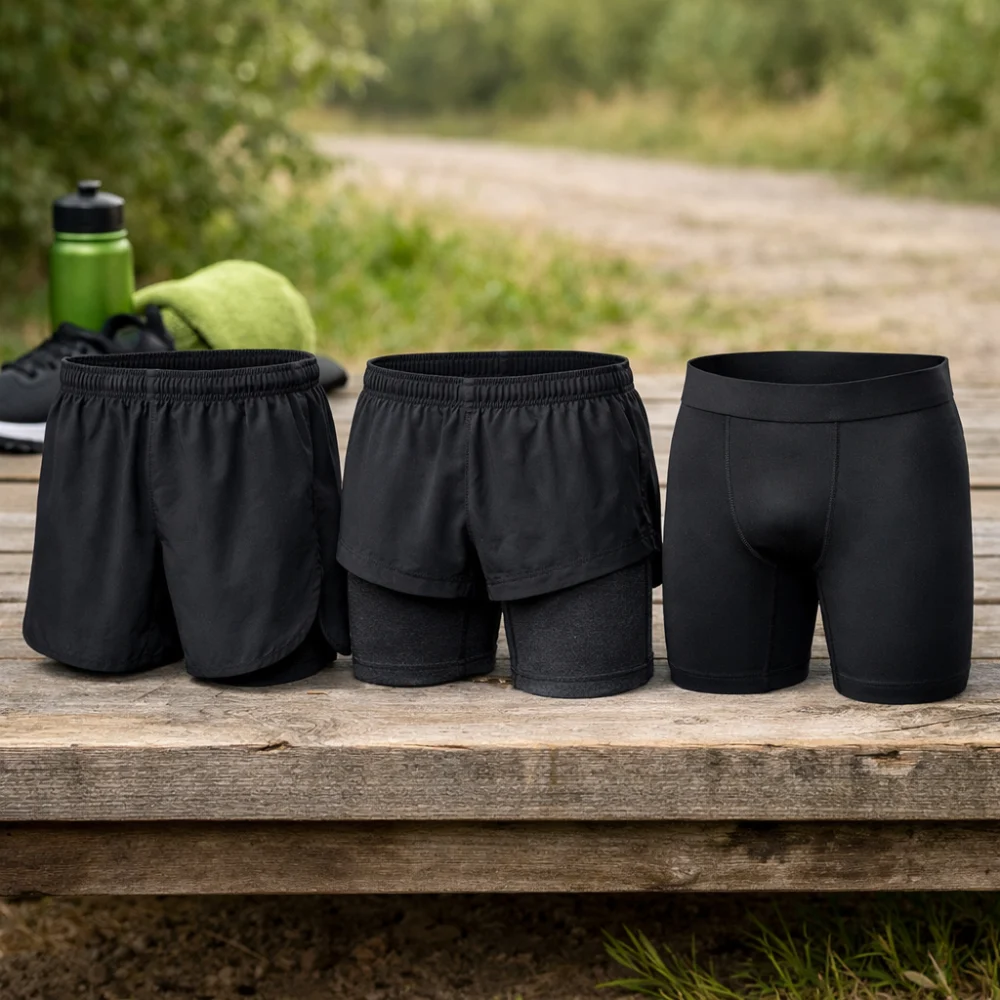
Which style suits which runner?
| Buyer need | What to prioritise | Why |
|---|---|---|
| Short everyday runs | Comfortable fit, simple waistband, enough storage for essentials | Convenience matters more than advanced features |
| Longer outings | Secure pockets, comfortable lining, reliable fit | You may notice rubbing and storage limitations over time |
| Hot-weather running | Light feel, breathable construction, less bulk | Extra fabric or layers can feel less comfortable in warm conditions |
| Runners who carry items | Practical pocket setup and stable fit | Storage is only useful if it stays secure while moving |
| Runners who prefer support | Built-in lining or a closer cut | Support needs vary, so the construction should match your preference |
Common mistakes to avoid
- Choosing by appearance alone: a good-looking pair may still feel wrong if the fit, lining or pocket layout does not suit your runs.
- Ignoring pocket security: a pocket is not automatically useful if it cannot hold what you normally carry in a stable way.
- Overlooking the lining: some runners prefer a built-in layer, while others find it unnecessary or warm.
- Assuming one length suits everyone: coverage is a comfort choice as much as a style choice.
- Forgetting how you actually run: a pair chosen for occasional jogging may not be ideal for longer or faster sessions.
Safety and suitability caveats
Running shorts are a comfort and performance choice, so the main checks are about fit, movement and whether the construction suits the conditions you run in. If you run in changing weather or on mixed surfaces, consider whether the shorts can work comfortably with your other running clothing. Specifications vary by model, so always check the individual product page before buying.
Maintenance, storage and lifespan
Most running shorts are straightforward to care for, but the exact washing and drying guidance can differ by fabric and construction. If a pair has pockets, linings or bonded details, treat those features with care and follow the product information rather than assuming all shorts behave the same. Proper care helps preserve comfort and fit for longer.
How to compare options efficiently
- Decide how you will use the shorts most often, such as easy runs, longer sessions or warm-weather training.
- Choose the cut and construction that match your comfort preference.
- Check the pocket arrangement and whether it suits what you carry.
- Compare the waistband, lining and length details on each individual product page.
- Pick the pair whose trade-offs fit your running habits rather than the one with the most features.
Summary buyer decision checklist
- Does the fit sound comfortable for your running style?
- Is the length and coverage right for your preference?
- Do you need pockets, and if so, are they likely to be secure enough?
- Is a lining helpful, unnecessary or something you would rather avoid?
- Does the waistband sound stable and comfortable?
- Have you checked the product page for the exact model details?
Frequently asked questions
Are running shorts better than gym shorts for running?
Running shorts are usually designed with movement, airflow and reduced distraction in mind. Gym shorts can work for casual use, but they may not offer the same fit, support or pocket layout for running. The better choice depends on how seriously you run and what you want to carry.
Do I need pockets in running shorts?
Not necessarily. If you only run with nothing in your pockets, a simpler pair may be perfectly suitable. If you like to carry keys, cards or a phone, then pocket placement and security become much more important.
What is the difference between loose shorts and 2-in-1 shorts?
Loose shorts focus on a light, open feel and freedom of movement. 2-in-1 shorts add an inner layer, which can provide extra support and reduce the need for separate layers. The trade-off is often between minimum bulk and extra structure.
How important is the waistband?
Very important, because a poor waistband can make otherwise decent shorts uncomfortable. A stable waistband helps the shorts stay in place while you move, especially on longer runs. Look for the adjustment style and overall fit described on the product page.
Should I choose shorter or longer running shorts?
That depends on your comfort preferences and where you run. Shorter shorts often feel lighter and cooler, while longer options may give more coverage and confidence. There is no single correct length for every runner.
Can I wear running shorts for everyday use?
Yes, many people do, especially if they prefer a sporty and comfortable feel. Just remember that features like support, lining and pockets are designed primarily around running use, so the best pair is usually the one that balances comfort with practicality.