


Men’s wax jackets are a familiar choice for country clothing because they balance weather resistance, practical pockets and a classic outdoor look. They are often chosen for walking, shooting, farm work, dog walking and everyday wear where durability matters more than a lightweight shell.
If you are comparing options, the main decision is usually less about style alone and more about how the jacket will be used. Lining, length, weight, fit and pocket layout can make one jacket feel much more suited to regular wet-weather wear than another.
Specifications vary by model, so always check the individual product page before buying.
Compare Men's Wax Jackets


As an Amazon Associate we earn from qualifying purchases.
What should you look for in a men’s wax jacket?
The best starting point is how and where you will wear it. A wax jacket that feels ideal for damp walks may be too warm, too long or too structured for daily errands, while a lighter version may be easier to wear but less reassuring in harsher weather. The main trade-off is usually weather protection versus comfort, breathability and freedom of movement.
| Feature | What It Means | Why It Matters | What To Check |
|---|---|---|---|
| Waxed outer fabric | The jacket’s outer layer is treated for a weather-resistant finish. | Helps the jacket cope with drizzle, damp air and muddy conditions. | Look for the overall finish, care guidance and whether the waxed feel suits your use. |
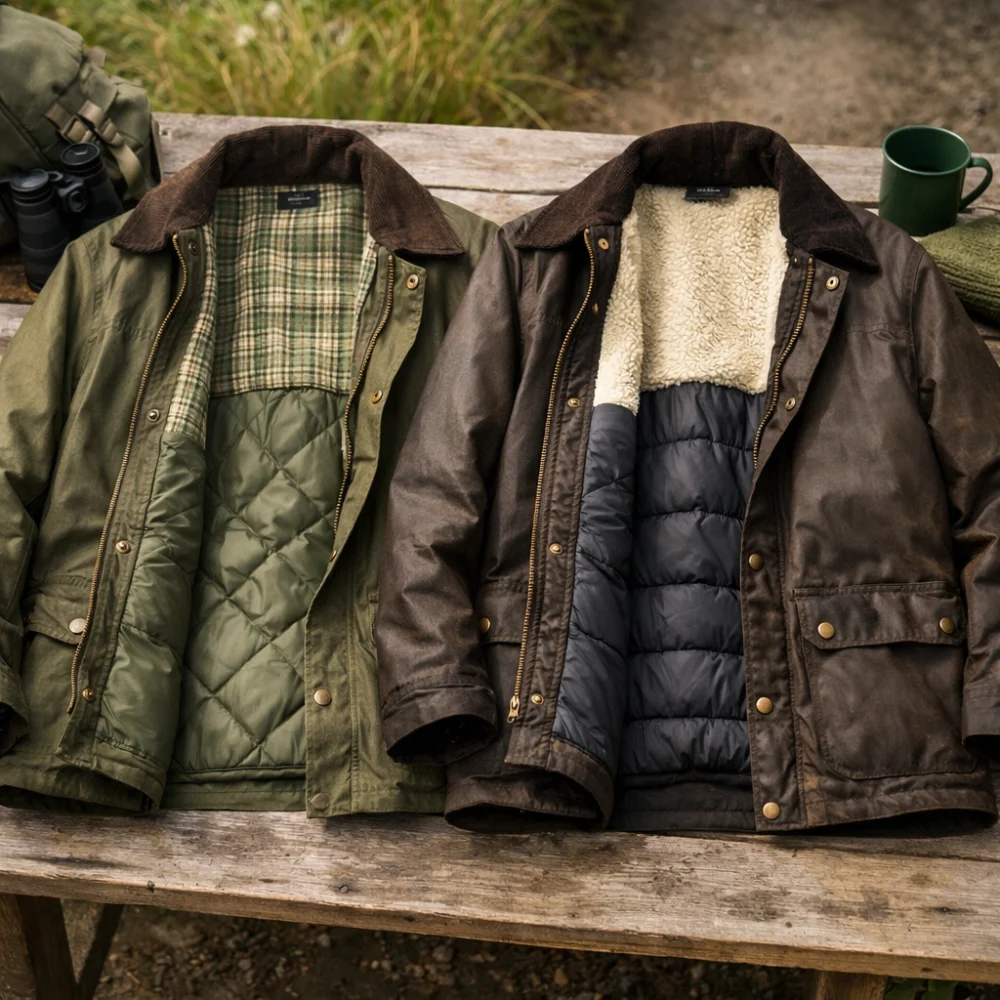
| Lining | The inside layer affects warmth and comfort. | Changes how suitable the jacket feels across seasons and how easy it is to wear over layers. | Check whether the jacket is lightly lined, quilted or more substantial. |
| Length | The jacket may sit at the waist, hip or longer. | Longer styles can add coverage, while shorter styles often move more easily. | Compare the cut with how you will sit, walk or work in it. |
| Fit and layering room | How the jacket sits over a shirt, knitwear or fleece. | A fit that is too close can feel restrictive; too loose can feel bulky. | Check the product description for room to layer and any size notes. |
| Pockets and closures | Number, placement and type of pockets, plus the front fastening. | Practical details can matter as much as appearance for country use. | Consider hand-warmer pockets, secure storage and ease of fastening with gloves. |
| Collar and cuffs | These affect draught protection and comfort at the neck and wrists. | Small design details can change how usable the jacket feels in poor weather. | Check whether the collar, cuffs and storm-facing details suit your conditions. |
Key decisions explained
Weather resistance and comfort
Wax jackets are chosen for their weather-resistant feel, but that does not mean every model behaves the same. Some are designed to feel more robust and protective, while others are easier to wear around town or during milder outdoor days. If you expect frequent rain, think about coverage and sealing around openings as well as the outer finish.
Lined, quilted or lighter-feeling options
The inside of the jacket often has a bigger effect on comfort than shoppers expect. A warmer lining can improve cold-weather wear, but it can also make the jacket feel heavier and less versatile in mild weather. A lighter jacket is often easier to layer, yet it may need more careful pairing with knitwear when temperatures drop.
Cut, length and movement
Country jackets are often worn over multiple layers, so fit matters. A jacket that is too short may feel less suitable for outdoor work or driving, while a longer cut may give more coverage but feel less agile when walking quickly or bending. Think about your normal movement rather than just how it looks on a hanger.
Pockets and practical details
Wax jackets are often chosen for practical storage, but pocket layout is not one-size-fits-all. If you carry gloves, dog leads or small essentials, the location and size of pockets may matter more than the number shown in the description. Make sure the layout suits how you use a jacket day to day.
Common types and variations
Within this category, the main differences are usually style and structure rather than radically different product types.
- Unpadded or lighter jackets suit mild conditions, active wear and people who want a less bulky feel, but they usually rely more on layering for warmth.
- Padded or quilted wax jackets are more suitable for cooler weather and for buyers who want a warmer, more substantial feel.
- Longer country styles may give more coverage and a classic look, but they can feel less nimble than shorter designs.
- More tailored or smarter-looking jackets may suit town and country use, while more utilitarian cuts can prioritise practicality.
The most useful question is not which style is “better”, but which balance of warmth, coverage and mobility matches your routine.
Which jacket suits which buyer?
| Buyer need | Look for | Why it helps |
|---|---|---|
| Regular wet-weather use | Weather-resistant finish, sensible coverage and practical fastening details | Helps the jacket feel more dependable in changing outdoor conditions |
| Cold-weather wear | Warmer lining or added padding | Makes the jacket more comfortable when worn over lighter layers |
| Active walking or work | Good freedom of movement and a cut that is not overly bulky | Reduces restriction when you are active for longer periods |
| Everyday country style | Balanced cut, usable pockets and a fit that works with your usual clothes | Helps the jacket feel practical as well as smart |
| Layering over knitwear | Enough room through the shoulders and body | Prevents the jacket from feeling tight once you add warmer layers |
Common mistakes to avoid
- Choosing on appearance alone: a jacket can look right but still feel too warm, too short or too restrictive for the way you will actually wear it.
- Ignoring the lining: two wax jackets can look similar while feeling very different in cooler weather.
- Forgetting about layering: if you plan to wear a thick jumper underneath, allow space for that in the fit.
- Overlooking pocket layout: practical use often depends on where the pockets sit and how easy they are to reach.
- Assuming all wax jackets need the same care: finishes and care guidance can vary, so check the individual product information.
Safety and suitability notes
Wax jackets are generally a clothing choice rather than specialist protective equipment, so the key issue is suitability for the conditions and activity you have in mind. If you need the jacket for rough outdoor work, frequent rain or long walks, check whether the design offers enough coverage, comfort and movement for that purpose. Specifications vary by model, so always check the individual product page before buying.
Care, storage and everyday ownership
Waxed clothing usually needs a little more thought than a standard casual jacket. Keep it clean according to the product guidance, store it somewhere dry and avoid treating it like an ordinary machine-wash item unless the instructions clearly say otherwise. If you want the jacket to keep its appearance and weather-resistant feel, the care routine is part of the buying decision, not an afterthought.
It is also worth thinking about how often you will wear it. A jacket used regularly for country outings may justify a more robust, practical design, while an occasional-use jacket may be better chosen for comfort and versatility.
How to compare options efficiently
- Decide where you will wear the jacket most often.
- Choose the type of feel you need: lighter, warmer, longer or more mobile.
- Compare lining, fit, length and pocket layout first.
- Check the product page for layering room, care guidance and any model-specific notes.
- Balance practicality against the style you want to live with day to day.
Buying checklist
- Will it suit your main use: walking, country wear, work or general everyday wear?
- Does the lining or padding match the weather you expect to face?
- Is there enough room for the layers you usually wear underneath?
- Do the length and cut suit your movement and coverage needs?
- Are the pockets, collar and fastening details practical for your routine?
- Have you checked the care guidance for the specific jacket?
Frequently asked questions
Are wax jackets warm enough for winter?
Some are, but warmth depends on the lining, padding and how much layering you plan to wear underneath. A lighter wax jacket may be better for milder weather, while a warmer style can be more suitable when temperatures drop. Check the product details rather than assuming all wax jackets feel the same.
Are wax jackets only for country wear?
No. They are strongly associated with country clothing, but many people wear them for everyday outdoor use as well. Their practicality and classic look make them useful beyond purely rural settings.
Should I size up in a wax jacket?
Not always, but it is often worth thinking about layering before you choose. If you plan to wear knitwear or heavier layers underneath, make sure the fit allows room without feeling bulky. Product descriptions and size guidance are more useful than guessing from the style alone.
What is the main difference between a lighter and a more substantial wax jacket?
A lighter jacket is usually easier to wear in milder conditions and can feel less restrictive. A more substantial jacket often gives a warmer, more protective feel, but may be less comfortable in warmer weather or during more active movement. The right choice depends on your routine and climate.
Do wax jackets need special care?
Often, yes, compared with a standard casual jacket. Waxed outer fabrics and linings may have specific care guidance, so it is wise to follow the individual product instructions. That helps you judge whether the jacket fits your maintenance expectations before buying.
What features matter most if I will wear the jacket often?
Focus first on fit, comfort, pocket layout and the level of warmth you need. If the jacket is uncomfortable, too heavy or awkward to layer with, you are less likely to reach for it regularly. Practical details usually matter more than the styling cues.
Does a wax finish mean a jacket is waterproof?
Not necessarily. A waxed finish alone does not establish how a particular jacket will perform in prolonged rain, so do not assume that every wax jacket is waterproof. Check the individual product information for its stated weather protection and any relevant construction details, and choose according to the conditions you expect to encounter.
More Men's Wax Jackets
See all 211 Men's Wax Jackets →


As an Amazon Associate we earn from qualifying purchases.