

Nymph flies are a core part of many fly-fishing setups because they are designed to be fished below the surface, where fish often feed. If you are choosing for the first time, the main job is not to find a single “perfect” fly, but to match the fly’s style to the water, depth and presentation you want to fish.
That usually means balancing realism, sink rate, size and how easy the fly is to present cleanly. A simple, sensible choice often matters more than a heavily detailed pattern if it does not suit the conditions.
This guide explains the main buying points so you can compare nymph flies with more confidence and avoid common misunderstandings. It stays at category level, so the individual product page is still the place to confirm the exact details of each fly.
What should I look for when choosing nymph flies?
Start with the water you expect to fish and the way you want the fly to behave. A nymph that drifts naturally in slow or moderate water may be a poor fit if you need something that gets down quickly, and a heavier pattern may feel unnecessary in shallow or delicate presentations.
The most useful first checks are size, weight or density, profile, and how natural or suggestive the pattern looks. Specifications vary by model, so always check the individual product page before buying.
| Feature | What it means | Why it matters | What to check |
|---|---|---|---|
| Size | The overall hook size and visual footprint of the fly | It affects how selective or visible the fly may be | Match it to the water, expected insect size and the patterns you already use |
| Profile | The shape and silhouette of the fly | Some situations call for a slim, subtle look; others suit a fuller shape | Compare the body, legs and general outline |
| Weight or sink tendency | How readily the fly reaches the fishing depth | Depth control is often a major part of nymph fishing | Look for any description that indicates heavier or more streamlined construction |
| Pattern style | Whether the fly is suggestive, realistic or tied to a specific natural imitation | Different waters and fish behaviour can favour different approaches | Check whether the pattern is general-purpose or tied to a particular hatch or insect stage |
| Visibility | How easy the fly may be for the angler to track | Useful when you need to follow the drift or detect takes | Consider colour accents and how busy the pattern appears |
Which details matter most in practice?
Size and profile
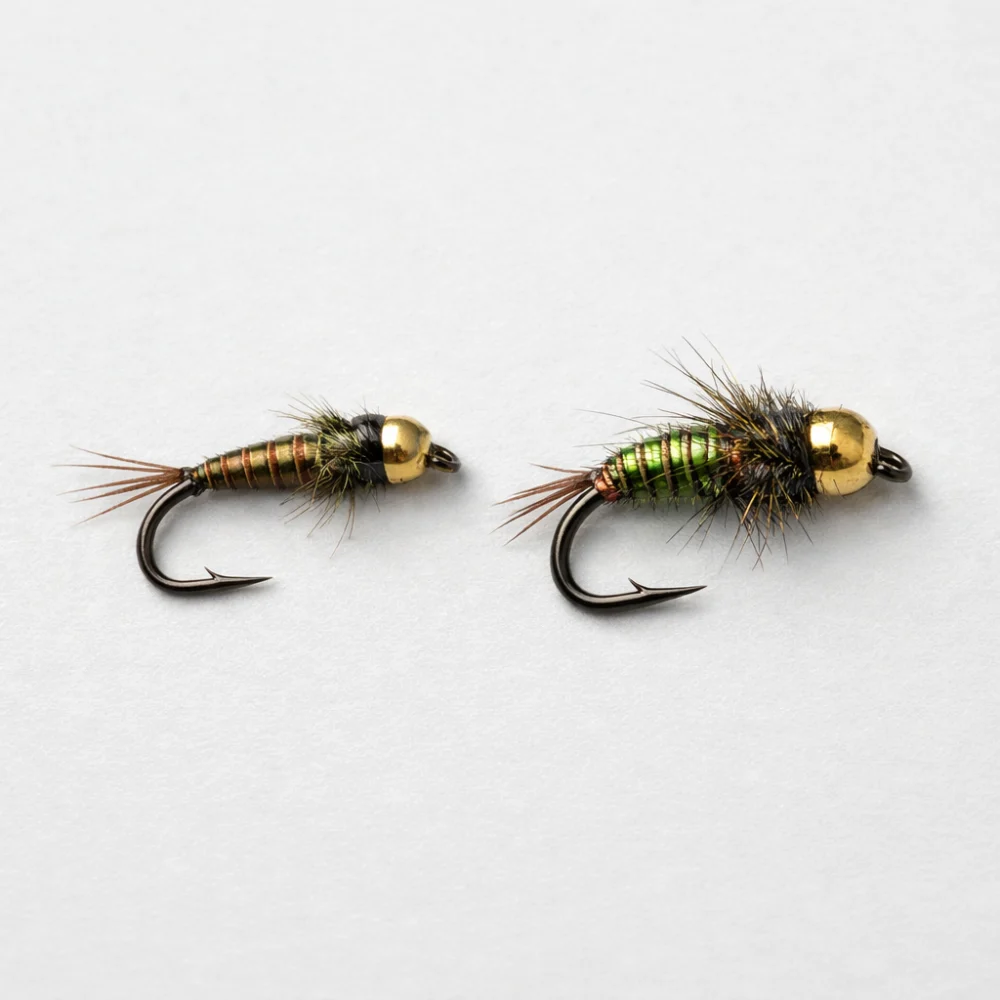
Many buyers focus on the name of the pattern and overlook the actual silhouette. In practice, fish often respond to size and shape as much as to exact imitation, especially when the fly is being drifted naturally.
A slimmer pattern can look subtle and unobtrusive, while a fuller profile may offer more presence in coloured water or when fish need a clearer target. The right choice depends on where you fish and how selective the fish are likely to be.
Sink behaviour and depth
Nymph fishing is usually about getting the fly into the feeding zone. That makes weight, density and overall construction important even when the fly description does not present them as headline features.
If you want a fly for deeper runs or faster water, you may prefer a pattern that is designed to sink more readily. For shallow or technical fishing, a lighter approach can make presentation easier and reduce the risk of looking overdone.
Colour and impression
Colour can help a fly stand out, but it is rarely the only factor. Some anglers prefer muted, natural tones; others want a touch of contrast for visibility or to trigger attention.
A practical way to think about colour is to ask whether you want the fly to blend in, suggest movement or stand out slightly. That keeps the choice tied to fishing conditions rather than to appearance alone.
What types of nymph flies are there?
Within this category, the main distinctions are usually about how the fly is tied rather than a completely different product type. You will often see patterns that lean towards natural imitation, attractor style or general-purpose use.
- Natural-looking nymphs: These are designed to suggest aquatic insects more closely and can suit clearer water or more selective fish.
- Attractor-style nymphs: These use stronger contrast or more noticeable features and can be useful when fish need a clearer signal.
- General-purpose patterns: These sit between the two approaches and can be a practical choice if you want one fly that covers more situations.
The main limitation is that no single style covers every situation. Matching the fly to water type, depth and fish behaviour is more important than choosing the most detailed-looking option.
How should different buyers choose?
| Buyer need | Likely priority | What tends to suit |
|---|---|---|
| Beginner building a first selection | Simplicity and versatility | General-purpose patterns that are easy to understand and use across more than one situation |
| Angler fishing clear or pressured water | Natural presentation | Subtle profiles and restrained colours that do not look overly busy |
| Angler fishing deeper or faster runs | Getting down efficiently | Patterns that are described or presented as more substantial or denser |
| Angler wanting more visual presence | Visibility and contrast | Attractor-style patterns with clearer colour separation or a bolder outline |
Common mistakes to avoid
- Choosing by appearance alone: A fly can look excellent in a photo but still be a poor fit for the water you fish.
- Ignoring the depth question: If the fly will not fish at the right level, pattern choice becomes less important.
- Overcomplicating the selection: Many anglers do better with a small, sensible set of options than with too many near-duplicates.
- Assuming one style works everywhere: Clear, slow water and deeper, faster water often reward different choices.
Safety and suitability checks
Nymph flies are relatively straightforward to buy, but it still helps to check suitability before committing. Make sure the size and style fit your intended fishing, and confirm that the product page matches the fishing situation you have in mind.
If you are buying for someone else, a balanced mix of styles is often safer than a very narrow specialist choice. For gift buying, it helps to think about the kind of water the angler usually fishes.
Care, storage and lifespan
Fly condition matters because crushed fibres, bent hooks or damp storage can affect how a fly presents. After use, storing flies somewhere dry and organised helps keep them easier to find and in better condition for longer.
If a pattern relies on fine materials or delicate finishes, it may need a little more care when being carried or sorted. A simple fly box that protects the shape of the pattern is often more useful than one that looks impressive but does not hold flies securely.
How do I compare options efficiently?
- Decide where and how you are most likely to fish the fly.
- Choose the broad style first: natural, attractor or general-purpose.
- Compare size, profile and likely sink behaviour.
- Check whether the fly is better suited to subtle presentation or stronger visibility.
- Read the individual product page for the exact details before you buy.
Buyer checklist
- Does the fly suit the water you plan to fish?
- Is the size appropriate for your usual conditions?
- Does the profile match the look you want in the water?
- Will the fly likely fish at the depth you need?
- Does the pattern style fit your approach: natural, attractor or general-purpose?
- Have you checked the individual product page for the exact details?
Frequently asked questions
Are nymph flies only for one kind of water?
No. They are used in a wide range of freshwater situations, but the exact pattern choice should match depth, flow and how selective the fish are likely to be. A subtle pattern may suit some waters, while a more obvious one can make sense elsewhere.
Do I need lots of different nymphs to get started?
Not necessarily. A small, thoughtful selection is often easier to learn with than a large collection of very similar flies. Start with a few that give you different sizes or levels of subtlety.
Is a more realistic fly always better?
Not always. In some situations, impression and presentation matter more than exact realism. The useful question is whether the fly suits the water and the behaviour you expect from the fish.
Should I choose heavier flies for every situation?
No. Heavier patterns can help you reach depth, but they are not ideal for every water type or every presentation. In shallower or more technical situations, a lighter choice may be easier to fish well.
What if I am buying nymphs as a gift?
Choose versatile styles rather than highly specialised ones if you do not know the angler’s usual waters. It also helps to think about common sizes and whether they prefer subtle or more noticeable patterns.
How do I know whether a pattern is general-purpose or specialist?
Look at the product description and the overall design. If the fly suggests a very specific insect stage or fishing situation, it may be more specialised; if it is built to cover a wider range, it is more likely to be general-purpose.