Mountain Bike Helmets
Mountain bike helmets are designed for riders who want head protection suited to off-road cycling, whether that means trail rides, technical descents or mixed terrain. When comparing options, it helps to look at fit, coverage and ventilation, then check any details that affect comfort on longer rides.
You may also want to compare visor style, retention system and compatibility with eyewear or eyewear storage if those features matter to your riding. Always review the individual product details so the helmet suits your style of mountain biking and fits securely.
 Buyers guideMountain Bike Helmets Buyer GuideWhat to compare before you choose
Showing 1–12 of 54 results
-
Mountain Bike Helmets
200 Lumen USB Rechargeable Bike Helmet Light with Front and Rear Modes
£19.99 View on Amazon -
Mountain Bike Helmets
7 iDP M1 MTB Full Face Ventilated Helmet, Matte Black, L
Original price was: £99.99.£89.90Current price is: £89.90. View on Amazon -
Mountain Bike Helmets
ABUS CliffHanger MTB Bicycle Helmet, Concrete Grey, Size L
£91.99 View on Amazon -
Mountain Bike Helmets
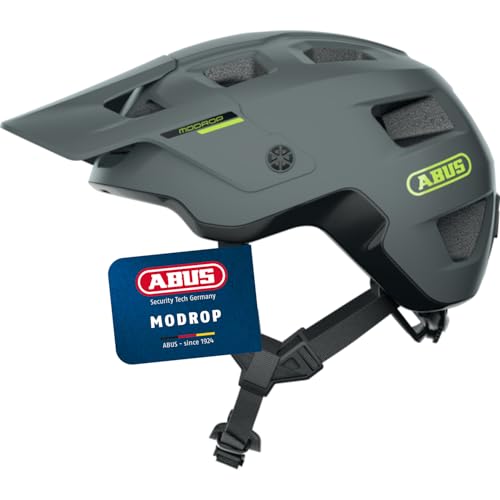
ABUS MoDrop MTB Helmet, Matt Grey, Size M
Original price was: £63.79.£49.99Current price is: £49.99. View on Amazon -
Mountain Bike Helmets
ABUS MoTrip MTB Helmet, Shiny Black, M Mountain Bike Helmet
£39.99 View on Amazon -
Mountain Bike Helmets
Adjustable Mountain Bike Helmet with Removable Chin Guard
£27.33 View on Amazon -
Mountain Bike Helmets
Adult Cycle Helmet with LED Light, Adjustable 56-60 cm
Original price was: £21.99.£18.99Current price is: £18.99. View on Amazon -
Mountain Bike Helmets
AEYINO Mountain Bike Helmet for Adults with Detachable Sun Visor
£39.99 View on Amazon




Mountain bike helmets are built for off-road riding where trails, roots, climbs and descents can all shape the kind of protection and comfort a rider needs. This category is for people looking to compare helmets intended for mountain biking rather than road or everyday commuting use.
What to look for in a mountain bike helmet
Fit is one of the most important considerations. A helmet should sit securely and comfortably, without pressure points or movement once adjusted. Many riders also compare coverage, especially around the back of the head and the sides, because off-road riding can involve more varied terrain and body positions than flatter routes.
Ventilation can matter too, particularly on longer climbs or warmer days. Some helmets are shaped to balance airflow with added coverage, so it is worth checking the product description to see how a helmet is presented and whether that matches the kind of riding you do most often.
Useful features to compare
Mountain bike helmets often include practical details such as a visor, adjustable straps and a retention system that helps fine-tune the fit. If you ride with eyewear, it can also be useful to check how the helmet is shaped around the temples and brow area. These details are not the same across every listing, so it is sensible to review the individual product information before deciding.
Some helmets may be aimed at general trail use, while others are better suited to more demanding off-road riding. Rather than relying on the category name alone, compare the wording on each listing and look for the features that match your riding style, comfort preferences and safety expectations.
Choosing the right helmet for the ride
For mountain biking, the best choice is usually the helmet that fits properly and suits the type of terrain you ride most often. If you are comparing several models, focus on comfort, adjustment and the overall shape as well as any stated use on the product page. That makes it easier to narrow down the options and choose a helmet that feels appropriate for your routes.
As with any protective equipment, it is sensible to check the sizing guidance, fitting advice and product details for each listing before you decide.